
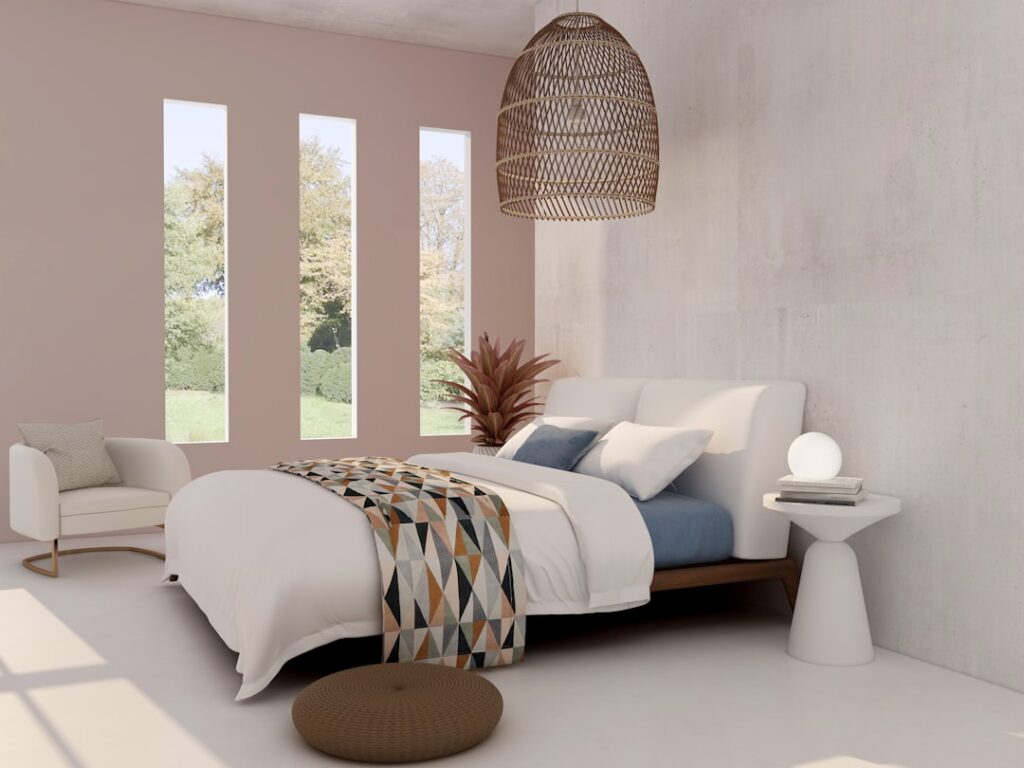
Few color moves transform a room as quickly or as affordably as painting one wall a deep, saturated blue. A navy blue accent wall bedroom feels instantly cozier, more grown-up, and more architectural, and it does it for the price of a single gallon of paint and an afternoon of work.
Navy sits in a design sweet spot. It reads as a neutral, so it pairs with almost anything, yet it carries enough drama to give a bedroom a real focal point. Having specified and painted dozens of these walls, here’s exactly how to choose the shade, the wall, and the pairings that make navy sing instead of sulk.
Why Navy Works So Well in a Bedroom
Bedrooms are meant to feel calm and enveloping, and dark blue delivers on both counts. Color psychology consistently associates blue with rest and lowered heart rate, which is exactly what you want in a space built for sleep. Navy also recedes visually, so a headboard wall in deep blue makes the bed feel like the anchored center of the room.
Unlike black, which can feel heavy, or gray, which can feel cold, navy has warmth and depth that shifts beautifully through the day, ink-dark at night by lamplight, softer and almost slate-blue in morning sun.
Choosing the Right Wall
The accent wall is the wall your eye lands on first. In most bedrooms that’s the headboard wall, and it’s almost always the correct choice.
- Headboard wall (best default): Frames the bed, creates instant symmetry, and hides the fact that the bed is the room’s bulkiest object.
- Wall with a window: Works if the window has substantial trim; navy makes white casing pop like a picture frame. Avoid if the window is small and off-center.
- Avoid the wall with the door, and avoid a wall broken up by a closet, a radiator, and a light switch. An accent wall needs a clean, uninterrupted surface to feel intentional.
One rule I hold to: don’t paint a wall that gets blasted by direct afternoon sun all day, harsh light flattens navy and can make it look chalky. A wall that receives softer, indirect light shows the color’s depth far better.
The Best Navy Paint Colors
Not all navies are equal. Some lean purple, some lean teal, and some are nearly black. Here are shades that perform reliably in bedrooms:
- Benjamin Moore Hale Navy (HC-154): The gold standard, slightly muted with a hint of gray, so it never looks like a superhero costume. Around $75 to $85 per gallon.
- Sherwin-Williams Naval (SW 6244): A true, rich navy with excellent depth. Extremely popular and forgiving in most light.
- Benjamin Moore Gentleman’s Gray (2062-20): Deeper and moodier, almost a blue-black, ideal for a dramatic, den-like bedroom.
- Farrow & Ball Stiffkey Blue (No. 281): Inky with a purple undertone that glows by candlelight, a premium option at roughly $110 per gallon.
Always test before you commit
Buy sample pots (about $6 to $9 each) and paint two coats on a 2-by-2-foot patch of poster board. Move the board around the wall and view it morning, noon, and night. Undertones that look identical on a chip diverge dramatically on the wall.
Finish and Sheen Matter
Sheen changes how a dark color behaves. For a bedroom accent wall I recommend eggshell or matte. Flat and matte finishes hide wall imperfections and drink up light for that velvety, enveloping feel dark walls do best. Save satin and semi-gloss for trim.
Dark colors also benefit from a tinted gray primer. Ask the paint desk to tint your primer to a mid-gray, it dramatically improves coverage and can save you a full coat of expensive finish paint.
What to Pair With a Navy Accent Wall
Navy’s versatility is its superpower. Here’s how to build the rest of the room around it:
Warm metals and wood
Brass and gold light fixtures, drawer pulls, and picture frames against navy is a classic, luxurious combination. Warm wood tones, walnut nightstands, oak flooring, add organic contrast that keeps the room from feeling cold.
Crisp whites and creams
White bedding and white trim provide the high contrast that makes navy read as intentional and clean. A cream or ivory throws softens the look for a more relaxed feel.
Blush, rust, and mustard accents
For color, dusty pink, terracotta, and mustard yellow all sit opposite navy on the wheel and pop beautifully in pillows, art, and a throw blanket.
Layered textures
Because navy is a quiet color, texture carries the interest, a rattan pendant, a chunky knit blanket, linen curtains, and a wool rug keep the room from feeling flat.
Step-by-Step: Painting the Accent Wall
- Prep the wall. Fill nail holes with spackle, sand smooth, and wipe down dust. Dark paint highlights every bump, so prep matters more here than on a light wall.
- Tape the edges. Run quality painter’s tape along the ceiling, adjoining walls, and trim. Press the edge down firmly with a putty knife to prevent bleed.
- Prime with tinted gray primer. One coat, let it dry fully (typically 2 to 4 hours).
- Cut in the corners and edges with a 2.5-inch angled brush.
- Roll the field with a 3/8-inch nap roller in a W pattern, then fill it in. Maintain a wet edge to avoid lap marks.
- Apply the second coat after the first dries (2 to 4 hours). Dark colors almost always need two coats over primer for even depth.
- Pull the tape while the last coat is still slightly wet for the cleanest line.
Budget roughly $90 to $130 total for one wall: a gallon of quality paint, primer, tape, a roller kit, and a brush. Most bedroom accent walls need less than a full gallon.
Common Mistakes to Avoid
- Skipping primer on a previously bold or patchy wall, old colors bleed through and waste your finish coats.
- Choosing high-gloss, which spotlights every dent and roller mark.
- Painting the smallest, most cluttered wall. Give navy a clean, generous surface.
- Under-lighting the room. A dark wall absorbs light, so add a warm-toned table lamp or sconces flanking the bed.
Styling the Wall After the Paint Dries
A freshly painted navy wall is a blank stage, and how you dress it determines whether the room reads intentional or unfinished. Above the headboard, hang art with plenty of visual weight, a large single piece or a tight grouping, so the dark field doesn’t swallow small frames. Metallic or white-matted art pops beautifully against navy.
Flanking the bed, matched table lamps with warm bulbs pull the eye and add the light a dark wall needs. If your bed has a fabric headboard, a warm oatmeal, camel, or blush upholstered headboard against navy looks especially rich. Finish with bedding that layers whites and creams with one accent color, and a rug that pulls a warm tone into the room. These finishing moves cost little but make the difference between a wall that looks like a designer chose it and one that simply looks painted.
Frequently Asked Questions
Does a navy accent wall make a small bedroom look smaller?
Not necessarily. A dark wall actually adds depth and can make a small room feel cozy and intentional rather than cramped. Keep the other three walls light, and add good lighting so the space still feels open.
Which wall should be the navy accent wall?
The headboard wall is the best default because it frames the bed and creates a natural focal point. Choose an uninterrupted wall without doors, closets, or clutter for the cleanest, most designer-looking result.
What colors go best with navy in a bedroom?
White and cream for contrast, brass and gold for warmth, natural wood tones for organic balance, and accents of blush, rust, or mustard for a pop of color that complements navy beautifully.
A navy accent wall is one of the highest-return decorating decisions you can make, low cost, low commitment, and instantly transformative. Choose a shade with the right undertone, give it a clean wall and good light, and your bedroom will feel like a boutique hotel by the weekend.


