Keeping up with the newest flooring trends is exciting, but the smartest homeowners know the difference between a durable style worth installing and a fad that will date their home in five years. Flooring is one of the most expensive and longest-lived surfaces in a house, so you want to chase trends that have staying power rather than ones you will regret at resale. The good news is that today’s leading directions, wider planks, warmer tones, and waterproof construction, mostly lean classic and practical rather than gimmicky.
- Wide Planks and Long Boards
- Warm and Natural Tones
- Waterproof Rigid-Core Vinyl Everywhere
- Texture and Matte Finishes
- Patterns Making a Comeback
- Sustainable and Healthier Materials
- Which Trends Are Worth Chasing
- Matching Trends to Your Home and Budget
- Trends in Tile and Stone Looks
- How to Shop Trends Without Overspending
- Bottom Line
Wide Planks and Long Boards
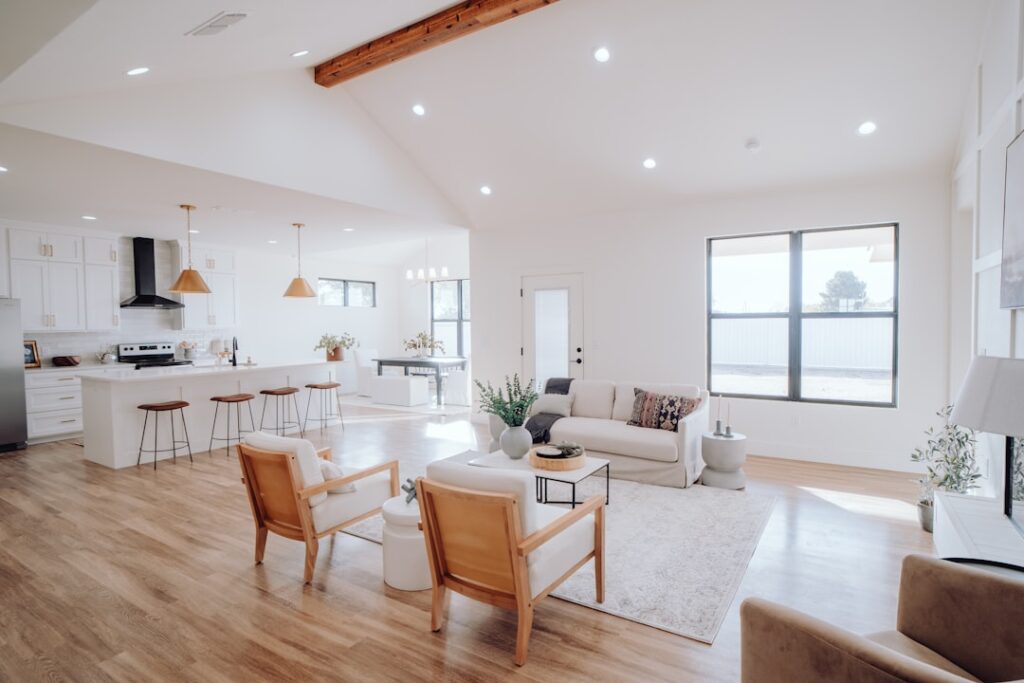
Narrow strip flooring is giving way to wide planks, often 7 to 9 inches across and 4 feet or longer. The wider format shows off the wood grain, makes rooms feel larger and more open, and means fewer seams across the floor. This applies to real hardwood, engineered wood, and the vinyl and laminate that mimic them. It is a trend with genuine longevity because it reads as upscale and timeless rather than flashy. The main caution is that wide planks demand a very flat subfloor, since any unevenness shows more across a broad board.
Warm and Natural Tones
The cool gray wood look that dominated the 2010s is fading. Buyers are returning to warm honey, caramel, and natural oak tones, along with rich medium browns that feel inviting and organic. Greige, a blend of gray and beige, remains a safe middle ground that pairs with almost any decor. These warmer, nature-inspired colors are part of a broader move toward biophilic design, and because they echo real wood, they tend to age gracefully rather than looking dated.
Waterproof Rigid-Core Vinyl Everywhere
If there is one structural trend reshaping flooring, it is the dominance of waterproof rigid-core vinyl, the SPC and WPC planks that look like wood but shrug off spills, pets, and kids. Homeowners now put this in kitchens, baths, basements, and whole homes where they once would have used wood or laminate.
- Pros: Fully waterproof, scratch-resistant, warm underfoot, and DIY-friendly with click-lock joints.
- Cons: Will not refinish, can dent under heavy point loads, and very cheap product looks plasticky.
- Cost: Roughly $3 to $8 per square foot installed for quality lines.
This is a trend with real staying power because it solves practical problems rather than just looking new.
Texture and Matte Finishes
Glossy, high-shine floors are out. The newest products lean into matte and low-sheen finishes with tactile texture, such as wire-brushed and hand-scraped surfaces that feel like real wood and hide scratches, dust, and footprints far better than a mirror finish. Textured finishes also add slip resistance. Because they emphasize natural character over polish, these finishes coordinate with the warm-tone and biophilic directions and are unlikely to feel dated soon.
Patterns Making a Comeback
Geometric and traditional patterns are back in style after years of straight-lay simplicity. Herringbone and chevron layouts add elegance and movement, while patterned and encaustic-look tile brings personality to entries, kitchens, and powder rooms. Patterns are a higher-commitment trend, since they are harder to install and more material-intensive, so weigh whether you will still love the look years from now before committing a whole floor to it.
Sustainable and Healthier Materials
Eco-conscious buyers are driving demand for sustainable options: bamboo, cork, reclaimed wood, and natural linoleum, along with low-VOC and formaldehyde-free products that improve indoor air quality. Cork and bamboo are renewable and resilient, reclaimed wood carries one-of-a-kind character, and certifications like FloorScore and GREENGUARD help you verify low emissions. This is less a fad than a lasting shift in what shoppers expect from manufacturers.
Which Trends Are Worth Chasing
Not every trend deserves your money. Here is a quick filter for deciding what to adopt.
- Worth it: Wide planks, warm natural tones, matte textured finishes, and waterproof rigid-core construction. These are practical and classic.
- Worth it in moderation: Herringbone and patterned floors as accents or in smaller rooms where the commitment is contained.
- Approach with caution: Very bold colors, ultra-trendy patterns across an entire home, and anything that screams a specific year. These date fastest and can hurt resale.
Matching Trends to Your Home and Budget
Trends should serve your lifestyle, not dictate it. A busy family home with pets benefits most from waterproof rigid-core vinyl in warm wide-plank looks, durable and forgiving. A design-forward homeowner staying put for years can indulge in herringbone or patterned tile. If resale is on the horizon, stick to broadly appealing warm neutrals and timeless wood looks rather than statement choices. Whatever you pick, buy quality within the category; a cheap version of any trend looks worse and fails faster than a solid mid-grade product.
Trends in Tile and Stone Looks
Beyond wood looks, hard-surface trends are evolving too. Large-format tiles, 24 by 48 inches and bigger, are popular for their minimal grout lines and clean, expansive feel. Stone-look porcelain that convincingly mimics marble, travertine, and slate lets homeowners get the high-end appearance without the cost and upkeep of natural stone. Terrazzo and terrazzo-look tile are back in style for entries and powder rooms, bringing speckled, midcentury character. As with patterns, these are higher-commitment choices, so weigh whether the look suits your home long term before tiling an entire floor in a statement material.
How to Shop Trends Without Overspending
You can ride current styles without blowing your budget if you shop strategically.
- Buy quality within whatever category you choose; a cheap version of any trend looks worse and fails faster.
- Use trendy patterns and bold looks as contained accents, such as an entry or powder room, rather than whole-home commitments.
- Order physical samples and live with them in your real lighting, since screens distort color badly.
- Reserve your biggest spend for the timeless, durable directions like warm wide-plank wood looks and waterproof cores.
- If resale is near, stick to broadly appealing neutrals that the widest pool of buyers will like.
Bottom Line
The newest flooring trends mostly point in sensible, livable directions: wider planks, warmer natural tones, matte textured finishes, and waterproof rigid-core construction that handles real life. Lean into those for the best mix of style and longevity, treat bold patterns and colors as contained accents rather than whole-home commitments, and always buy quality within whatever trend you choose. That approach gives you a floor that feels current today and still looks great when it is time to sell.
Prefer to explore on your own?
See how new flooring looks in your actual room in seconds — free, no signup.
Try the free Floor Studio →