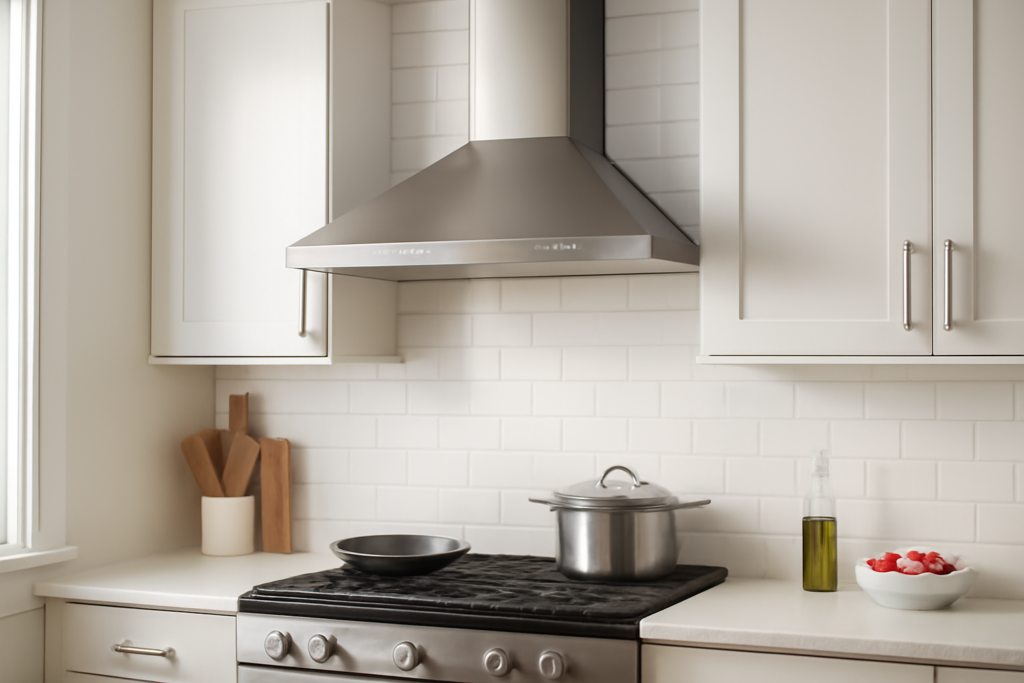
Few kitchen appliances work as hard and get as little attention as the vent over your stove. A NuTone range hood pulls smoke, grease, steam, and cooking odors out of the air, protecting your cabinets and keeping the whole house smelling fresh. As one of the longest-running names in home ventilation, NuTone offers everything from budget under-cabinet models to powerful chimney-style hoods, and knowing how to choose and maintain a NuTone range hood ensures your kitchen stays clear no matter what you cook.
Part of our Kitchen Remodeling guide — explore the full guide →
A Quick Word on the Brand
NuTone has been making ventilation products since 1936 and is now part of the Broan-NuTone family, the largest residential ventilation manufacturer in North America. Because Broan and NuTone share engineering and parts, many components are interchangeable, which makes finding replacement filters, fan motors, and light covers relatively easy even for older units.
The lineup ranges from simple non-ducted hoods that recirculate filtered air to high-CFM ducted models built for serious cooking. That breadth means there is a NuTone hood for nearly any kitchen and budget, but it also means you need to match the model to how you actually cook.
Types of NuTone Range Hoods
Understanding the mounting styles helps you narrow the field quickly:
- Under-cabinet: Mounts beneath a wall cabinet above the range. The most common and affordable style.
- Wall-mount chimney: A freestanding hood that attaches to the wall where no cabinet exists above the stove, with a decorative duct cover.
- Island: Hangs from the ceiling over a cooktop island, venting up through the ceiling.
- Insert or power pack: A fan and filter unit built into custom cabinetry or a wood hood surround.
- Microwave-hood combo: An over-the-range microwave with a built-in vent, common in many kitchens.
Under-cabinet models are the workhorses of the line and the easiest to install as a direct replacement. Chimney-style hoods deliver a more upscale look and typically higher airflow.
Ducted vs. Ductless
The single biggest performance decision is whether your hood vents outside. A ducted hood pushes air through a duct to the exterior, removing heat, moisture, and grease completely. A ductless, or recirculating, hood pulls air through a charcoal filter and blows it back into the kitchen, which captures some grease and odor but cannot remove heat or humidity.
Whenever possible, choose ducted operation. It is far more effective, especially if you sear, fry, or cook with gas. Ductless makes sense only when running a duct to the outside is impossible, such as an interior island in a condo. Many NuTone hoods can be configured either way, so confirm the setup before buying.
Sizing and CFM
Airflow is measured in CFM, cubic feet per minute, and getting this right is what separates a hood that works from one that just makes noise. For an electric range, a common rule is to provide at least 100 CFM for every 10 inches of stove width, so a 30-inch range wants a minimum of about 300 CFM. Gas ranges produce more heat and demand more airflow, often calculated by dividing the burner BTU total by 100.
The hood itself should be as wide as the cooktop or slightly wider. Standard sizes are 30 and 36 inches, matching typical ranges. Mount the hood 24 to 30 inches above an electric cooktop and 24 to 36 inches above gas, following the manual, so it captures rising smoke without being in your way.
Filters and Maintenance
A range hood only performs when its filters are clean. Ducted NuTone hoods use aluminum or stainless mesh grease filters that are dishwasher safe. Pull them monthly and either run them through the dishwasher or soak them in hot water with degreasing dish soap. A clogged grease filter chokes airflow and forces the motor to work harder.
Ductless hoods add a charcoal or carbon filter that absorbs odors. Unlike mesh filters, carbon filters cannot be washed and must be replaced every three to six months depending on how much you cook. Genuine NuTone and compatible Broan filters are widely available online and at hardware stores for $10 to $30 per set.
Common Parts and Repairs
Because NuTone shares parts with Broan, most repairs are straightforward. The fan motor, light socket, and switch are the parts most likely to fail over a hood’s 10-to-15-year life. A humming hood that will not spin usually has a seized motor or bad capacitor, while flickering lights point to a loose socket or worn bulb.
- Always cut power at the breaker before servicing the hood.
- Find your model number on the label inside the hood, near the filter area.
- Order the exact replacement motor, blower wheel, or switch by that number.
- Swap the part following the wiring diagram in the manual.
- Restore power and test each speed and the light.
Replacement LED light modules, halogen bulbs, and rocker switches are inexpensive, so a tired hood can often be revived for far less than a full replacement.
Installation Tips
Replacing an existing under-cabinet hood is a manageable DIY job if you are comfortable with basic wiring. Match the new hood’s duct location, top or rear, to your existing ductwork to avoid rerouting. Use smooth rigid metal duct rather than flexible foil when possible, because smooth duct moves air more efficiently and collects less grease.
Keep duct runs as short and straight as you can, and minimize elbows, since every turn cuts airflow. For a first-time install where no duct exists, or for a gas range that needs high CFM and possibly make-up air, hiring a professional is the safer route.
Noise Levels and Sones
A range hood is only useful if you actually run it, and a screaming-loud fan tempts people to leave it off. Hood noise is measured in sones, where lower numbers mean quieter operation. A hood rated around 1 to 2 sones on low is pleasant background noise, while cheaper units can hit 6 to 8 sones on high, loud enough to interfere with conversation.
Higher CFM generally means more noise, so there is a tradeoff between power and quiet. Some NuTone models place the blower motor remotely, in the duct or on the roof, which dramatically lowers the noise heard in the kitchen. If quiet matters to you, check the sone rating at the speed you will actually use most, usually low or medium, rather than just the maximum. A hood you can comfortably run at medium while talking is far more useful than a powerful one you never turn on.
Lighting and Controls
Good task lighting over the cooktop is one of the most appreciated features of a range hood. Most current NuTone hoods use LED lighting, which runs cool, lasts for years, and provides bright, even illumination of your burners. Older models may use halogen or incandescent bulbs, which are easy to replace but generate more heat and burn out sooner.
Controls range from simple mechanical rocker switches to electronic touch panels with multiple fan speeds and timers. A basic under-cabinet hood typically offers a light switch and a two- or three-speed fan control on the front edge. Higher-end models add a delayed shut-off that runs the fan for several minutes after you finish cooking to clear lingering smoke, and some include a filter-cleaning reminder. Choose the control style that fits how you cook; a serious home cook benefits from multiple speeds, while a simple two-speed unit is plenty for light everyday cooking.
Getting the Most From Your Hood
A NuTone range hood is a practical, repairable appliance that pays off every time you cook. Choose a ducted model sized to your stove, run it a few minutes before and after cooking to clear the air fully, and keep the filters clean. Do those three things and your hood will protect your kitchen finishes and keep the air fresh for well over a decade.