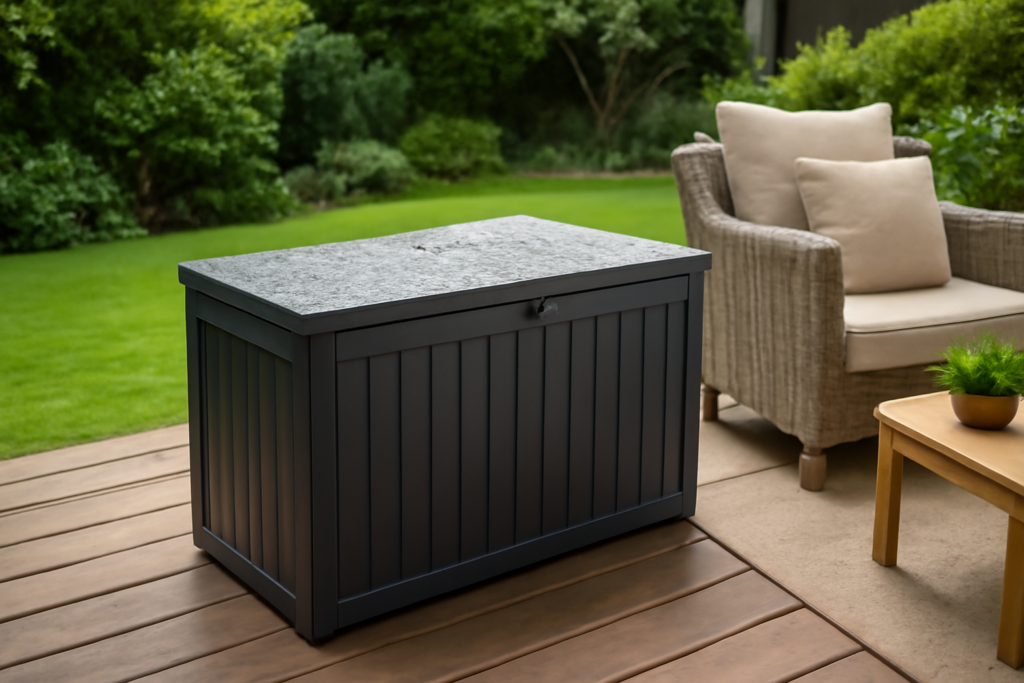
A good outdoor deck box waterproof enough to survive real weather is one of the most useful additions you can make to a patio, deck, or poolside. It keeps cushions dry through a surprise thunderstorm, hides pool floats and garden tools out of the sun, and doubles as extra seating when guests arrive. The trouble is that plenty of boxes marketed as weatherproof still let moisture seep in through loose lids and unsealed seams. This guide walks you through the materials, capacities, and sealing features that separate a genuinely waterproof box from one that just looks the part.
Part of our Roofing guide — explore the full guide →
What “Waterproof” Really Means for a Deck Box
It helps to understand that most deck boxes are technically water-resistant rather than perfectly waterproof. A truly sealed box would trap condensation inside and grow mildew, so the best designs actually balance moisture protection with a little airflow. When a manufacturer calls a box waterproof, they usually mean the lid overlaps the body, the seams are welded or tightly molded, and rain runs off the top instead of pooling and dripping inside.
The features that matter most are an overlapping or double-walled lid, a rubber gasket around the rim, and small drainage channels in the base that let any stray water escape rather than collect. If you live somewhere with heavy rain or snow, look specifically for these details in the product description. A box that simply claims to be all-weather without mentioning a gasket or lid overlap will often let water wick in during a sustained storm.
Resin, Wood, and Metal: Choosing the Right Material
Resin is the most popular material for a reason. High-density polyethylene and polypropylene resins shrug off rain, resist fading with UV inhibitors, and never rot or rust. Brands like Keter and Suncast build most of their boxes from textured resin that mimics wood grain or wicker while weighing far less than the real thing. A resin box is your best bet if low maintenance and true weather resistance are the priority, and prices typically run from about 80 to 250 dollars depending on size.
Wood boxes, often built from cedar or acacia, bring a warm, natural look that resin cannot quite match. The catch is upkeep. Wood needs regular sealing or staining every year or two to stay watertight, and even then it is more vulnerable to warping and mildew than plastic. Metal boxes, usually galvanized or powder-coated steel, are the most durable against impact and offer a sleek modern look, but they can rust at scratches and get hot in direct sun. For most homeowners chasing a waterproof, worry-free option, resin wins on value and performance.
How Weatherproofing Holds Up Over Time
No material is immune to years of sun and rain. Resin can become brittle after five or more seasons of intense UV exposure, especially cheaper boxes without UV stabilizers. Wood grays and splits if you skip the annual sealing. Metal is the toughest structurally but the most prone to surface corrosion once the coating chips. A quick spray-down every few months and storing the box in partial shade will extend the life of any material considerably.
Sizing Your Deck Box: Gallons and Cubic Feet
Deck boxes are sold by capacity, usually listed in gallons and sometimes in cubic feet, and picking the right size prevents both overcrowding and wasted space. Small boxes in the 50 to 70 gallon range, roughly 7 to 10 cubic feet, suit a compact balcony and hold a few seat cushions or a set of garden tools. Mid-size boxes around 100 to 120 gallons are the sweet spot for most decks, swallowing two full patio chair cushion sets plus pool toys.
Large boxes stretch from 130 to 150 gallons or more, big enough to store a whole sofa’s worth of cushions, life jackets, and a folded umbrella. As a rough rule, one 14-inch square seat cushion takes up about 5 gallons of space, so a 120-gallon box comfortably holds a family’s outdoor cushion collection with room to spare. Measure the deck footprint before you buy, since a large box can eat up more floor space than you expect once it is in place.
Key Features That Keep Water Out
Beyond material, a few specific features determine whether your belongings stay dry. A gasket-sealed lid is the single most important upgrade, creating a soft barrier that blocks wind-driven rain at the seam. Pneumatic or spring-assisted lid hinges are a nice convenience, holding the lid open while you load and preventing it from slamming, but the real waterproofing comes from how tightly that lid seats when closed.
Look also for a raised or ventilated floor. Many quality boxes lift the interior base a half inch or so off the ground and add drainage holes, which keeps stored items above any water that does find its way in. Lockable latches add security and pull the lid down snugly against the gasket, improving the seal at the same time. If you plan to use the box as a bench, confirm the weight rating, since sturdier lids that support 400 to 600 pounds also tend to seal better.
Popular Waterproof Deck Box Brands
A handful of brands dominate this category and each has a signature strength. Keter, the largest player, offers the widely praised Westwood and Rockwood lines with textured resin, generous 150-gallon capacities, and lids rated to hold two adults as a bench. Their boxes typically land between 100 and 200 dollars and are known for genuinely weather-tight construction. Suncast is the go-to American brand for classic-looking resin boxes in a range of sizes, often at slightly lower price points around 80 to 160 dollars.
Rubbermaid rounds out the trio with rugged, no-frills storage boxes that prioritize durability over style, popular for garages and utility decks. Whichever brand you choose, read recent buyer reviews specifically for comments about the lid seal and how the box handles heavy rain. Real-world feedback tells you far more about waterproofing than the marketing copy on the box itself.
It is also worth thinking about how the box will function beyond simple storage. Many of the larger Keter and Suncast models are engineered to double as a bench, with reinforced lids rated to hold 500 pounds or more, which turns dead corner space into extra seating around a fire pit or dining table. If you plan to move the box seasonally, check whether it ships with hidden wheels or handles, since a fully loaded 150-gallon box is genuinely heavy and awkward to drag across decking without them.
Frequently Asked Questions
Are outdoor deck boxes truly waterproof?
Most are water-resistant rather than fully sealed, which is by design to prevent trapped condensation and mildew. A quality box with an overlapping lid, rubber gasket, and drainage channels will keep cushions and gear dry through normal rain and snow, but no deck box is meant to be submerged or perfectly airtight.
How do I keep moisture from building up inside my deck box?
Add a few silica gel packs or a small container of moisture absorber, and make sure items are dry before you store them. Choosing a box with a slightly ventilated floor helps air circulate. Cracking the lid open on a dry, sunny day every couple of weeks also lets any built-up humidity escape.
What size deck box do I need for patio cushions?
A 100 to 120 gallon box, roughly 14 to 17 cubic feet, holds two full sets of chair cushions comfortably. If you have a sectional or several loungers, step up to a 150-gallon box. Measure your cushions and add a little breathing room so you are not forcing the lid shut against them.
Can I leave a resin deck box outside all winter?
Yes, quality resin boxes are built to stay outdoors year-round, including through freezing temperatures. To extend its life, empty out heavy items before deep cold, keep the lid latched so snow does not force it open, and position the box where it gets some shade to slow UV wear on the plastic.