The fastest way to add usable square footage to a home without adding a single foot of conditioned space is hardscaping. Outdoor hardscapes typically return 60-80 percent of their installed cost at resale and increase day-to-day enjoyment far more than another bathroom remodel ever will. The challenge is that hardscaping is one of the few exterior projects where material costs vary by 5x, labor varies by 3x, and the wrong base prep guarantees failure. After years of designing and overseeing installs, here is the framework I use with clients to get the right hardscape package for the right yard.
Part of our Windows & Doors guide — explore the full guide →
What Counts as Outdoor Hardscapes
Hardscape is everything in the landscape that is not living. Patios, walkways, retaining walls, fire pits, outdoor kitchens, pergolas, decking, gravel beds, edging, fountains, and stairs all qualify. Softscape covers the lawn, beds, trees, and shrubs. A balanced design pairs roughly 30-40 percent hardscape against 60-70 percent softscape on a typical suburban lot, though urban courtyards swing closer to 60 percent hard.
Good design starts with circulation, then defines outdoor rooms, then layers material textures. Lead with the path of travel from the back door to the seating area, and build outward.
Material Choices Ranked by Performance and Price
Material choice drives both first cost and 25-year cost. Here is how the major options stack up.
- Poured concrete: $8-$18 per sq ft installed. Fastest, most affordable, prone to cracking. Add stamping for $4-$8 per sq ft more.
- Concrete pavers (Belgard, Techo-Bloc, Unilock): $14-$28 per sq ft installed. Modular, repairable, strongest ROI for most patios.
- Brick pavers: $15-$30 per sq ft installed. Classic look, weathers gracefully.
- Flagstone (Pennsylvania bluestone, Tennessee fieldstone): $22-$45 per sq ft installed. Premium look, requires more skilled labor.
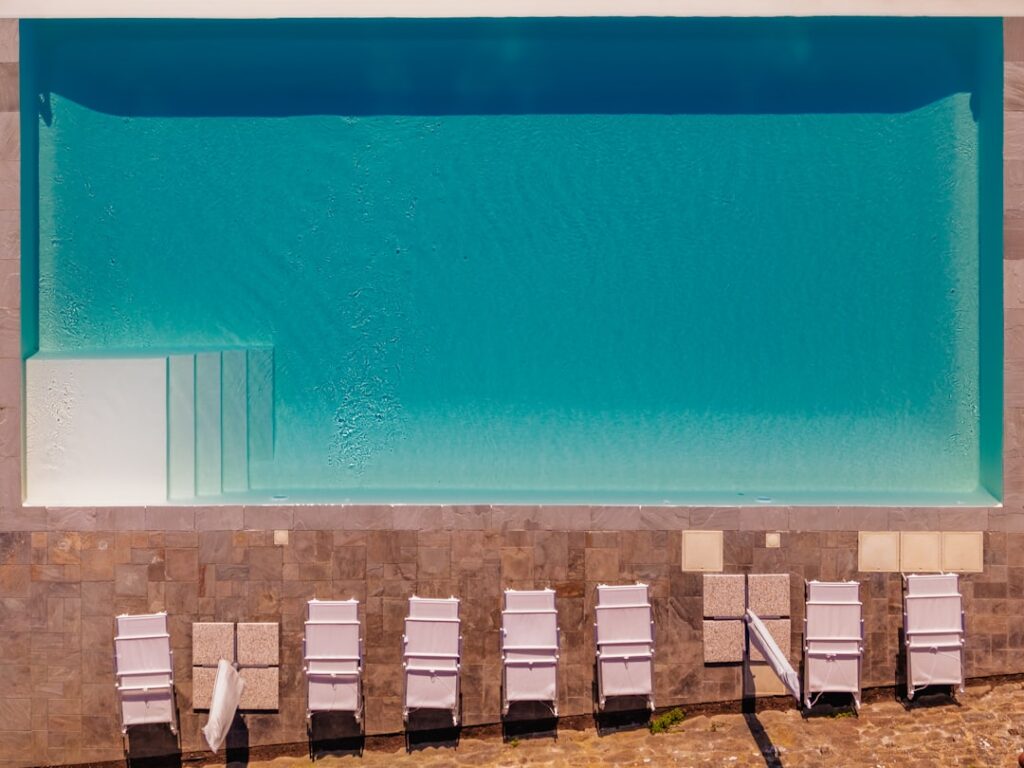
- Travertine: $18-$32 per sq ft installed. Stays cool underfoot, ideal for pool decks.
- Porcelain pavers (2cm thick): $20-$40 per sq ft installed. Modern, near-zero maintenance, brittle to point loads.
Base Prep: The Make-or-Break Step
Most failed hardscape installs trace back to subgrade. The visible surface gets the attention, but what you cannot see decides whether your patio is flat in 10 years or a wave of frost-heaved pavers.
For pavers and stone in the freeze-thaw zones (most of the US north of Atlanta), the formula is simple: 6-8 inches of compacted 3/4 inch minus crushed stone over native subgrade, with geotextile fabric between, topped with 1 inch of bedding sand or stone screenings. Compact in 2-inch lifts with a plate compactor at 4,000-5,000 lbs of force. Skip a lift and you get settling within two winters.
For poured concrete, use 4 inches of 4,000 psi mix with #4 rebar at 18 inches on center, or 6×6 W2.9 wire mesh held mid-slab on chairs. Saw-cut control joints within 24 hours of pour at 1/4 the slab thickness depth, every 8-10 feet.
Outdoor Hardscapes Cost Breakdown by Project
Realistic 2026 budgets for common projects, including base prep and labor.
- 200 sq ft concrete paver patio: $3,200-$5,800
- 400 sq ft natural stone patio: $9,500-$17,500
- 50 ft serpentine walkway in flagstone: $4,500-$8,000
- 30-inch tall x 25 ft segmental retaining wall: $4,800-$9,500
- Built-in fire pit (gas, 36 in dia): $2,800-$6,200
- Outdoor kitchen frame with countertop: $8,500-$25,000
Add 10-15 percent contingency. Hardscape projects almost always uncover at least one surprise: a buried oil tank, an old septic line, tree roots that need to be cut and treated, or unexpected rock requiring a hammer attachment.
Drainage Decisions Up Front
Water is the slow killer of outdoor hardscapes. Plan grading and drainage before laying a single block. The minimum slope away from the house is 1/4 inch per foot, or about 2 percent. Steeper at 1/2 inch per foot is better near foundations.
For walls over 24 inches tall, install a perforated drain pipe behind the wall, wrapped in geotextile, sloped at 1/8 inch per foot to daylight. Fill the rear void with 12 inches of drainage stone. Skipping this is the number one cause of segmental wall failure within 5-10 years.
Permeable paver systems (Belgard Aqua-Bric, Techo-Bloc Pavé) cost 15-25 percent more upfront but allow rainwater to infiltrate the subgrade. Many municipalities now offer stormwater fee credits for permeable installations.
DIY vs Hire a Pro
The honest line is around 250 sq ft and 2 vertical feet. Below that, a determined homeowner with a rented plate compactor and a strong back can build a respectable patio over a weekend or two. Above that, the math on tool rental, hauling material, and pacing yourself across multiple weekends rarely beats hiring a competent crew.
Walls over 30 inches tall almost always need engineering and permits in most jurisdictions. Hire a contractor with ICPI or NCMA certification rather than the cheapest bid. The middle quote on a hardscape project is usually the right one. The lowest is missing prep work or using inferior base material.
Pairing Materials Without Looking Busy
Limit yourself to two primary hardscape materials and one accent. A common winning combination: concrete pavers for the main patio field, natural stone for the seat wall caps, and crushed bluestone for the gravel border. Three materials, repeating across the design, reads intentional rather than chaotic.
Color temperature matters too. Warm-toned brick fights cool gray bluestone unless separated by lawn or planting. Sample 2×2 ft sections of any combination on-site for a week before committing to 400 sq ft of installed product.
Maintenance Reality
The lowest-maintenance hardscape is poured concrete with a sealed surface. The highest is mortared natural stone, which needs joint repointing every 7-10 years. Concrete pavers sit comfortably in the middle: re-sand the joints every 2-3 years with polymeric sand, pressure wash annually at 1,500 psi or less, and reseal every 5 years if you want the wet look.
Outdoor hardscapes age into character if you let them. A patio with a small stain or a worn corner often looks better at year 10 than at year 1. Plan for that in your material choice and you will enjoy the space far longer.