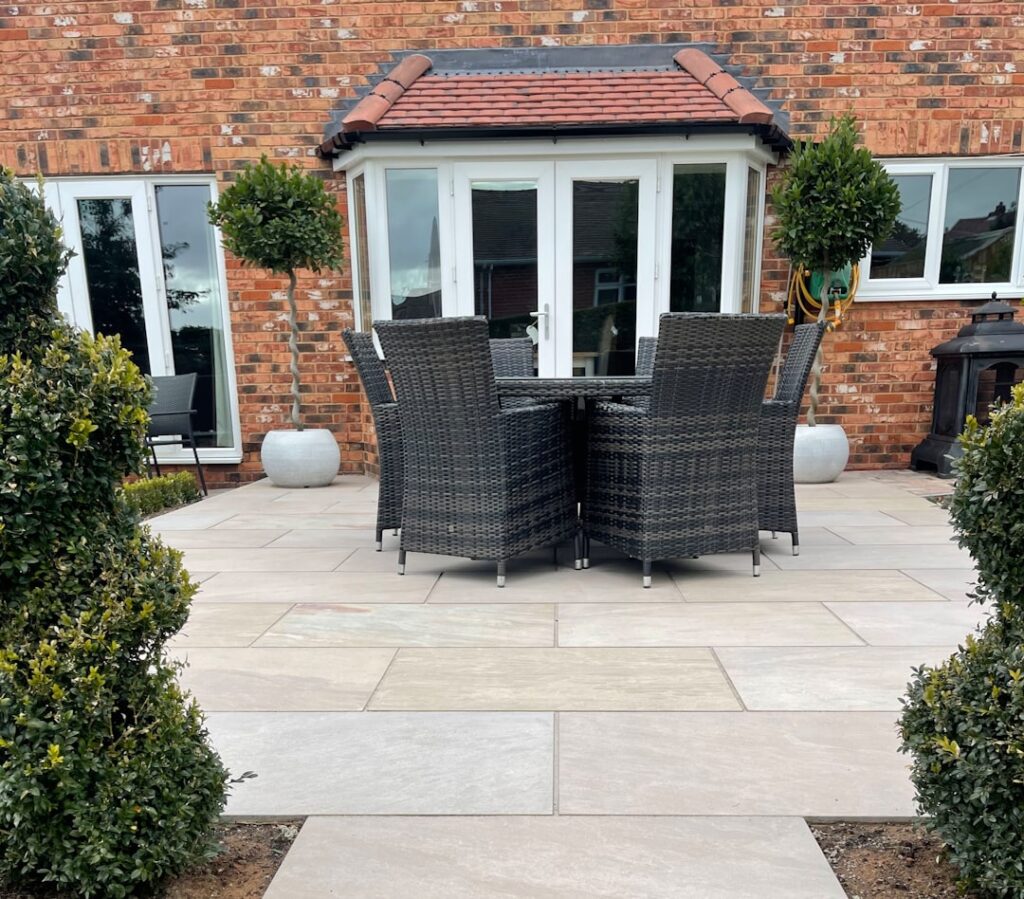
A backyard firepit transforms a flat slab of concrete into a year-round gathering space, but the difference between a $500 portable bowl and a $15,000 built-in installation reflects very different experiences. Designing an outdoor patio with firepit well means matching the patio size, paving material, fuel source, and seating layout to how you actually entertain. Done thoughtfully, the project adds resale value and creates the most-used outdoor space in the home.
Sizing the Patio Around the Firepit
The firepit anchors the design. Plan for at least 7 feet of clear space measured from the outside edge of the firepit to any seating, with 10 feet preferred for larger groups. A typical wood-burning firepit measures 36 to 48 inches across; gas pits range from 30 to 60 inches.
For a circular conversation patio with seating for six, the patio diameter should hit 18 to 22 feet. Rectangular patios accommodating outdoor dining plus firepit need at least 16 by 22 feet to keep both zones functional. Measure your actual furniture before finalizing, because oversized sectionals dramatically change the math.
Choosing the Right Fuel Source
Four fuel options dominate the market, each with cost, ambiance, and code implications.
- Wood-burning: Real flames, crackling sound, smoke. $300 to $4,000 installed. Restricted in many drought-prone counties.
- Natural gas: On-demand flame, no smoke, requires gas line. $2,500 to $10,000 installed.
- Propane: Portable, easier to retrofit. $400 to $5,000. Tank refills every 8 to 20 hours of use.
- Gel fuel or bioethanol: Tabletop and small features, no permit needed. $100 to $800.
Wood gives the most atmospheric experience but requires storing seasoned firewood and dealing with ash cleanup. Gas eliminates both issues but costs more upfront. Propane offers a middle ground for renters or anyone unsure about long-term commitment to a built-in feature.
Paving Materials for the Patio Surface
The patio under and around a firepit faces heat, embers, freeze-thaw cycles, and heavy furniture. Pick a material that handles all four. Concrete pavers, natural stone, and poured concrete remain the top three choices.
- Poured concrete: $6 to $15 per sq ft. Cheapest, but cracks over time and looks plain unless stamped.
- Concrete pavers: $13 to $25 per sq ft installed. Modular, replaceable, huge style range.
- Natural stone (flagstone, bluestone): $20 to $40 per sq ft installed. Premium look, irregular shapes.
- Brick pavers: $15 to $25 per sq ft. Classic, holds heat in winter.
- Travertine: $20 to $35 per sq ft. Stays cool barefoot, slip-resistant.
For a 400-square-foot patio, expect total paving costs between $2,400 (basic concrete) and $16,000 (high-end natural stone). Add 15 to 20 percent for base preparation and edge restraints, more if drainage or grade work is needed.
Built-In vs Portable Firepits
Built-in firepits become permanent features that anchor a patio design and add resale value. Built-in stone or paver firepits run $1,500 to $5,000 for wood-burning units and $4,000 to $12,000 for gas installations including the gas line trenching.
Portable firepits — Solo Stove, Tiki Brand, and dozens of cast iron and steel bowls — offer flexibility for $200 to $900. Move them seasonally, store under cover in winter, or take them camping. The drawback is they lack the integrated seating and visual anchoring of a true built-in. For a starter project or rental property, portable wins. For a forever home with a defined outdoor living plan, built-in earns its premium.
Seating Options That Match the Pit
The seating arrangement drives whether the firepit becomes a daily gathering spot or sits unused. Plan for at least three configurations.
- Adirondack chairs: $80 to $400 each. Comfortable for long sessions, easy to reposition.
- Outdoor sectional: $1,500 to $8,000. Conversation-friendly, demands dedicated cover.
- Built-in seat wall: $4,000 to $12,000 added during patio construction. Permanent, low-maintenance.
- Glider benches: $300 to $1,200. Gentle motion, good for older guests.
- Hammock or swing: $200 to $800. Off-axis from the fire for relaxation reading.
The most successful firepit patios mix two or three of these. A built-in seat wall on the far side balances movable Adirondacks on the near side, accommodating both intimate evenings and bigger parties.
Code Requirements and Permit Issues
Local fire codes regulate setbacks, fuel type, and structure height. Common requirements include:
- Minimum 10-foot clearance from any structure or wood fence
- 15 feet from overhanging trees or branches
- Permitted only on noncombustible surface (concrete, stone, gravel)
- Restrictions during regional fire bans, often May through October in the West
- Spark screens required on wood-burning models in some HOAs
Natural gas connections always require a permit and inspection. Pulling permits also matters for insurance; uninsured fire-related losses on unpermitted structures often get denied at claim time. Check the local building department and HOA covenants before purchasing materials.
Drainage and Base Preparation
A patio that puddles or heaves in winter ruins both the surface and the fire feature anchored to it. Proper base preparation runs 6 to 10 inches deep depending on soil and climate.
- Excavate to the required depth, accounting for the paver thickness
- Lay landscape fabric to separate base from native soil
- Compact 4 to 6 inches of crushed stone in 2-inch lifts
- Lay 1 inch of bedding sand or screenings, screeded flat
- Slope the entire patio at least 1/8 inch per linear foot away from the house
Skipping any of these steps trades upfront time for years of frost heave and settling. The base is the most important part of the project even though no one will ever see it once the pavers are down.
Year-Round Use and Accessories
A firepit alone extends the patio season by about two months on each end of summer. Add a few accessories and you push that to nearly year-round use in most climates. A pergola overhead with a retractable shade keeps the area cooler in summer and partially sheltered in light rain. String lights mounted on the pergola or surrounding trees make the area usable after dark.
Outdoor heaters supplement the firepit on truly cold nights. Patio-rated propane or natural gas heaters add 15 to 30 degrees of localized warmth for $150 to $800 per unit. Wind protection from a vinyl-coated panel or built-in stone half-wall reduces fire flicker and keeps embers contained on gusty evenings.
Total Cost Expectations
A complete outdoor patio with firepit project lands in three rough budget tiers. Entry-level builds with a 12-foot circular concrete paver patio and a portable wood firepit hit $3,500 to $6,000 DIY or $7,500 to $10,000 with a contractor. Mid-range projects featuring 300 to 400 square feet of paver patio, a built-in wood-burning pit, and basic landscaping run $12,000 to $25,000 installed. High-end designs combining natural stone paving, gas firepit, seat walls, pergola, and integrated lighting easily exceed $40,000.
Whatever the budget, prioritize base preparation and a solid fire feature. Both lock in for the lifetime of the patio, while furniture and accessories can upgrade over time as needs and tastes change. A well-designed outdoor patio with firepit pays back daily in the way it pulls family and friends outside.