Most regional hardwood brands fall into two camps — premium engineered lines that compete with Mirage and Mercier, or budget plywood-core products dressed up with shiny advertising. Parker flooring sits in the upper-mid tier, appealing to homeowners who want wide-plank European white oak without paying $14 per sq ft for a name on the box. Whether the brand is right for your project depends on the wear-layer thickness, finish, and how the floor will actually be used. This guide walks through the trade-offs without the showroom polish.
What the Parker Lineup Offers
The brand is best known for engineered European white oak in 5, 7, and 9-inch widths, with a 3-4 mm sawn-face wear layer over a multi-ply birch core. Plank lengths run 4-7 feet, with mixed-length cartons that mimic the random feel of site-laid solid hardwood. Surfaces include smooth, lightly wire-brushed, and heavily distressed, finished with hard-wax oil or aluminum-oxide UV polyurethane.
Color range covers natural blondes through smoked browns, with a few black and gray options for contemporary projects. The collections are not as deep as Mirage or DuChateau, but the standard SKUs cover 80% of typical residential needs.
Strongest Reasons to Specify It
- True 4 mm wear layer on premium SKUs — refinish-able once or twice over 30+ years
- Wide planks at moderate price — 7-inch boards at $7-$10 per sq ft material
- Hard-wax oil finishes available, easier to spot-repair than UV polyurethane
- European sourcing with FSC certification on most SKUs
- CARB Phase 2 compliant cores, low VOC emissions
Honest Drawbacks
The brand uses a multi-ply birch core, which is dimensionally stable but slightly heavier than HDF-core engineered products. Click-locking is reliable but the planks are denser than competitors, so installers used to lightweight engineered boards take longer per sq ft.
Color consistency between boxes is good but not perfect — always order 10-12% overage and dry-lay across multiple cartons to even out the visual. Some hand-distressed SKUs have heavier knot fills than the showroom samples suggest; if a clean European white oak look is critical, request larger samples (12×18 or 24×36) before committing.
Real-World Pricing
- Smooth or lightly brushed 5-inch engineered: $5.50-$7 per sq ft material
- Wire-brushed 7-inch wide plank: $7-$10 per sq ft material
- Hand-distressed or smoked 9-inch plank: $9-$13 per sq ft material
- Hard-wax oiled premium collections: $11-$15 per sq ft material
Installation by a qualified hardwood mechanic adds $4-$8 per sq ft for nail or staple-down over plywood, $5-$9 per sq ft for full-spread glue-down on concrete with a moisture-mitigation membrane. Floating click-lock installs run $3-$5 per sq ft labor but are not appropriate for large open-concept rooms over 1,000 sq ft without expansion breaks.
Best Rooms in the Home
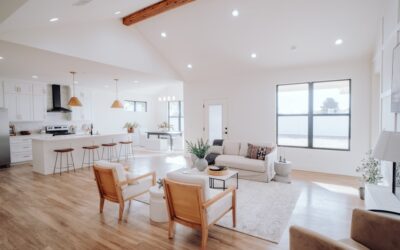
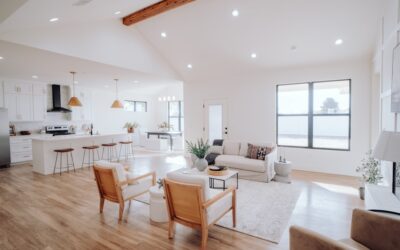
Living rooms, bedrooms, dining rooms, hallways, and home offices are the natural fit. Wide European white oak handles average residential traffic with grace and ages well — micro-scratches blend into the wire-brushed texture rather than standing out.
Kitchens are workable if the homeowner is realistic about water management — wipe spills promptly, place runners in front of the sink, and accept that any solid wood will dent under heavy cookware drops. Avoid full-bath installations and below-grade basements without professional moisture mitigation; engineered hardwood is more forgiving than solid, but it is not waterproof.
Subfloor Requirements
For nail-down installation, plywood subfloor must be 5/8 inch minimum, dry to under 12% moisture content, and flat to within 3/16 inch in 10 feet. For glue-down on concrete, slab moisture must test below 4 lbs per 1,000 sq ft per 24 hours by calcium chloride or 75% RH by ASTM F2170. Older slabs may need a Mapei Planiseal VS or Bostik MVP4 epoxy moisture barrier at $1.50-$3 per sq ft.
Acclimation is non-negotiable. Cartons must sit in the conditioned space for 5-7 days at 60-80°F and 35-55% relative humidity. Skipping this step is the most common cause of post-install gapping and cupping.
Finish Options and Care
UV-cured aluminum-oxide polyurethane resists daily wear best but is hard to spot-repair — a single bad scratch usually means refinishing the whole room. Hard-wax oil (Rubio Monocoat, Pallmann Magic Oil) lets you fix individual boards with a 12×12 inch pad and 30 minutes of work, but requires a yearly maintenance oil application in high-traffic areas.
- Sweep or vacuum (hard-floor setting) every 2-3 days
- Damp mop monthly with a hardwood-safe cleaner like Bona Pro Hardwood Cleaner
- Re-oil hard-wax finishes every 12-24 months in entries and kitchens
- Refinish UV poly floors at 12-18 years depending on traffic
Warranty and Service Considerations
Standard residential warranties run 25-30 years on the structural integrity of the engineered core and 15-25 years on the finish. Read the fine print on humidity range — most warranties require 35-55% RH year-round, which usually means whole-house humidification in northern winters. Document delivery condition with photos; warranty claims typically require evidence the planks were not damaged before installation.
Pet, Kid, and Furniture Considerations
European white oak in the 1,290-1,360 Janka range handles dog claws better than walnut or hickory but worse than ipe. For households with large dogs, choose a wire-brushed surface — the texture hides scratches that would stand out on a smooth-faced board. Trim nails monthly and place a runner in the high-traffic path between the back door and the kitchen. For kid zones, hard-wax oil shines because spot-repairs are realistic at the home level: a felt sanding pad and 30 minutes restores most damaged areas without calling a refinisher.
Furniture-leg felts are non-negotiable. Replace them every six months because grit embeds in the felt and turns it into sandpaper over time. Use wide rolling caster cups under office chairs; standard plastic casters cut grooves in even the hardest oak within a year. For dining chairs, glide-style felts beat round felts because they cover more contact area and stay attached longer.
Final Buying Recommendation
If the budget allows $7-$10 per sq ft material plus quality installation, the brand delivers a wide European white oak floor that looks much more expensive than it costs. Pair it with hard-wax oil for forgiving long-term care, or UV poly if you have pets and want maximum scratch resistance. Order generous overage, acclimate properly, and confirm subfloor moisture before unboxing — those three steps determine whether the floor lives up to the showroom promise or becomes a callback story.
Prefer to explore on your own?
See how new flooring looks in your actual room in seconds — free, no signup.
Try the free Floor Studio →