Few flooring options carry the visual drama and timeless sophistication of parquet flooring. Made from individual pieces of wood arranged in geometric patterns, a parquet floor transforms any room into a statement space. Whether you have seen it gracing the halls of a French chateau or a sleek modern loft, parquet wood flooring has remained one of the most sought-after choices for homeowners who value craftsmanship and design.
In this comprehensive guide, we cover everything you need to know about parquet flooring—from the different types and patterns available to cost per square foot, installation methods, maintenance tips, and the best rooms to install it in. If you are weighing your options between hardwood flooring and parquet, or trying to decide between herringbone and chevron layouts, you will find your answers here.
- What Is Parquet Flooring?
- Types of Parquet Flooring
- Parquet Types Compared
- Popular Parquet Floor Patterns
- Parquet Flooring Cost
- Installation Methods
- Pros and Cons of Parquet Flooring
- Parquet Flooring Maintenance
- Best Rooms for Parquet Flooring
- Modern vs. Traditional Parquet Flooring
- How to Choose the Right Parquet Flooring
- Frequently Asked Questions About Parquet Flooring
- Final Thoughts
What Is Parquet Flooring?
Parquet flooring is a style of wood flooring composed of small strips, blocks, or tiles of wood arranged in repeating geometric patterns. The word “parquet” comes from the French parqueterie, meaning a small enclosed space, and the technique dates back to 17th-century France where it replaced marble flooring in the Palace of Versailles.
Unlike standard plank hardwood flooring that runs in a single direction, parquet floor tiles use angular and interlocking arrangements to create visual interest. Each piece is precision-cut and fitted together to form patterns such as herringbone, chevron, basketweave, and the ornate Versailles panel.
Modern parquet wood flooring is available in solid hardwood, engineered wood, and even laminate versions, making it accessible across a wide range of budgets and project types.
Types of Parquet Flooring
Understanding the different types of parquet flooring is the first step toward choosing the right product for your home. Each type has distinct characteristics in terms of durability, installation complexity, and price.
Solid Wood Parquet
Solid wood parquet is milled from a single piece of hardwood, typically oak, walnut, maple, or cherry. Each block or strip is usually 3/4 inch thick and can be sanded and refinished multiple times over its lifespan, which often exceeds 50 years with proper care.
Because solid wood expands and contracts with changes in humidity, it is best suited to ground-level rooms with stable climate control. It is not recommended for basements or over concrete subfloors without a moisture barrier. If you appreciate the longevity of real hardwood, solid parquet delivers unmatched authenticity.
Engineered Wood Parquet
Engineered parquet features a top veneer of real hardwood bonded to multiple layers of plywood or high-density fiberboard. This cross-layered construction makes it far more dimensionally stable than solid wood, meaning it resists warping and cupping when exposed to moisture fluctuations.
Engineered wood flooring can be installed over concrete, over radiant heating systems, and in below-grade spaces—all situations where solid wood would be risky. The top veneer can typically be refinished one to three times depending on its thickness. For most homeowners, engineered parquet strikes the ideal balance between beauty and practicality.
Laminate Parquet
Laminate flooring that mimics parquet patterns uses a high-resolution photographic layer over a dense fiberboard core. While it does not contain real wood, modern laminate parquet has become remarkably convincing and offers significant advantages in terms of cost and maintenance.
Laminate parquet floor tiles are scratch-resistant, moisture-resistant, and simple to install with click-lock mechanisms. They cannot be refinished, but at a fraction of the price of real wood, they make parquet floor patterns accessible to budget-conscious renovators.
Parquet Types Compared
| Feature | Solid Wood Parquet | Engineered Wood Parquet | Laminate Parquet |
|---|---|---|---|
| Material | 100% hardwood | Hardwood veneer over plywood core | Photographic layer over HDF core |
| Thickness | 3/4 inch | 3/8 – 3/4 inch | 6 – 12 mm |
| Cost per Sq Ft | $8 – $20 | $6 – $15 | $2 – $6 |
| Lifespan | 50–100 years | 25–50 years | 10–25 years |
| Refinishing | Multiple times | 1–3 times | Not possible |
| Moisture Resistance | Low | Moderate | Moderate to High |
| Installation | Nail-down or glue-down | Glue-down, float, or nail-down | Click-lock floating |
| Subfloor Flexibility | Wood subfloor only | Wood, concrete, radiant heat | Almost any flat surface |
| Best For | Heritage homes, long-term investment | Most homes, versatile projects | Budget renovations, rentals |
Popular Parquet Floor Patterns
The defining characteristic of a parquet floor is its pattern. The arrangement of the wood pieces is what elevates parquet from ordinary flooring to a design feature. Here are the most popular parquet floor patterns you will encounter.
Herringbone
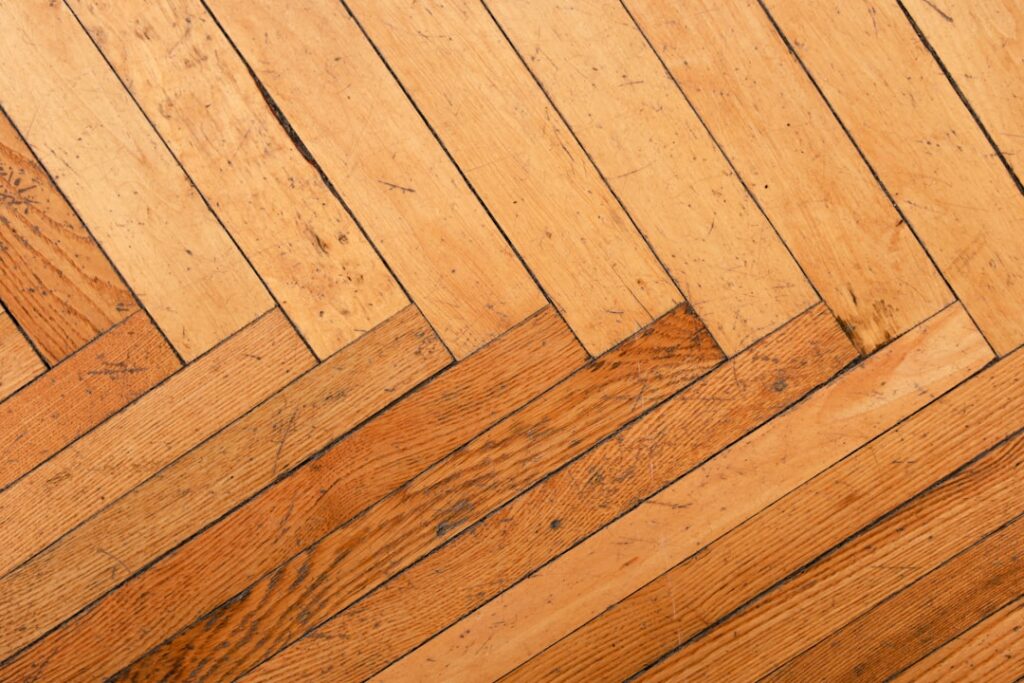
Herringbone flooring is arguably the most recognizable parquet pattern. Rectangular planks are laid at 90-degree angles to one another, creating a continuous zigzag that draws the eye along the length of the room. The pattern gets its name from its resemblance to the skeleton of a herring fish.
Herringbone works beautifully in both traditional and contemporary interiors. It adds a sense of movement and elongation to a space, making it particularly effective in hallways, living rooms, and entryways.
Chevron
Chevron is often confused with herringbone, but the difference is important. In a chevron pattern, each plank is cut at an angle (typically 45 or 60 degrees) so the ends meet in a clean, continuous V-shape. This creates a sharper, more uniform zigzag compared to the staggered look of herringbone.
Chevron parquet tends to feel more formal and modern. It requires more precise cutting during manufacturing, which can make it slightly more expensive than herringbone, but the result is a crisp, tailored appearance.
Basketweave
The basketweave pattern arranges pairs or groups of wood strips in alternating horizontal and vertical squares, mimicking the interlocking pattern of a woven basket. Some versions include a small contrasting square at each intersection for added visual interest.
Basketweave parquet has a classic, understated elegance. It was extremely popular in mid-century American homes and has seen a resurgence in recent years among designers seeking a retro aesthetic with character.
Versailles
Named after the Palace of Versailles where it originated, this is the most elaborate and luxurious of all parquet floor patterns. Versailles panels are large, pre-assembled squares featuring interlocking diagonal and woven arrangements bordered by a frame.
Due to the complexity of the design and the amount of wood required, Versailles parquet is the most expensive option. It is best suited to grand living rooms, dining rooms, and formal spaces where it can serve as the centerpiece of the interior design.
Other Notable Patterns
Beyond the four major patterns, parquet flooring also comes in brick bond (offset rectangles), diagonal, and custom geometric designs. Some manufacturers offer modular parquet floor tiles that combine multiple patterns within a single panel, simplifying installation while preserving the intricate look.
Parquet Flooring Cost
One of the most common questions homeowners ask is about parquet flooring cost. The total price depends on the type of wood, the complexity of the pattern, and whether you hire a professional installer or attempt a DIY project.
Material Cost per Square Foot
- Laminate parquet: $2 – $6 per sq ft
- Engineered wood parquet: $6 – $15 per sq ft
- Solid wood parquet: $8 – $20 per sq ft
- Versailles panels: $15 – $40+ per sq ft
Installation Cost
Professional installation of parquet flooring typically runs $4 to $10 per square foot for standard patterns like herringbone or basketweave. More complex designs like Versailles can cost $10 to $18 per square foot due to the additional labor and precision required.
Total Project Cost Example
For a 300-square-foot living room using engineered herringbone parquet at $10 per sq ft for materials and $6 per sq ft for installation, you would budget approximately $4,800. Adding subfloor preparation, underlayment, and trim work could bring the total to $5,500–$6,500.
While this is higher than standard plank hardwood, the visual impact and property value increase often justify the premium for homeowners planning to stay in their homes long-term.
Installation Methods
How your parquet floor is installed depends on the type of product, the subfloor material, and the pattern. Here are the three primary methods.
Glue-Down Installation
Glue-down is the most common method for parquet flooring, especially for intricate patterns. A flooring adhesive is spread over the subfloor, and each piece is pressed into place. This method provides a very stable, quiet floor and is suitable for both solid and engineered parquet over wood or concrete subfloors.
Nail-Down Installation
Nail-down installation uses a flooring nailer to secure each piece through its tongue into a wooden subfloor. This is primarily used for solid wood parquet and provides an extremely secure bond. It is not suitable for concrete subfloors.
Floating Installation
Floating installation relies on click-lock or tongue-and-groove connections between pieces, with no attachment to the subfloor. The floor “floats” over an underlayment pad. This method is standard for laminate parquet and some engineered products. It is the fastest and most DIY-friendly installation option.
Professional vs. DIY
While floating laminate parquet can be a manageable DIY project, glue-down and nail-down installations of patterned parquet are best left to experienced flooring professionals. The precision required to align geometric patterns correctly—especially at walls, doorways, and transitions—makes professional installation well worth the investment.
Pros and Cons of Parquet Flooring
Advantages
- Stunning visual appeal: Geometric patterns create a dramatic focal point in any room.
- Timeless style: Parquet has been admired for centuries and never goes out of fashion.
- Increases property value: High-quality parquet floors are a selling point for potential buyers.
- Variety of patterns and woods: Endless customization options to match any interior style.
- Refinishing potential: Solid and engineered parquet can be sanded and refinished to look brand new.
- Durability: Hardwood parquet, when maintained, can last 50 years or more.
Disadvantages
- Higher cost: Both materials and installation are more expensive than standard plank flooring.
- Complex installation: Pattern alignment demands skilled labor, increasing project cost and timeline.
- Susceptible to moisture: Solid wood parquet can warp or cup in humid or damp environments.
- Scratching and denting: Softer woods are vulnerable to damage from furniture and foot traffic.
- Fading: Prolonged sun exposure can cause uneven discoloration over time.
- Noise: Without proper underlayment, parquet can produce hollow sounds underfoot.
Parquet Flooring Maintenance
Proper maintenance protects your investment and keeps your parquet floor looking its best for decades. The good news is that parquet does not require any special cleaning products or equipment.
Daily and Weekly Care
- Sweep or vacuum regularly using a soft-bristle attachment to remove dust and grit that can scratch the finish.
- Wipe spills immediately with a dry or slightly damp cloth.
- Use a wood-specific floor cleaner diluted according to the manufacturer’s instructions for weekly mopping. Avoid excess water.
Preventive Measures
- Place felt pads under all furniture legs to prevent scratches and dents.
- Use doormats at all exterior entrances to trap dirt and grit before it reaches the floor.
- Maintain indoor humidity between 35% and 55% to minimize wood expansion and contraction.
- Use curtains or UV-protective window film in rooms with heavy sun exposure to prevent fading.
- Avoid wearing high heels or cleats on parquet surfaces.
Refinishing
Solid wood and engineered parquet can be refinished when the surface shows significant wear. The process involves sanding down the existing finish, repairing any damaged pieces, and applying a new coat of stain and polyurethane. Most parquet floors benefit from refinishing every 10 to 15 years, depending on traffic levels.
Best Rooms for Parquet Flooring
Not every room is equally suited to parquet. Here is a breakdown of where parquet wood flooring performs best and where you might want to consider alternatives.
Ideal Rooms
- Living rooms: The showpiece room of the home benefits most from the visual impact of parquet floor patterns.
- Dining rooms: Parquet adds formality and elegance to dinner gatherings.
- Entryways and hallways: Herringbone and chevron patterns create a striking first impression and visually elongate narrow spaces.
- Bedrooms: Low traffic and stable conditions make bedrooms an excellent choice for parquet.
- Home offices: A parquet floor elevates a workspace and holds up well under rolling desk chairs when a chair mat is used.
Rooms to Avoid or Use Caution
- Bathrooms: High moisture levels make bathrooms a poor choice for solid wood parquet. Engineered or laminate parquet with waterproof cores may work in a powder room.
- Kitchens: Frequent spills and heavy appliance traffic make kitchens challenging. Engineered parquet with a durable finish is acceptable if you commit to wiping up spills promptly.
- Basements: Below-grade moisture issues rule out solid wood. Engineered parquet over a vapor barrier can work in a finished basement with proper climate control.
- Laundry rooms: The risk of water leaks makes parquet inadvisable in laundry areas.
Modern vs. Traditional Parquet Flooring
Parquet flooring bridges the gap between historical charm and contemporary design better than almost any other flooring material. Understanding the difference between modern and traditional approaches helps you make the right choice for your home.
Traditional Parquet
Traditional parquet evokes old-world craftsmanship. It typically features warm-toned woods like oak, walnut, or mahogany in classic patterns such as Versailles, basketweave, or intricate herringbone. Floors are often finished with oil or wax for a rich, matte appearance. Traditional parquet suits period homes, formal interiors, and spaces where you want a sense of history and grandeur.
Modern Parquet
Modern parquet takes the geometric principles of traditional designs and reinterprets them with contemporary sensibilities. Lighter wood tones (white oak, ash, maple), wider planks, matte or ultra-matte finishes, and simplified patterns like oversized herringbone or chevron define the modern approach. Some designers also experiment with mixed-width pieces, grey-washed tones, and even black-stained parquet for dramatic, minimalist interiors.
Engineered wood flooring has been a driving force behind modern parquet, offering wider and longer planks that were difficult to achieve with solid wood. The result is a cleaner, more open look that pairs well with Scandinavian, industrial, and mid-century modern design styles.
Blending Both Worlds
Many homeowners today choose a middle path: a classic pattern like herringbone executed in a contemporary finish such as white-washed oak. This approach delivers the geometric interest of traditional parquet with the light, airy feel of modern interiors. It is one of the most popular trends in residential flooring design and shows no signs of fading.
How to Choose the Right Parquet Flooring
With so many options available, narrowing down your choice can feel overwhelming. Use these guiding questions to simplify the decision.
- What is your budget? If cost is the primary concern, laminate parquet delivers the look without the price tag. For a mid-range investment, engineered parquet offers the best value. For a lifetime floor, solid wood is the premium choice.
- Where will it be installed? Ground-level living areas suit all types. Basements and concrete subfloors require engineered or laminate. Rooms with moisture risk call for laminate or waterproof engineered products.
- What pattern do you want? Herringbone and chevron are the most versatile. Basketweave suits traditional and retro spaces. Versailles is reserved for grand, formal rooms.
- Do you want to refinish later? If longevity and refinishing matter, choose solid or thick-veneer engineered parquet.
- Who will install it? DIY-friendly projects favor click-lock laminate or floating engineered options. Complex patterns in solid or glue-down engineered require professional installers.
Frequently Asked Questions About Parquet Flooring
Is parquet flooring outdated?
Not at all. Parquet flooring has experienced a significant revival in recent years. While the orange-toned, thin-strip parquet of the 1970s may feel dated, modern parquet wood flooring in herringbone and chevron patterns with contemporary finishes is one of the hottest trends in interior design. Updated wood tones, wider planks, and matte finishes give parquet a thoroughly modern look.
How much does parquet flooring cost compared to regular hardwood?
Parquet flooring cost is generally 20% to 40% higher than standard plank hardwood flooring of the same wood species. The premium comes from the additional cutting and manufacturing required to create patterned pieces, as well as higher installation labor costs due to the complexity of laying geometric designs. Budget $10 to $25 per square foot installed for engineered parquet and $14 to $30 for solid wood parquet.
Can parquet flooring be installed over underfloor heating?
Yes, but only engineered wood parquet and laminate parquet are suitable for use over radiant heating systems. The dimensional stability of engineered construction prevents the gaps and warping that solid wood would experience from the heat cycling. Always check the manufacturer’s specifications and ensure the surface temperature does not exceed the recommended maximum, typically around 80 to 85 degrees Fahrenheit.
How long does parquet flooring last?
Solid wood parquet can last 50 to 100 years with proper maintenance and periodic refinishing. Engineered parquet typically lasts 25 to 50 years. Laminate parquet has a shorter lifespan of 10 to 25 years since it cannot be refinished. In all cases, controlling humidity, preventing scratches, and addressing damage promptly will maximize the floor’s useful life.
What is the difference between herringbone and chevron parquet?
Both herringbone and chevron are zigzag patterns, but they differ in how the planks meet. In herringbone, rectangular planks are laid at 90-degree angles with staggered ends, creating a broken zigzag. In chevron, planks are cut at an angle so the ends align perfectly into a continuous V-shape. Chevron looks sharper and more uniform, while herringbone has a more traditional, textured appearance.
Final Thoughts
Parquet flooring remains one of the most beautiful and rewarding flooring choices available to homeowners. Whether you opt for the warmth of solid oak herringbone, the practicality of engineered chevron, or the affordability of laminate parquet floor tiles, you are investing in a floor that adds character, elegance, and lasting value to your home.
The key to a successful parquet project is matching the right type and pattern to your room, budget, and lifestyle. Take the time to order samples, consult with a professional installer, and plan your layout carefully. A well-executed parquet floor is a work of art that you will enjoy every single day.
Prefer to explore on your own?
See how new flooring looks in your actual room in seconds — free, no signup.
Try the free Floor Studio →