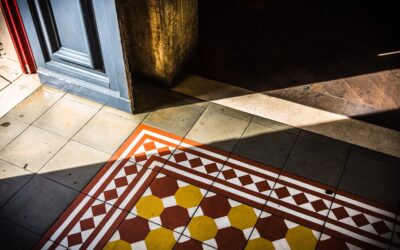
Parquet tile gives you the warm, geometric look of classic wood parquet flooring without some of the headaches that come with solid wood. When homeowners ask me about parquet tile, they usually want that herringbone or basketweave pattern they saw in an old French apartment, but they want it in a bathroom or kitchen where real hardwood would swell and cup. Porcelain and ceramic versions solve that problem cleanly.
Part of our Tile & Grout guide — explore the full guide →
What Parquet Tile Actually Is
Traditional parquet is small blocks of hardwood arranged in repeating geometric patterns. Parquet tile borrows that visual language and reproduces it in porcelain, ceramic, or luxury vinyl. Some products are single large-format tiles printed with a full herringbone or chevron pattern, so one 24-inch square already looks like a dozen wood strips. Others are individual plank-shaped tiles, roughly 4 by 24 inches, that you lay by hand into the pattern you want.
The printed-pattern versions install fast because you set fewer pieces. The individual-plank versions give you flexibility and a more convincing result up close, but they take more layout time and more cuts. Neither one moves with humidity the way real wood does, which is the whole selling point.
Popular Parquet Patterns
The pattern you pick drives the entire mood of the room. Here are the ones I install most:
- Herringbone: Rectangles set at a 90-degree angle in a broken zigzag. The most requested pattern and the most forgiving for beginners.
- Chevron: Planks cut at 45 degrees so the ends meet in a continuous point. Sharper and more formal, but every cut has to be exact.
- Basketweave: Pairs of pieces alternating horizontal and vertical, mimicking woven strips. Great for a vintage or period look.
- Versailles panel: An ornate square within a square, historically the sign of a high-end floor.
- Brick or straight-lay: The simplest arrangement, offset like a masonry wall.
Design and Color Considerations
Wood-look parquet tile comes in almost every species tone: pale white oak, honey-toned maple, gray-washed driftwood, and deep walnut. Lighter tones open up a small room and hide dust. Darker tones read as luxurious but show every crumb and pet hair.
Grout color matters more than people expect. Match the grout to the tile and the pattern reads as a seamless wood floor. Contrast the grout and you emphasize the geometry, which can look intentional and modern or busy and cheap depending on the room. For most wood-look parquet, I steer clients toward a grout within one shade of the tile body and a joint no wider than one-eighth inch.
Where to Use Parquet Tile
Because it is tile, you can put it almost anywhere a standard porcelain or ceramic goes. That means kitchens, bathrooms, mudrooms, laundry rooms, entryways, and basements are all fair game, including spots where solid hardwood would be a bad idea.
It pairs beautifully with in-floor radiant heat, since porcelain conducts warmth efficiently and won’t dry out and crack the way wood can over a heating system. In a full bath, choose a tile with a slip rating of at least a DCOF of 0.42 for wet areas. For a covered porch or three-season room, confirm the product is rated for exterior or freeze-thaw use before you commit.
Buying Considerations
Before you order, work through this checklist so you don’t get surprised at delivery:
- PEI rating: For floors, buy PEI 3 or higher; PEI 4 for busy kitchens and entries.
- Rectified edges: Rectified tiles have precisely cut edges that allow tight grout lines, which sells the wood illusion. Non-rectified needs wider joints.
- Pattern count: Ask how many unique face variations the product has. More variations mean fewer obvious repeats across the floor.
- Overage: Order 15 to 20 percent extra for herringbone and chevron because diagonal cuts create more waste than a straight lay.
- Lot numbers: Buy all your tile from one production lot so shade and caliber match.
Installation
Parquet tile is a more demanding install than a plain grid, so budget accordingly. The subfloor has to be flat within one-eighth inch over 10 feet; any hump or dip shows up as lippage where the angled pieces meet. Most pros apply an uncoupling membrane or cement backer board over wood subfloors to prevent cracks.
Dry-lay the pattern first. Snap your reference lines, find the true center of the room, and set a few rows loose before you ever mix thinset. For herringbone, work off a 45-degree guide line rather than the walls, because rooms are rarely square. Back-butter large-format wood-look planks to guarantee full coverage, and use a leveling clip system to control lippage on the long, narrow pieces. A pro typically charges $8 to $15 per square foot for labor on a patterned install, roughly double a straight-lay job.
Care and Maintenance
This is where tile earns its keep. Sweep or dry-mop to keep grit off the surface, then damp-mop with a pH-neutral cleaner. Skip oil soaps and steam mops on a regular basis; excessive steam can degrade grout over time. Seal cement-based grout after installation and reseal every year or two in wet rooms to keep it from staining.
Because the color is baked into porcelain, it won’t fade in sunlight, won’t scratch through to a different color, and never needs refinishing. A wood floor might need sanding every decade; a parquet tile floor just needs the grout kept clean.
Pros and Cons
Weigh the trade-offs before you commit your budget:
- Pros: Waterproof, scratch-resistant, works over radiant heat, never needs refinishing, huge pattern selection, and delivers a wood look in wet rooms.
- Cons: Harder and colder underfoot than wood, higher labor cost for patterns, grout lines to maintain, and a hollow sound compared with solid hardwood.
Cost Per Square Foot
Here is a realistic budget range in USD for materials alone:
- Entry-level ceramic parquet-look: $2 to $4 per sq ft.
- Mid-grade porcelain wood-look plank: $4 to $8 per sq ft.
- Premium rectified porcelain, large-format patterns: $8 to $14 per sq ft.
- Luxury vinyl parquet tile: $3 to $7 per sq ft.
Add $8 to $15 per square foot for patterned installation labor, plus setting materials, membrane, and grout. All-in, a professionally installed herringbone porcelain floor commonly lands between $14 and $28 per square foot.
Frequently Asked Questions
Is parquet tile the same as parquet wood?
No. Real parquet is hardwood blocks. Parquet tile reproduces the pattern in porcelain, ceramic, or vinyl, so it is waterproof and far more durable in wet areas.
Can I install parquet tile myself?
A confident DIYer can handle a straight or basketweave lay. Herringbone and chevron are unforgiving and I’d hire a pro unless you have real tile experience and a wet saw.
Does parquet tile add resale value?
A well-executed wood-look tile floor reads as an upgrade and appeals to buyers who want low-maintenance flooring, especially in kitchens and baths.
How long does parquet tile last?
Porcelain parquet tile can last 50 years or more with basic care. The grout, not the tile, is usually the first thing that needs attention.
Is parquet tile good over radiant heat?
Yes, it’s one of the best choices for a heated floor. Porcelain transfers warmth efficiently and stays dimensionally stable, so you won’t see the gapping and cupping that plague wood over radiant systems. Just follow the manufacturer’s ramp-up schedule after installation.
What size parquet tile should I choose?
For a printed full-pattern look, larger 18-inch or 24-inch squares cover ground fast and suit open rooms. For a hand-laid herringbone, narrow planks around 3 to 6 inches wide and 18 to 24 inches long give the most authentic proportions in an average kitchen or bath.
For most homeowners chasing that timeless geometric floor, parquet tile is the practical answer: the classic look of parquet with the durability of porcelain, ready for any room in the house.
Prefer to explore on your own?
See how new flooring looks in your actual room in seconds — free, no signup.
Try the free Floor Studio →