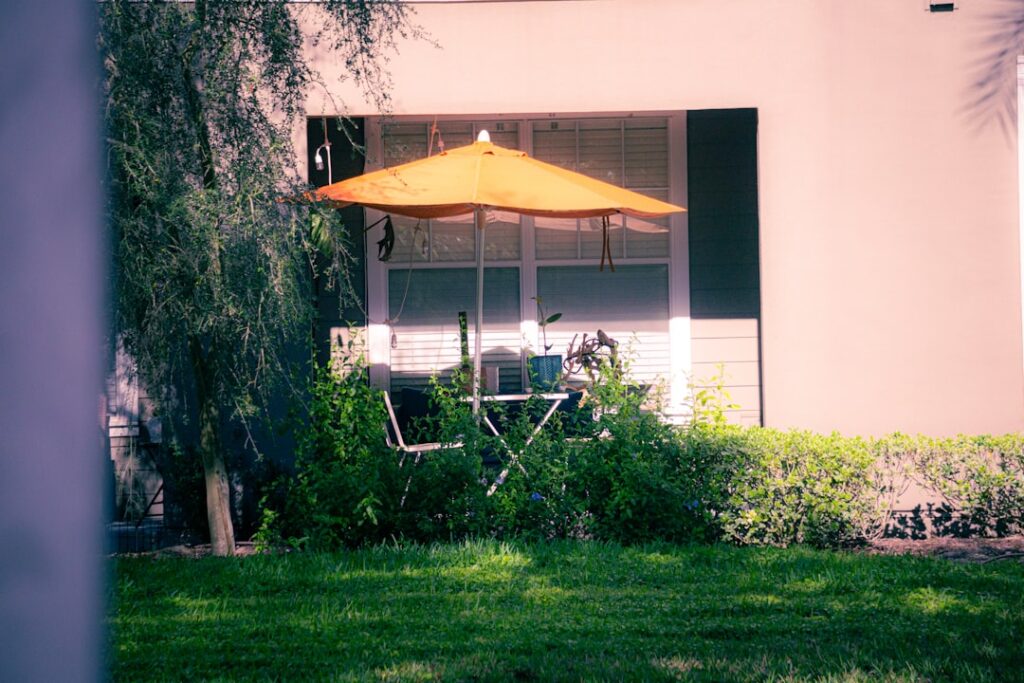
A pergola or covered porch blocks sun from above and does nothing about the low afternoon glare pouring in from the side. Patio blinds — exterior-rated roller shades that mount to the openings of a pergola, porch, or gazebo — solve the problem the roof can’t, cutting side glare by up to 90% and dropping the temperature under a canopy by 10 to 15°F. One clarification up front: this guide covers outdoor blinds for patio structures. If you’re shopping for window treatments on the sliding door itself, that’s an interior product with different rules — see our guide to patio door blinds for those. Everything below lives outside in the weather.
- What Makes a Blind Outdoor-Rated
- The Main Types
- Outdoor Roller Shades
- Cordless Spring-Assist Shades
- Zip-Track Shades
- Bamboo and Woven Exterior Blinds
- Sizing and Measuring
- Manual vs Motorized
- What Patio Blinds Actually Do for Comfort
- Installation and Care
- Choosing Fabric Color
- Budget Summary
- Bottom Line
What Makes a Blind Outdoor-Rated
Exterior blinds look like oversized indoor roller shades but share almost no components. The fabric is the giveaway: outdoor shades use PVC-coated polyester or woven olefin mesh that shrugs off UV, mildew, and rain, where an indoor shade fabric would fade in one summer and grow mold by the second. Hardware is powder-coated aluminum or stainless steel instead of painted stock, and quality units add side-retention systems — zippered tracks or wire guides — that keep the fabric from flogging in wind. Warranties tell the story too: reputable outdoor shade fabric carries 5- to 10-year UV warranties; indoor fabric hung outside carries none.
Openness rating is the key spec. Mesh fabrics are graded by the percentage of light passing through: 1% openness blocks nearly all glare and gives strong privacy but traps some breeze; 5% is the popular middle ground — you keep your view out, neighbors can’t easily see in during daylight, and airflow stays comfortable; 10% suits view-priority installs like a lake-facing porch. For rain protection choose 0% (solid PVC), understanding that a solid panel catches wind like a sail and demands a track system.
The Main Types
Outdoor Roller Shades
The default choice: a fabric panel on a roller tube inside a cassette mounted to the header beam. Widths run 4 to 16 feet from a single tube, drops to 10 feet. Manual crank versions cost $120 to $400 per opening in common sizes; a 10-foot-wide motorized unit runs $400 to $1,200. Exterior-grade cassettes matter — an exposed roll collects wasp nests and leaf litter, so pay the extra $50 for a closed headbox if the shade lives under an open-rafter pergola.
Cordless Spring-Assist Shades
Cordless outdoor shades use a spring tube: pull the bottom bar down to any height and it holds; nudge and it retracts. No dangling cords means nothing to whip in the wind and nothing for kids to reach — the same child-safety logic that pushed indoor blinds cordless. They top out around 8 feet wide and are the best value at $100 to $250 for a typical 6×6 pergola bay.
Zip-Track Shades
The premium tier. The fabric’s welded edges run inside zippered side channels bolted to the posts, sealing the opening completely. Zip systems hold fabric taut in 40 to 60 mph winds, block insects, and, with solid PVC fabric, effectively glass in a porch for three-season use. Expect $900 to $2,500 per opening installed. If you’re in a mosquito-heavy or gusty region, this is the category that actually works.
Bamboo and Woven Exterior Blinds
Roll-up bamboo blinds cost $30 to $90 and look right on a casual porch, but treat them as consumable — two to four seasons before sun and moisture take them. Fine for renters; a poor foundation for a permanent setup.
Sizing and Measuring
Measure each opening at the header, not the floor — posts rack out of plumb more than you’d think, and a shade sized off the bottom dimension can miss the mounting face by an inch at the top. Standard practice:
- Face-mount to the beam with the cassette spanning the full opening width plus 2-4 inches of overlap per side for glare control
- For zip tracks, order to exact post-to-post inside dimension — the installer trims channels on site
- Keep single-shade widths under 12 feet where wind is a factor; split a 16-foot opening into two shades with a center support and both will outlive one giant panel
- Drop length: order to about 1 inch above the deck so the bottom bar never sits in standing water
Manual vs Motorized
Crank operation is fine for one or two openings. Past that, cranking five shades every time weather rolls in gets old, and motorization earns its price. Hardwired 110V motors suit new pergola builds where you can fish wire through a post; rechargeable lithium tube motors ($150-$300 upcharge per shade) retrofit anywhere and run a season per charge; solar-panel motor kits add about $80 and remove charging entirely. The killer app is a wind sensor: a $100-$200 anemometer that auto-retracts every shade when gusts pass a threshold you set — typically 25 mph for open rollers. Motorized shades destroyed by wind while homeowners were away is the single most common warranty dispute in this category, and most manufacturers void coverage for wind damage, so the sensor is cheap insurance.
What Patio Blinds Actually Do for Comfort
Numbers from shade-industry testing are consistent: a 5% openness mesh on the western opening of a pergola cuts radiant heat gain through that opening by 80-90% and lowers perceived temperature in the seating zone 10-15°F during the 4-7 p.m. glare window. Furniture fade slows dramatically — UV transmission through quality mesh runs under 10%. Wind reduction is real but partial with open-edge shades (about half) and near-total with zip tracks. None of this requires enclosing every side; most patios need shades on one or two sun-facing openings only, which keeps cost down and preserves the open feel.
Installation and Care
DIY installation of a cassette roller shade is a one-hour job per opening: lag the brackets into the header beam (into solid wood or aluminum structure, never fascia trim alone), snap in the cassette, set the limit stops. Zip-track systems are worth professional installation — channel alignment tolerances are tight, and a channel out of parallel by a quarter inch causes fabric creep and jams. Maintenance is minimal: hose the mesh quarterly, brush the tracks each spring, and retract shades for storms and for winter in snow country. Retracted inside its cassette, good outdoor fabric lasts 8 to 12 years.
Choosing Fabric Color
Color changes how a mesh shade performs, not just how it looks. Dark fabrics — charcoal, black, deep bronze — give the best view-through and glare control because they absorb light rather than diffusing it; standing inside, a 5% charcoal mesh nearly disappears. Light fabrics reflect more solar heat off the patio but glow under direct sun and haze the view. The practical compromise most installers recommend: dark mesh on view-facing openings, light or dual-sided fabric where heat rejection matters more than sight lines, and always order a fabric sample card before committing — the same 5% openness reads completely differently in charcoal versus linen. Match the cassette and bottom-bar powder coat to your pergola frame, not the fabric; hardware in bronze or black hides dirt that white hardware advertises.
Budget Summary
- Bamboo roll-ups: $30-$90 per opening, 2-4 year lifespan
- Cordless spring outdoor shades: $100-$250
- Crank roller shades: $120-$400
- Motorized roller shades: $400-$1,200
- Zip-track systems, installed: $900-$2,500 per opening
- Wind sensor automation: $100-$200 sitewide
Bottom Line
Match the product to the problem. Afternoon glare on one side of a pergola: a 5% mesh crank or cordless roller, under $300, done in an hour. Whole-porch comfort in a windy or buggy climate: zip tracks with solid or tight mesh fabric and motors. Skip indoor-grade anything, keep widths sane, and add the wind sensor if you motorize. Good patio blinds are the cheapest square footage you’ll ever add — they turn the hours your patio was unusable into the hours you actually have free.