
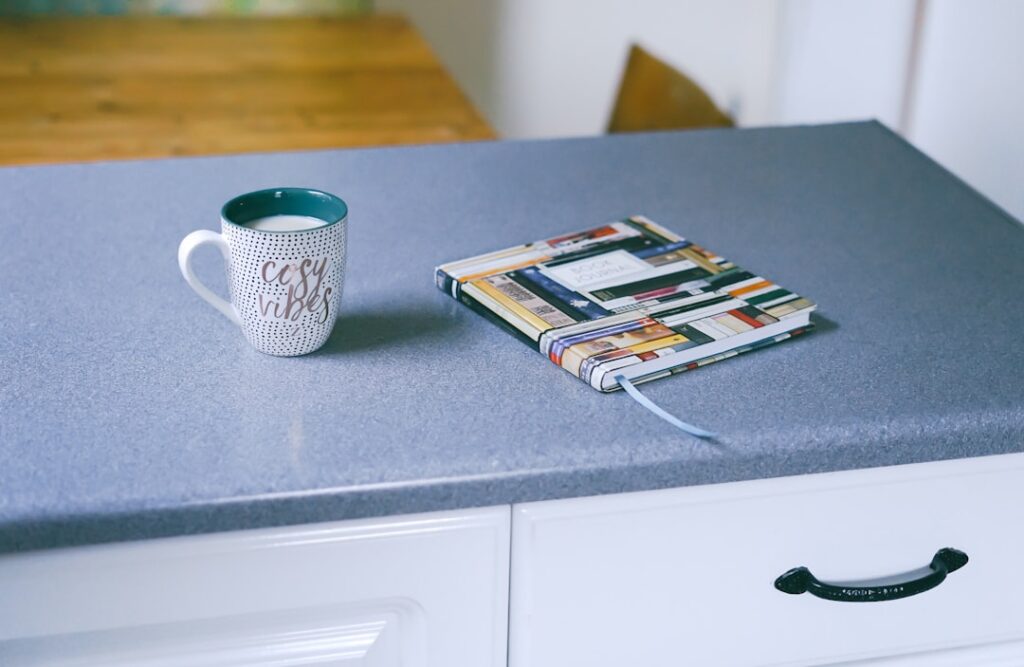
If you’re stuck with ugly counters you can’t legally replace, peel and stick countertop paper is the low-commitment fix that has taken over renter forums for good reason. This self-adhesive vinyl film wraps right over your existing surface, mimicking marble, granite, butcher block, or concrete for a small price and zero demolition. It’s genuinely useful, but it’s a cosmetic cover-up with real limits. Here’s exactly what it can and can’t do before you order a roll.
What This Product Actually Is
Despite the name, it isn’t paper. It’s a printed vinyl film with a peel-away paper backing and an adhesive layer, essentially heavy-duty contact paper engineered for counters. You unroll it, cut it to size, peel the backing, and smooth it down over your existing laminate or tile. The top layer is a thin protective coating that gives it a slight sheen and some wipe-clean resistance.
Because it’s a surface film and not a coating you mix or cure, it goes on fast and, crucially for renters, peels back off later without damaging what’s underneath in most cases.
Where It Makes Sense
This is a temporary-refresh product, and it shines in specific situations:
- Rentals — the headline use; reversible, so you can restore the original before moving out.
- Quick staging — freshening a kitchen fast before listing or photos.
- Budget refreshes — bridging until you can afford real counters.
- Low-use surfaces — a bathroom vanity, laundry counter, or bar that sees light duty.
If you own the home and cook seriously, a resurfacing coating or new slab will serve you far better. Peel-and-stick film is about speed, reversibility, and price, not permanence.
How to Apply It Cleanly
A clean application separates a convincing counter from a bubbled mess. Work through these steps:
- Clean and degrease the counter completely, then let it dry fully.
- Measure and pre-cut each piece, adding a couple of inches to wrap over edges.
- Peel back only a few inches of backing, align one edge, then smooth as you go.
- Use a plastic squeegee or an old gift card to push out air bubbles toward the edges.
- Warm stubborn spots and corners with a hair dryer so the film conforms and stays down.
Take your time aligning the pattern at seams, and wrap the film slightly under the counter’s front edge so no lifted edge invites peeling. A little heat from a hair dryer makes the vinyl stretch around curves and bullnose edges.
The Heat Limit You Cannot Ignore
This is the single most important warning. Peel and stick countertop paper is vinyl, and vinyl melts. Never set a hot pan, a scorching pot, or a lit appliance directly on it. Heat will bubble, discolor, or shrivel the film instantly and permanently. Always use trivets and hot pads, and keep it well away from the surface directly beside the range where splatter and heat concentrate.
Moisture and Seam Weaknesses
Water is the other enemy, and it attacks at the seams. Around the sink, standing water works under any cut edge and lifts the adhesive over time. To fight this, run a thin bead of clear silicone caulk along the sink edge and any backsplash seam to keep water out. Wipe spills promptly rather than letting them pool, and expect the areas around the faucet to be the first to show wear.
Honest Durability Expectations
Set your expectations at the right level and you won’t be disappointed. Treated gently, peel-and-stick film can look good for a year or two, sometimes longer in a low-traffic spot. But it scratches under knives, so always cut on a board. It can dull from abrasive scrubbing, and it will show wear in the busy zones around the sink and prep area first. This is a cosmetic layer, not a work surface built to take abuse.
When it does start to lift or scuff, the upside is that replacing a section is cheap and quick, which is part of the appeal of the whole system.
Choosing a Convincing Pattern
Not all films look equally believable, and the pattern you pick matters as much as the application. Marble and stone prints with fine, realistic veining tend to read best from a normal viewing distance, while overly repetitive or cartoonish patterns give the product away instantly. Matte and satin finishes usually look more like real stone than a high-gloss sheen, which can appear plasticky under kitchen light.
Order a sample or a small roll before committing to the whole kitchen. Colors shift under different lighting, and a print that looked great on a phone screen can read cold or fake in person. Matching the seams where two pieces meet also improves realism, so buy enough to align the pattern rather than piecing scraps together randomly.
Removing It Without Damage
The reversibility that makes this product renter-friendly only holds if you remove it correctly. When you’re ready to take it off, warm the film with a hair dryer to soften the adhesive, then peel slowly at a low angle. Rushing it or yanking cold film can lift the laminate’s finish underneath, which defeats the whole point.
- Heat a section at a time with a hair dryer to release the glue.
- Peel slowly and steadily rather than in fast jerks.
- Remove leftover adhesive residue with a gentle citrus-based remover.
- Wipe the counter clean and let it dry before applying anything new.
On a sound, undamaged laminate counter, careful removal usually leaves the original surface intact, which is exactly what a security-deposit-conscious renter wants.
Cleaning and Care
Maintenance is easy, which suits its low-commitment nature. Wipe with a soft cloth and mild soapy water, and skip abrasive powders, scouring pads, and harsh solvents that can cloud or peel the top coat. Blot spills instead of letting them sit at the seams. Handled with a cutting board, trivets, and prompt cleanup, peel and stick countertop paper delivers a surprisingly convincing counter refresh for the money, as long as you respect its cosmetic-only nature.
Weigh it honestly against the alternatives before you buy. Compared to a resurfacing epoxy kit, peel-and-stick film is cheaper, far faster, and fully reversible, but it’s also less durable and can’t take heat. Compared to new counters, it’s a tiny fraction of the cost with none of the demolition, but it won’t add real value or last the same way. That trade-off is exactly why it’s the darling of renters and short-term fixes rather than forever kitchens.
Used for what it is, this product punches above its price. A weekend, a sharp blade, a squeegee, and a roll or two can take a dated, stained counter and make it read as clean marble or warm butcher block in an afternoon. Keep it away from heat, seal the seams around water, cut on a board, and peel and stick countertop paper will carry a rental or a tight budget stylishly until the day you’re ready for the real thing.


