Most people shopping for outdoor warmth only compare propane and electric, then wonder why their patio still feels like a parking lot at 45°F. A pellet patio heater takes a different route: it burns compressed hardwood pellets inside a tall steel tower, sending up a visible flame and a column of radiant heat that feels closer to a campfire than a gas lamp. There is no tank to swap and no cord to run, just a bag of fuel and a match.
Part of our Decks & Outdoor guide — explore the full guide →
Expect a typical tower to put out somewhere between 30,000 and 50,000 BTU per hour at full burn, which is in the same range as a standard propane mushroom heater. A full hopper of roughly 5 to 10 pounds of pellets usually lasts 1.5 to 3 hours, depending on the airflow setting and how dry the fuel is. Smoke is light once the fire is established but noticeable during the first 10 to 15 minutes, and you will have a small tray of ash to empty after every session.
- How a Pellet Patio Heater Works
- Heat Output: Pellet vs Propane and Electric
- Pellets Per Hour and Real Burn Time
- Smoke, Startup and Ash Cleanup
- Where to Put It: Deck and Patio Clearances
- Buying Checklist for a Pellet Fueled Patio Heater
- Maintenance and Troubleshooting
- When to Call a Professional
- Frequently Asked Questions
That combination makes a pellet heater a good fit for open patios, backyard lawns and fire-friendly decks where people want the look and smell of wood without the sparks and log-handling of a traditional fire pit. It is a poor fit for covered porches, screened rooms or anywhere smoke can drift into a window.
How a Pellet Patio Heater Works
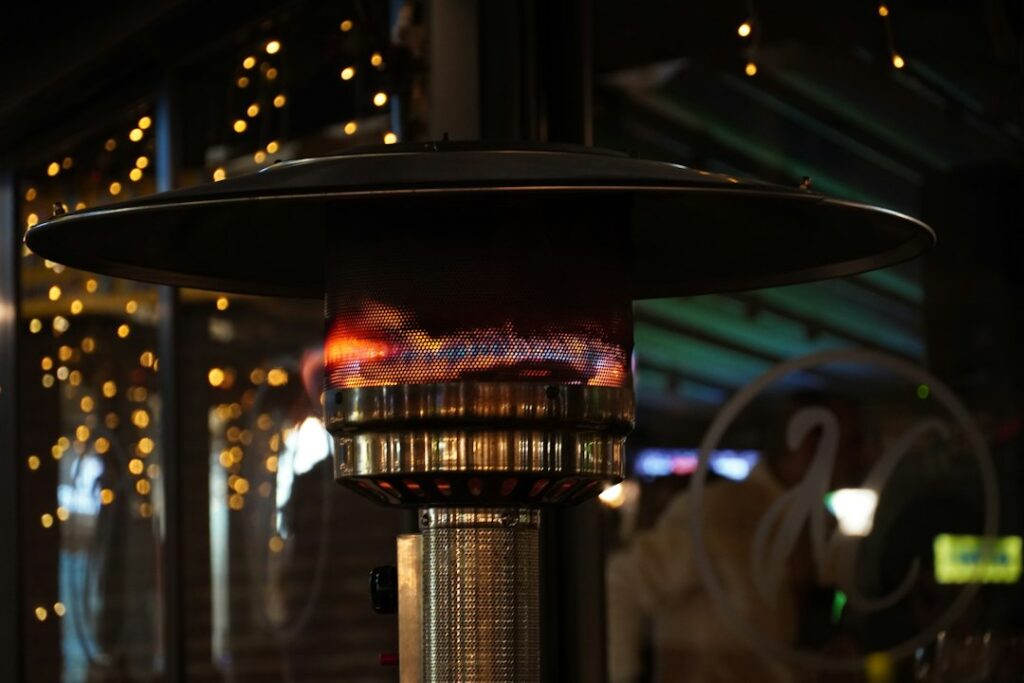
Nearly every model on the market uses the same gravity-fed design. Pellets load into a hopper or central tube at the top of the tower. As the pellets at the bottom burn down in a small grate or burn pot, fresh ones slide down to replace them. Air enters through vents near the base, feeds the fire, and the hot gases rise through a perforated or glass-sided chimney that radiates heat outward in a circle.
Because there is no fan or auger, a pellet patio heater does not need electricity. Heat output is controlled by adjusting the lower air intake: open it for a hot, fast burn, close it partway for a slower, longer burn. Some towers also have a damper at the top to trap more heat in the steel body, which then glows and radiates like a stove pipe.
The result is a heat pattern that differs from a propane mushroom heater. Instead of a reflector bouncing warmth down from 7 feet up, the whole column radiates sideways at seated height. People sitting 3 to 6 feet away feel the most benefit, while those 10 feet out feel very little.
Heat Output: Pellet vs Propane and Electric
BTU numbers on outdoor heaters are always approximate, but they give you a fair way to compare fuels. A pound of quality wood pellets holds about 8,000 BTU of energy. Burning 4 to 5 pounds per hour works out to around 32,000 to 40,000 BTU, similar to a 40,000 BTU propane tower heater at its high setting.
- Pellet tower: roughly 30,000 to 50,000 BTU per hour, radiant heat at seated height, visible flame, some smoke.
- Propane mushroom heater: commonly 40,000 to 48,000 BTU per hour, heat directed downward from a reflector hood, no smoke, 8 to 10 hours from a 20-pound tank at medium.
- Electric infrared heater: commonly 1,500 watts (about 5,100 BTU) on a standard outlet, instant directional heat, best for small zones and covered spaces.
In practice, a wood pellet heater outdoors warms a circle about 10 to 15 feet across on a still evening. Wind cuts that sharply, just as it does with propane. Where pellets win is atmosphere: the crackle, the glow and the faint wood smell make it feel like a fire pit you can stand around without smoke chasing you from seat to seat.
Pellets Per Hour and Real Burn Time
Burn time depends on hopper size and airflow more than anything else. Small tabletop pellet heaters may hold 2 to 3 pounds and burn for 45 to 90 minutes. Full-height towers usually hold 7 to 15 pounds and run 2 to 4 hours on one load with the intake partly closed.
Plan on 3 to 6 pounds of pellets per hour of real use. A standard 40-pound bag therefore covers roughly 7 to 12 hours of heat, or three or four evenings. Hardwood pellets sold for heating stoves generally run a few dollars more per bag than grilling pellets but burn cleaner and produce less ash. Avoid pellets with added oils or flavorings intended for smokers; they can create more smoke and sticky residue inside the tower.
You can top off a running heater, but do it carefully with heat-resistant gloves and a scoop, pouring slowly so you do not smother the flame or spill burning embers. Many owners prefer to light a full load and let it burn out naturally rather than refill mid-evening.
Smoke, Startup and Ash Cleanup
Nearly all of the smoke from an outdoor pellet heater happens at startup. Cold pellets, a cold chimney and a small flame produce a gray plume for the first 10 to 15 minutes. Once the burn pot is hot and air is flowing well, the smoke thins to a light haze and the flame turns bright yellow.
A few habits cut startup smoke considerably:
- Use dry pellets stored off the ground in a sealed bin; damp pellets swell, crumble and smolder.
- Light with a gel fire starter or starter cubes in the burn pot, never gasoline, lighter fluid or other liquid accelerants.
- Open the air intake fully during startup, then throttle back once the flame is established.
- Place the heater downwind of seating so any drift moves away from guests.
Ash volume is small, roughly a cup or two per bag of good hardwood pellets, but it must be handled correctly. Let the heater cool completely, ideally overnight, before emptying the ash tray. Dump ash into a metal can with a tight lid and keep that can on a noncombustible surface away from the house, because pellet ash can hold live embers for many hours.
Where to Put It: Deck and Patio Clearances
Placement is the most important safety decision with any wood burning patio heater. The outside of the tower gets extremely hot, and embers can escape from vents or the top opening. Always follow the clearances printed in the manufacturer’s manual; when in doubt, give it more room, not less.
- Set the heater on a stable, level, noncombustible surface such as concrete, pavers or stone.
- On a wood or composite deck, use a fire-resistant heat shield or deck protector pad rated for wood-burning appliances, and check your manual and deck board warranty first.
- Keep at least 3 feet from furniture, cushions, umbrellas and railings, and more from walls and siding.
- Never use it under a roof, awning, pergola with a cover, tree limbs or inside a screened porch or garage.
- Check local burn rules and HOA restrictions, which sometimes treat pellet heaters like open fires.
Fire Safety Basics
Treat a pellet stove on the patio like any other wood fire. Keep a garden hose or a fire extinguisher within reach, keep children and pets out of a 3-foot zone around the tower, and never leave it burning unattended. Do not try to move a lit or hot heater. On windy days, skip the fire altogether; gusts can blow embers out of the vents and topple lightweight towers.
Carbon Monoxide Awareness
Any burning fuel produces carbon monoxide. Outdoors in open air it disperses quickly, but a pellet heater must never be used indoors, in a garage, in a tent or in any enclosed or partly enclosed room. Keep it well away from open windows, doors and air intakes so exhaust cannot drift inside. Your home should already have CO alarms on every level and near sleeping areas; if you notice headache, dizziness or nausea while sitting near any fire, move to fresh air right away.
Buying Checklist for a Pellet Fueled Patio Heater
Models vary more than the photos suggest. Before you buy, compare these points:
- Hopper capacity: 7 pounds or more for a 2-hour evening without refilling.
- Adjustable air intake: lets you trade heat for burn time.
- Steel gauge and finish: thicker steel and high-temperature paint resist warping and rust.
- Removable ash tray: makes cleanup quick and keeps ash out of the burn pot.
- Spark screen or top cap: reduces escaping embers.
- Wide, weighted base: improves stability on uneven pavers.
- Cover: a fitted cover keeps rain out of the hopper between uses.
Most pellet stove patio heater models fall in a general range of roughly $150 to $500, with smaller tabletop versions at the low end and heavier towers with glass panels at the top. Fuel runs a few dollars per evening.
Maintenance and Troubleshooting
A little routine care keeps a pellet heater burning clean. Empty the ash tray after each cooled-down use. Every few sessions, brush out the burn pot and clear the air holes with a wire brush, since clogged holes are the top cause of smoky, weak fires. Check the chimney section for creosote or soot buildup a few times per season.
- Lots of smoke after 20 minutes: pellets are damp, the burn pot holes are blocked, or the air intake is closed too far.
- Fire goes out halfway through: pellets are bridging in the hopper; gently tap the tower with a gloved hand or use shorter, uniform pellets.
- Weak heat: intake too restricted, low-grade pellets or strong wind.
- Rust spots: store covered and dry; touch up with high-heat paint when fully cool.
When to Call a Professional
Most pellet towers are freestanding and need no installation. If you want a permanent setup on a raised deck, a built-in noncombustible pad, or you are unsure whether local codes allow wood-burning appliances on your property, talk with your fire department, a deck contractor or a hearth professional first. They can confirm clearances, deck loads and whether a permit is needed.
Frequently Asked Questions
How long does a pellet patio heater burn on one load?
Most full-size towers burn 2 to 4 hours on a full hopper of 7 to 15 pounds, depending on the air setting. Smaller tabletop units last 45 to 90 minutes.
Is a pellet heater warmer than a propane patio heater?
Output is similar, usually 30,000 to 50,000 BTU per hour. Pellet towers radiate heat sideways at seated height, while propane mushroom heaters push heat down from a reflector.
Can I use a pellet patio heater on a wood deck?
Only if the manual allows it and you place it on a rated heat shield or noncombustible pad with full clearances. Embers and radiant heat can scorch or ignite deck boards.
Does an outdoor pellet heater smoke a lot?
Smoke is heaviest for the first 10 to 15 minutes. Dry hardwood pellets, a clean burn pot and a fully open intake at startup keep it light afterward.
Can I use grilling pellets in a pellet heater?
Plain hardwood grilling pellets work, but heating pellets usually burn cleaner with less ash. Avoid flavored or oil-added pellets.