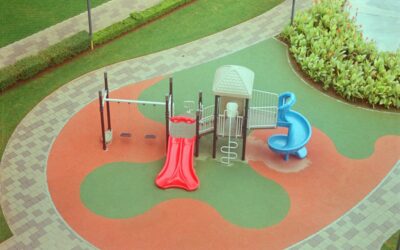
Playground flooring is about far more than aesthetics—it is a safety-critical decision that can prevent serious injuries from falls. The right playground surface absorbs impact, provides traction, drains properly, and withstands years of heavy use from energetic children. Whether you are outfitting a backyard play set, a school playground, a daycare facility, or a commercial indoor play area, this guide walks you through every major playground flooring option so you can choose the safest, most practical surface for your needs.
Why Playground Flooring Matters
Falls are the leading cause of playground injuries. According to the Consumer Product Safety Commission (CPSC), roughly 79 percent of playground injuries involve falls to the surface below. The right playground flooring dramatically reduces the severity of these injuries by cushioning impact.
ASTM F1292 is the standard that measures impact attenuation—how effectively a surface absorbs the energy of a fall. Any playground flooring you choose should meet this standard for the fall height of your tallest piece of equipment. Most playground equipment ranges from 4 to 12 feet in fall height, and the flooring must be rated to protect at or above that height.
Types of Playground Flooring
Rubber Tiles
Interlocking rubber tiles are one of the most popular playground flooring options for both residential and commercial settings. They are made from recycled rubber (often from tires) and come in various thicknesses to match different fall-height requirements.
Fall height protection: 2.5-inch tiles protect up to 6 feet; 4.25-inch tiles protect up to 10 feet.
Pros:
- Excellent impact absorption
- Slip-resistant surface even when wet
- Low maintenance—easy to clean with a hose or pressure washer
- ADA-compliant for wheelchair accessibility
- Interlocking installation requires no adhesive in many cases
- Available in multiple colors for creative designs
Cons:
- Higher upfront cost than loose-fill materials
- Can get hot in direct sunlight (darker colors absorb more heat)
- May shift or lift on uneven ground without proper base preparation
For more on rubber flooring in general, see our rubber flooring guide.
Poured-in-Place Rubber (PIP)
Poured-in-place rubber creates a seamless, monolithic surface by applying two layers on-site: a base layer of cushioning rubber granules and a top layer of colored EPDM rubber bound with polyurethane.
Fall height protection: Customizable based on thickness, typically up to 12 feet or more.
Pros:
- Seamless surface with no trip hazards
- Fully ADA-compliant
- Custom colors, patterns, and embedded designs (logos, games, maps)
- Excellent drainage
- Long lifespan (8 to 15 years with proper maintenance)
Cons:
- Highest cost playground flooring option
- Requires professional installation
- Curing time of 24 to 48 hours before use
- Repairs are visible if color matching is imperfect
Rubber Mulch
Rubber mulch consists of shredded recycled rubber that mimics the appearance of wood mulch. It is a loose-fill option that provides good impact absorption without the decomposition issues of organic mulch.
Fall height protection: 6 inches of rubber mulch protects up to 10 feet.
Pros:
- Good impact absorption
- Does not decompose, attract insects, or harbor mold like wood mulch
- Lower cost than rubber tiles or poured rubber
- Easy to install—just spread and level
Cons:
- Loose material can migrate out of the play area and needs containment borders
- Not ADA-compliant in loose form (wheelchairs cannot roll through it)
- Requires periodic raking and replenishment
- Small pieces can be a choking hazard for very young children
- Can retain heat in direct sunlight
Foam Tiles and Mats
EVA foam tiles are lightweight, soft, and easy to install. They are primarily used for indoor play areas, daycares, and home playrooms where fall heights are lower.
Fall height protection: Typically up to 4 feet depending on thickness.
Pros:
- Very soft and comfortable underfoot
- Lightweight and easy to install or rearrange
- Available in bright colors and puzzle-piece designs that appeal to children
- Affordable
- Easy to clean
Cons:
- Not suitable for outdoor use—UV light degrades the material
- Lower impact absorption than rubber for higher fall heights
- Can tear or compress under heavy equipment
- Not recommended for permanent outdoor installations
Engineered Wood Fiber (EWF)
Engineered wood fiber is a processed wood mulch designed specifically for playground safety. Unlike standard wood chips, EWF is manufactured to a consistent size and shape that knits together to form a more stable surface.
Fall height protection: 9 inches of EWF protects up to 7 feet; 12 inches protects up to 10 feet.
Pros:
- Natural appearance
- Meets ASTM F1292 when installed at proper depth
- Most affordable option per square foot
- Can be made ADA-compliant with compaction and wear mats
Cons:
- Decomposes over time and needs annual replenishment
- Can harbor mold and insects in humid climates
- Requires containment borders and regular maintenance
- Displaces easily under swings and at slide exits
Pea Gravel
Small, rounded gravel stones provide a loose-fill playground surface that drains well and is relatively inexpensive.
Fall height protection: 12 inches of pea gravel protects up to 5 feet.
Pros:
- Excellent drainage
- Does not decompose
- Inexpensive
- Natural appearance
Cons:
- Lower impact absorption than rubber or EWF
- Not ADA-compliant
- Stones can be thrown by children
- Uncomfortable to walk on barefoot
- Can migrate into grass and garden beds
Artificial Turf with Shock Pad
Synthetic grass installed over a foam or rubber shock-absorbing pad creates a natural-looking playground surface with good impact protection.
Fall height protection: Varies by shock pad thickness, typically up to 8 to 10 feet.
Pros:
- Attractive, natural-looking surface
- ADA-compliant
- Low maintenance once installed
- Good drainage with proper base preparation
Cons:
- High installation cost
- Gets hot in direct sunlight (can require cooling infill)
- Infill material may need periodic replenishment
- Requires professional installation
Indoor vs. Outdoor Playground Flooring
Indoor Playgrounds
Indoor play areas have controlled environments, so UV resistance and drainage are less critical. The best options for indoor playgrounds include:
- Foam tiles: Ideal for playrooms and daycare centers with equipment under 4 feet.
- Rubber tiles: Best for commercial indoor playgrounds with taller equipment.
- Poured-in-place rubber: Premium option for large commercial facilities.
Outdoor Playgrounds
Outdoor surfaces must withstand UV exposure, rain, snow, and temperature fluctuations. The best outdoor options include:
- Poured-in-place rubber: The most durable, long-term outdoor solution.
- Rubber tiles: Excellent for residential and small commercial outdoor play areas.
- Engineered wood fiber: Budget-friendly option with regular maintenance.
- Artificial turf with shock pad: Best for a natural appearance.
ADA Compliance and Playground Flooring
The Americans with Disabilities Act requires playground surfaces to be accessible to individuals with mobility devices. ADA-compliant playground flooring must provide a firm, stable surface that allows wheelchair and walker access.
Surfaces that meet ADA requirements:
- Poured-in-place rubber
- Rubber tiles
- Artificial turf with shock pad
- Engineered wood fiber (when properly compacted with accessible routes)
Surfaces that typically do not meet ADA requirements:
- Loose rubber mulch
- Pea gravel
- Sand
- Standard wood chips
Playground Flooring Cost Comparison
- Engineered wood fiber: $2 to $5 per square foot installed
- Rubber mulch: $5 to $9 per square foot installed
- Pea gravel: $2 to $4 per square foot installed
- Rubber tiles: $8 to $16 per square foot installed
- Foam tiles (indoor): $3 to $8 per square foot
- Artificial turf with shock pad: $10 to $18 per square foot installed
- Poured-in-place rubber: $12 to $22 per square foot installed
Installation Considerations
Base Preparation
Most playground flooring requires a stable, well-drained base. For rubber tiles and poured rubber, this usually means a compacted gravel base topped with a layer of crusher fines. For loose-fill materials, containment borders (landscape timbers, concrete curbs, or rubber borders) are essential to keep the material in place.
Drainage
Standing water creates slip hazards and accelerates material degradation. Ensure the base is graded for proper drainage (a minimum 1 to 2 percent slope away from equipment).
Fall Zone Coverage
Safety surfacing must extend at least 6 feet in all directions from stationary equipment. For swings, the fall zone extends much farther—at least twice the height of the swing beam in front of and behind the swing. Slides require extended fall zones at the exit.
Maintenance Tips by Surface Type
- Rubber tiles and poured rubber: Sweep debris regularly, pressure wash as needed, inspect for damage, and repair cracks or lifted seams promptly.
- Loose-fill materials: Rake level regularly (especially under swings and at slide exits), replenish annually, and check depth with a probe.
- Foam tiles: Wipe with mild soap and water, replace damaged tiles, and avoid dragging heavy equipment across them.
- Artificial turf: Brush fibers upright periodically, remove debris, and replenish infill as needed.
Frequently Asked Questions
What is the safest playground flooring?
Poured-in-place rubber offers the highest level of safety. It is seamless, customizable to any fall height, ADA-compliant, and long-lasting. Rubber tiles are a close second and more budget-friendly.
How thick should playground flooring be?
Thickness depends on the fall height of your tallest equipment. For rubber tiles, 2.5 inches covers up to 6 feet, while 4.25 inches covers up to 10 feet. Loose-fill materials require 9 to 12 inches of depth for adequate protection.
Can I install playground flooring myself?
Rubber tiles, foam mats, and loose-fill materials are DIY-friendly. Poured-in-place rubber and artificial turf with shock pads require professional installation.
How long does playground flooring last?
Poured-in-place rubber lasts 8 to 15 years. Rubber tiles last 10 to 20 years. Engineered wood fiber needs replenishment every 1 to 2 years. Artificial turf lasts 8 to 15 years depending on use and climate.
Final Thoughts
Choosing the right playground flooring balances safety, accessibility, durability, and budget. For the highest protection and lowest maintenance, rubber tiles or poured-in-place rubber are the top choices. For budget-conscious projects, engineered wood fiber provides compliant safety at the lowest cost—with the trade-off of ongoing maintenance. Whatever surface you choose, ensure it meets ASTM F1292 standards for your equipment’s fall height and covers the full fall zone.
For more on rubber-based surfaces, visit our rubber flooring guide. If you are also surfacing adjacent indoor areas, explore options like vinyl flooring and laminate flooring for surrounding spaces.
Prefer to explore on your own?
See how new flooring looks in your actual room in seconds — free, no signup.
Try the free Floor Studio →