
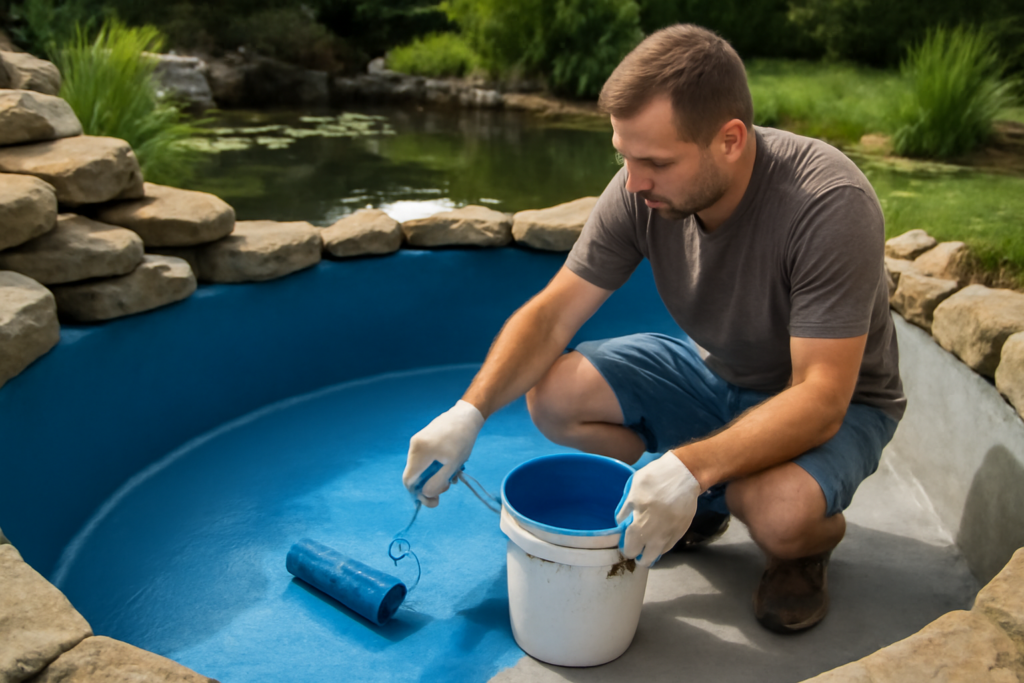
Pond Shield epoxy, made by Pond Armor, is a two-part coating designed to seal and waterproof ponds, water features, and fountains. It is one of the better-known products in this niche because it bonds to a range of surfaces and, once it has fully cured, is considered non-toxic and safe for fish and aquatic plants. If you have a leaking concrete pond or a fiberglass shell that needs refinishing, this kind of coating can give you a durable, watertight surface.
This guide walks through what the product does, which surfaces it suits, how to prep and apply it, and the safety steps that matter most. The single most important rule to remember up front is that a pond coating is only fish-safe after it has completely cured according to the manufacturer’s directions. Never rush water or livestock back into a freshly coated pond.
What Pond Shield Epoxy Is Used For
This coating is built to create a continuous, sealed membrane on the inside of a water container. People use it to stop leaks, to refinish a pond that has aged or stained, and to provide a clean, smooth surface that resists algae buildup and is easy to maintain.
Common applications include backyard koi and goldfish ponds, ornamental fountains, waterfalls, birdbaths, and small water features. It is also used to line concrete tanks and to repair fiberglass shells that have developed cracks or surface degradation. Because it cures to a hard, non-toxic finish, it is popular specifically with fishkeepers who need a coating that will not leach harmful chemicals into the water once it is fully set.
Surfaces It Bonds To
One reason this product is widely used is its versatility across substrates. It is formulated to adhere to several common pond materials when they are properly prepared.
- Concrete and cement for poured or block-built ponds.
- Fiberglass shells and preformed liners that need refinishing.
- Some rigid plastics and previously coated surfaces, provided they are clean and abraded.
Surface preparation is everything. No coating bonds well to a dirty, oily, glossy, or loose surface, so always confirm compatibility and prep requirements in the product instructions before you start. If you are unsure whether your substrate is suitable, contact the manufacturer rather than guessing.
Surface Preparation
Good prep is the difference between a coating that lasts for years and one that peels within a season. Take your time here.
- Drain the pond completely and remove all fish and plants to a safe holding tank.
- Scrub away algae, scale, dirt, oils, and any flaking old coating.
- For concrete, etch or roughen the surface as directed so the epoxy can grip; rinse and let it dry fully.
- For fiberglass, sand to a dull finish to create a mechanical bond.
- Make sure the surface is clean, dry, and free of dust before mixing any product.
Cure new concrete fully before coating it, and follow the manufacturer’s guidance on acceptable moisture levels. Trapped moisture or contamination is the most common cause of adhesion failure.
Mixing and Application
This is a two-part epoxy, meaning it comes as a base and a hardener that you combine immediately before use. Getting the mix ratio right is critical; an incorrect ratio can leave the coating tacky, soft, or unable to cure properly.
Always mix the exact ratio printed on the packaging, blend thoroughly so there are no unmixed streaks, and only mix as much as you can apply within the working time the manufacturer specifies. Apply in thin, even coats with a brush or roller suited to epoxy, work the product into corners and seams, and watch for sags or pooling. Most projects call for more than one coat; respect the recommended recoat window so the layers bond to each other. Maintain the temperature range listed in the instructions, because epoxy cures unpredictably when it is too cold or too hot.
Curing Before Adding Water and Fish
This step deserves its own section because it is where well-meaning homeowners make the most dangerous mistakes. The coating is non-toxic once it has reached a full cure, not while it is still curing.
Allow the full cure time the manufacturer specifies before introducing any water, and allow the complete recommended period before reintroducing fish or plants. Cure times vary with temperature and humidity, so cooler conditions can extend the wait significantly. When in doubt, wait longer rather than less. Many experienced pond owners fill, rinse, and even drain the pond once before livestock return, but always defer to the printed instructions for your specific product and conditions.
Safety and Handling
Uncured epoxy resins and hardeners are chemicals that demand respect. Protecting yourself during application is just as important as protecting your fish afterward.
- Work in a well-ventilated area and use a respirator rated for the product if directed.
- Wear chemical-resistant gloves, eye protection, and clothing that covers your skin.
- Avoid skin contact with the uncured material and clean up spills promptly.
- Keep children and pets away from the work area until everything has fully cured.
- Store and dispose of leftover product and containers according to local regulations.
If you have a large or complex pond, an unusual substrate, or any doubt about the project, consult the manufacturer’s technical support or hire an experienced installer.
Estimating How Much You Need
Buying the right quantity matters, because epoxy is mixed and applied in one continuous session and you cannot easily blend a fresh batch with one that has started to cure. Underbuying mid-project can leave you scrambling, while overbuying wastes money on a product with a limited shelf life once opened.
Coverage depends on the surface and the number of coats. Rough, porous concrete soaks up more product on the first coat than smooth fiberglass does, so a textured pond will need more than a slick one of the same size. Measure the full interior surface area you plan to coat, including the floor, walls, and any shelves or ledges, then consult the coverage rate printed on the product for your substrate and coat count. When the math lands between two amounts, round up; having a little extra is far better than running out partway through a wall.
Common Mistakes to Avoid
Most coating failures trace back to a handful of avoidable errors. Knowing them in advance saves you from redoing the whole job.
- Skipping or rushing prep: coating over algae, oil, or a glossy surface guarantees peeling.
- Wrong mix ratio: eyeballing the resin and hardener leaves the coating soft or sticky.
- Applying too thick: heavy coats sag, trap solvent, and cure poorly.
- Working in bad conditions: temperatures or humidity outside the recommended range disrupt curing.
- Adding water or fish too soon: the coating is only fish-safe after a complete cure.
Slow down at each stage and the finished coating will reward your patience with years of reliable, watertight service.
Maintenance After Coating
A properly applied coating is low maintenance, but a little routine care extends its life. Keep the water balanced, remove debris before it decomposes, and clean the surface gently with non-abrasive tools so you do not scratch the finish. Inspect the coating each season for any signs of wear, especially at seams and high-splash areas around waterfalls.
Used correctly and given a full cure, Pond Shield epoxy can transform a leaking or tired pond into a sealed, fish-safe water feature that holds up for many years. The keys are thorough prep, exact mixing, even application, and patience during the cure.


