
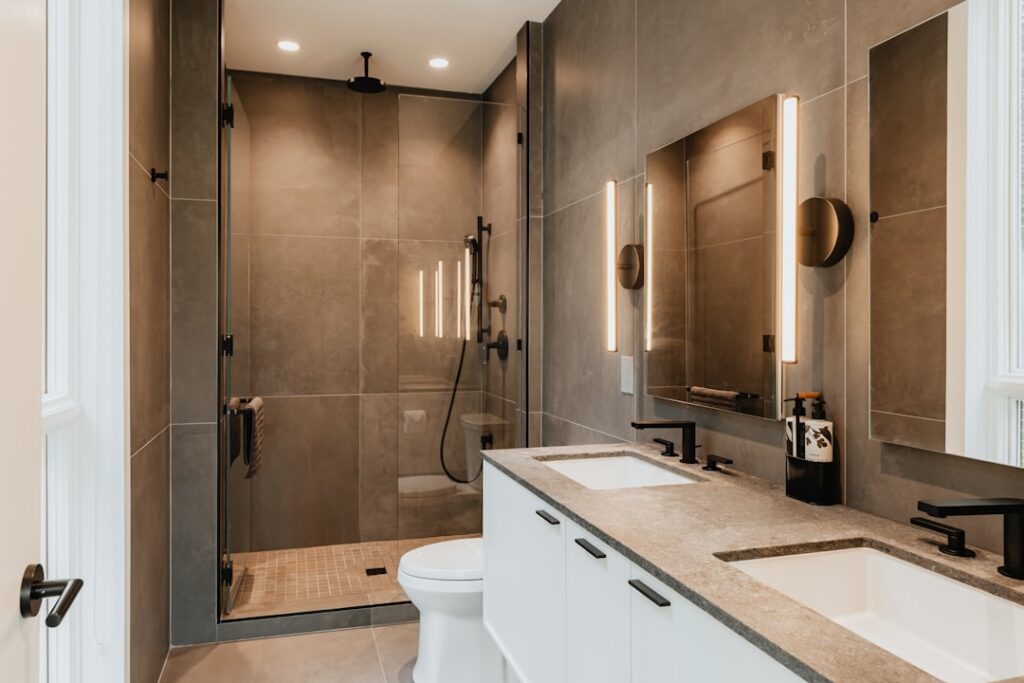
The shower base is the hardest-working square footage in your bathroom, and it is also where most leaks and grout headaches begin. A porcelain shower pan has become a popular answer to both problems, offering the clean, seamless look of a solid slab with the durability and easy cleaning of porcelain tile, minus the maze of grout lines that a traditional tiled shower floor collects gunk in. If you are remodeling a shower and weighing your options for the base, understanding how a porcelain pan stacks up against tile and acrylic will help you spend your money wisely.
What a Porcelain Shower Pan Is
A porcelain shower pan is a single, large-format porcelain slab manufactured specifically to serve as a shower floor. Unlike a tiled floor built from many small pieces, it arrives as one continuous piece, or occasionally a few large panels, with a built-in slope toward a drain and a factory-formed surface designed to shed water. The top has a textured, slip-resistant finish, and the underside is engineered to bond to the subfloor and integrate with the drain assembly. The result looks like a monolithic stone floor but weighs less, resists stains completely, and never needs sealing.
These pans come in solid colors and in stone-look and concrete-look finishes, so they blend seamlessly with matching porcelain wall tile for a high-end, spa-like effect. The near-total absence of grout is the headline feature: with just a thin perimeter joint and the drain, there is almost nothing for soap scum and mildew to hide in.
Porcelain Pan vs. Tiled Floor vs. Acrylic
Each shower base type occupies a clear niche, and knowing the trade-offs prevents buyer’s remorse.
- Traditional tiled floor: Fully customizable in size and pattern, but built from many small tiles with lots of grout that requires sealing and regular scrubbing. More labor to install and more failure points if waterproofing is imperfect.
- Porcelain shower pan: Seamless, stain-proof, low-maintenance, and available in modern large formats. Limited to manufactured sizes and needs careful, level installation.
- Acrylic or fiberglass pan: Cheapest and lightest, easy to install, but scratches, flexes, dulls over time, and looks less premium.
In short, a porcelain pan splits the difference between a fussy custom-tiled floor and a budget acrylic base, giving you the upscale appearance of tile with much of the low-maintenance convenience of a molded pan.
Sizes and Configurations
Porcelain shower pans come in standard rectangular and square footprints to match common shower openings, with popular sizes including 32×60, 36×60, 32×48, and 36×36 inches, among others. Drain placement can be center, offset, or a modern linear channel along one edge, and you will want to confirm the drain type and location match your rough plumbing before ordering. Some manufacturers offer curbless or low-threshold versions for a flush, walk-in look that is easier to enter and increasingly popular for aging-in-place bathrooms. Because the pans are factory-made, your shower dimensions need to fit an available size, though many lines can be trimmed slightly during installation.
What a Porcelain Shower Pan Costs
Pricing sits between budget acrylic and a fully custom-tiled floor. General ranges:
- The pan itself: $300 to $900 depending on size, finish, and brand.
- Professional installation: $400 to $1,000 in labor.
- Total installed: roughly $700 to $1,900 for the base alone.
Compare that to $1,500 or more for a fully custom-tiled and waterproofed shower floor, or $200 to $500 for a basic acrylic pan. The porcelain pan delivers a premium look for meaningfully less than a hand-tiled floor while sidestepping most of the long-term grout maintenance that a tiled floor demands.
Pros and Cons
The advantages are compelling. A porcelain pan is dense and impervious, so it will not stain, absorb odors, or harbor mildew the way grout can. It is extremely scratch and impact resistant, far tougher than acrylic. The seamless surface cleans in seconds with a squeegee and a wipe, and the material never needs sealing. Its textured finish provides solid slip resistance, and it pairs beautifully with matching wall tile.
The downsides are worth weighing. Porcelain pans are heavy and rigid, so they demand a perfectly flat, fully supported subfloor; any flex or void underneath risks a cracked pan. Installation is less forgiving than dropping in an acrylic base, so professional installation is strongly recommended. You are also limited to manufactured sizes and drain configurations, which can be a constraint in an oddly shaped shower. And the up-front cost is higher than acrylic, though the longevity often justifies it.
Installation Notes
The single most important factor is a flat, solid, level substrate. Installers typically set the pan in a full bed of thin-set or a manufacturer-specified bonding mortar so it is completely supported with no hollow spots, then connect the integrated drain to the plumbing and seal the perimeter where the pan meets the walls. Because the pan is the waterproofing element for the floor, the transition between the pan and the waterproofed walls must be sealed correctly, usually with the manufacturer’s recommended sealant or membrane. This is precise work, and a poorly bedded pan can crack or leak, which is why most homeowners hire it out.
Maintenance
This is where a porcelain pan truly shines. A daily squeegee after showering keeps water spots away, and a weekly wipe with any mild bathroom cleaner handles the rest. Because there is essentially no grout, there is no scrubbing of grimy joints and no annual resealing. Avoid abrasive pads on any glossy areas, but otherwise the surface is nearly maintenance-free for the life of the shower.
Is a Porcelain Shower Pan Right for You?
If you want the upscale, seamless look of a stone or tile shower floor without the endless grout maintenance, and your shower fits a standard size, a porcelain shower pan is one of the smartest choices in a bathroom remodel. It costs more than acrylic but far less than a custom-tiled floor, resists stains and mildew completely, and cleans in a fraction of the time. Just budget for professional installation over a flat, fully supported subfloor, and you will have a shower base that looks high-end and stays low-maintenance for the long haul.
Prefer to explore on your own?
See how new flooring looks in your actual room in seconds — free, no signup.
Try the free Floor Studio →

