
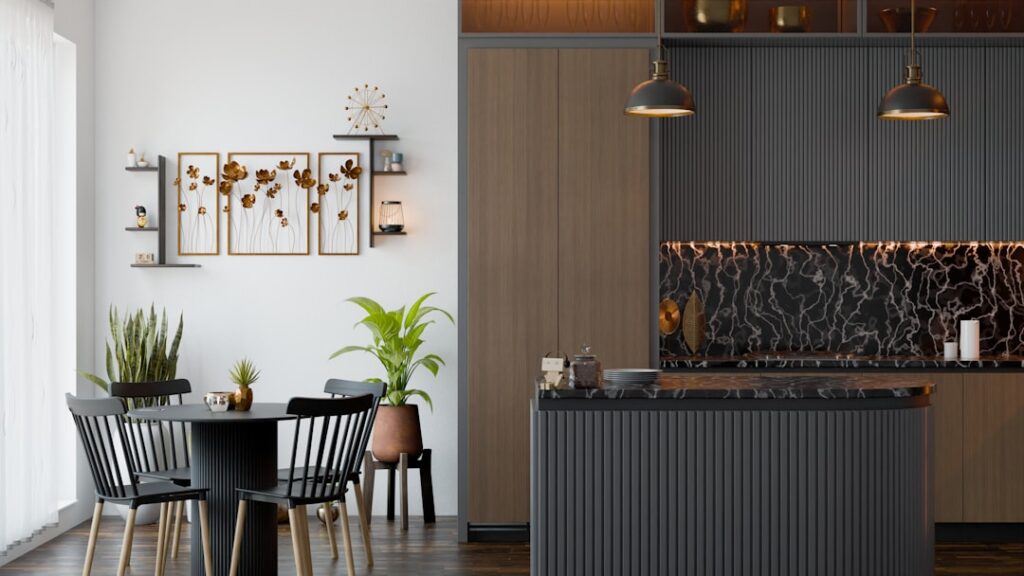
Not every kitchen has room for a built-in island, and not every homeowner wants to commit to one permanently. A portable kitchen island with storage solves both problems by adding prep space, cabinets, and shelving on locking casters you can roll wherever you need it. It’s the rare upgrade that boosts counter space and organization without any construction, and it moves with you if you rent or remodel. This guide walks through the features that matter, how to size one for your space, and what to look for before you buy.
- Why Choose a Portable Island
- Storage Configurations to Consider
- Countertop Material Matters
- Sizing for Your Kitchen
- Casters, Stability, and Weight Capacity
- Adding Seating and Function
- Assembly, Care, and Budget
- Styling Your Island to Match the Kitchen
- Getting the Most From a Small Footprint
- Making the Right Choice
Why Choose a Portable Island
The obvious appeal is flexibility. Roll it to the center of the room while you cook, then tuck it against a wall to open up the floor. That mobility makes it ideal for small kitchens, rentals, and open-concept spaces where a fixed island would crowd the room.
The second draw is instant storage. Most models pack drawers, cabinets, and open shelves into a footprint smaller than a dishwasher, reclaiming space that would otherwise sit empty in the middle of the kitchen.
Storage Configurations to Consider
Storage is the whole point, so match the layout to what you actually need to stash. Common configurations include a mix of the following.
- Drawers for utensils, linens, and small tools
- Closed cabinets for pots, small appliances, and pantry overflow
- Open shelves for cookbooks, baskets, and frequently grabbed items
- Wine racks and towel bars that use the sides efficiently
- Spice racks or drop-leaf extensions that fold away when not in use
Think about what clutters your counters now, then choose a configuration that gives each of those items a home.
Countertop Material Matters
The work surface determines how hard you can use the island. Different tops suit different tasks.
A butcher block top doubles as a cutting surface and adds warmth, though it needs occasional oiling. Stainless steel resists heat and water and wipes clean, favored by serious cooks. Granite or a stone composite offers durability and a premium look but adds significant weight, which matters on a rolling piece. For light-duty use, a laminate or wood top keeps the price and weight down.
Sizing for Your Kitchen
Measure before you fall in love with a model. You need clear walkways of at least 36 inches around the island so it doesn’t choke traffic, even when it’s parked against a wall.
Compact carts start around 20 by 30 inches, ideal for tight galley kitchens, while larger islands reach 40 by 24 inches or more with seating overhangs. Check the height too, since standard counter height is 36 inches. If you plan to use it alongside your existing counters, matching that height keeps the work surface continuous.
Casters, Stability, and Weight Capacity
The wheels are what set a portable island apart, and cheap casters undermine the whole thing. Look for locking casters on at least two of the four wheels so the island stays put while you work.
Stability also depends on the frame. A solid hardwood or steel frame resists the racking and wobble that plague flimsy particleboard models. Check the weight capacity of both the top and the shelves, especially if you’ll load it with heavy stand mixers or stacks of dishes.
Adding Seating and Function
Many portable islands double as a casual dining or homework spot. Models with an overhang on one side leave room to slide in a pair of stools, turning the island into a breakfast bar.
Some include drop-leaf extensions that expand the surface for entertaining and fold down for everyday storage. If you cook a lot, look for a model with a built-in towel bar, a knife block, or a slot for a small appliance to keep your most-used tools within reach.
Assembly, Care, and Budget
Most portable islands ship flat and require assembly, typically an hour or two with basic tools. Tighten every bolt fully, since loose hardware is the top cause of wobble that develops over time.
Prices span a wide range: simple carts start around $100 to $200, mid-range wood models with butcher-block tops run $250 to $600, and premium islands with stone tops and extensive storage reach $700 to $1,200. Wipe wood tops with a damp cloth, re-oil butcher block periodically, and avoid parking the island in direct sun to prevent fading.
Styling Your Island to Match the Kitchen
A portable island should look intentional, not like an afterthought parked in the middle of the room. Match its finish and color to your existing cabinetry or, alternatively, choose a deliberate contrast the way a built-in two-tone island would. A natural wood cart warms up a white kitchen, while a black or painted island adds a modern anchor.
Coordinate the hardware too. Swapping the factory knobs for pulls that match your cabinet hardware is a five-minute upgrade that ties the piece into the room. If the island has open shelving, style it with a few baskets and cookbooks rather than cramming every inch, so it reads as furniture rather than storage overflow.
Getting the Most From a Small Footprint
Even a compact cart can punch above its size with the right accessories. Look for models with a drop-leaf that folds up when you need extra prep space and tucks away the rest of the time. Side-mounted towel bars, hooks, and spice racks use vertical surfaces that would otherwise go to waste.
Inside, drawer organizers and stackable bins double the usable capacity of a single cabinet. A magnetic knife strip or a mounted paper-towel holder on the end panel keeps everyday tools at hand without eating into the countertop. These small additions turn a modest island into a surprisingly capable workstation, which is exactly what makes the portable format so appealing in a tight kitchen.
Making the Right Choice
The best portable kitchen island with storage is the one sized to your space, built on a sturdy frame with locking casters, and configured to hold the things currently crowding your counters. Prioritize storage layout and stability over looks alone, confirm the dimensions leave you comfortable walkways, and pick a countertop material that matches how hard you’ll use it. Get those basics right and a rolling island becomes one of the most useful and versatile additions to any kitchen.


