Green algae streaks and chalky grime can make a house look a decade older than it is, and the fix is often a single afternoon of cleaning. Learning to pressure wash vinyl siding the right way restores that bright, uniform look without damaging the panels or forcing water into your walls. The catch is that a careless approach can do real harm, so knowing how to pressure wash vinyl siding safely matters as much as owning the machine. This guide covers pressure settings, nozzles, cleaning solutions, and the technique that gets a clean, dry result.
Can You Pressure Wash Vinyl Siding?
Yes, vinyl is one of the more pressure-washer-friendly sidings, but with important limits. Vinyl panels are hung to allow expansion and drainage, which means water can be driven behind them if you spray at the wrong angle or into the seams. The goal is to clean the face of the siding, not to blast water uphill into the laps where it can reach the sheathing and insulation.
Before you start, check for loose or cracked panels and any gaps around windows, doors, and utility penetrations. High-pressure water at those spots can push moisture into the wall cavity. If your siding is old and brittle or you see damaged sections, address those first or consider a gentler soft-wash approach.
The Right Pressure and Equipment
More pressure is not better on siding. Too much force can crack panels, strip finish, or drive water behind the vinyl. A gas or electric pressure washer in the range of about 1,300 to 2,400 PSI is plenty for vinyl, and many pros favor the lower end paired with the right nozzle and detergent.
- Pressure: aim for 1,300 to 2,400 PSI; start low and increase only if needed
- Flow: 1.4 to 2.5 gallons per minute rinses effectively
- Nozzle: use a wide-angle 25-degree (green) or 40-degree (white) tip, never the narrow 0-degree red tip
- Detergent tip: the black soap nozzle applies cleaner at low pressure
The nozzle choice is critical. A narrow 0-degree tip concentrates enough force to gouge vinyl and blast water through seams. Keep a wide fan, and keep the tip a foot or more from the surface until you learn how the siding reacts.
Choosing a Cleaning Solution
Water alone rinses dust, but the algae, mildew, and chalky oxidation on siding need a cleaner to release. A house-wash solution does most of the work, letting you use less pressure. Common choices include a dedicated vinyl siding cleaner, a mix of oxygen bleach or a mild detergent, or a diluted sodium hypochlorite solution for heavy mildew, always well diluted and used with care.
Whatever you choose, protect your landscaping. Wet plants and shrubs before and after so cleaner does not concentrate on the leaves, and rinse foliage thoroughly. Avoid mixing bleach with any ammonia-based product, which creates toxic fumes. Wear eye protection and gloves, and follow the label directions for dilution and dwell time.
Step-by-Step Cleaning Technique
Work methodically for an even result and to keep water out of the walls. Start by connecting the detergent through the soap nozzle and applying the cleaning solution from the bottom of the wall upward. Washing bottom to top when applying detergent prevents dry streaks where runoff hits dirty siding.
- Apply cleaner bottom to top and let it dwell 5 to 10 minutes without drying out
- Switch to the wide 25 or 40-degree nozzle for rinsing
- Rinse from the top down so dirt and suds flow away from cleaned areas
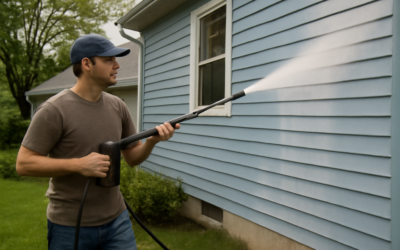
- Hold the wand at a slight downward angle, spraying with the laps, not up under them
- Keep the tip moving and maintain a consistent distance, about 1 to 3 feet
The single most important rule is angle. Spray straight on or slightly downward so water sheds off the panels. Spraying upward drives water behind the horizontal laps and into the wall, which is exactly what you are trying to avoid.
Mistakes That Cause Damage
A few errors account for most siding pressure-washing disasters. Using a 0-degree tip, standing too close, and spraying upward into the seams top the list because all three force water where it does not belong. Ignoring gaps around windows and penetrations lets water reach the sheathing, where it can cause hidden rot and mold.
Cranking the pressure to blast off stubborn stains often cracks panels or dulls the finish instead. If a stain resists, apply more cleaner and give it longer dwell time rather than more force. And never point the wand up under the soffit or into attic vents, where a surprising amount of water can enter the roof structure.
Ladders, Height, and Safety
Reaching a second story is where pressure washing gets genuinely risky. The wand produces a backward kick, and that recoil on a ladder can throw you off balance. Do not operate a pressure washer from a ladder. Instead, use a telescoping extension wand or a spray attachment from the ground, or hire a pro for two-story work.
Keep the spray away from electrical meters, outlets, light fixtures, and service entrances, and never aim it at people, pets, or windows at close range. Wear closed-toe shoes, eye protection, and hearing protection with a gas unit. If ground-level cleaning cannot reach the upper walls safely, a soft-wash service that applies cleaner at low pressure from the ground is the safer route.
When to Soft Wash Instead
Soft washing uses low pressure and a stronger cleaning solution to kill algae and mildew at the root, then rinses gently. For heavily oxidized, older, or fragile siding, or for tall walls you cannot reach safely, soft washing is often the better method because it cleans thoroughly without the risk of water intrusion or cracked panels. Many professionals soft wash siding by default for these reasons.
If your only goal is removing black algae streaks, a soft-wash approach with a quality house-wash mix and a garden-hose rinse can outperform aggressive pressure washing while being far gentler on the house.
Tackling Tough Stains the Right Way
Not every stain responds to a plain house wash, and knowing the difference keeps you from over-pressuring the siding. Green and black streaks are usually algae and mildew, which release with a mildewcide-based cleaner and dwell time rather than force. A white, chalky film on older siding is oxidation, the surface breaking down from years of sun, and it wipes away with a cleaner and a soft brush but tends to return as the vinyl continues to age.
Other stains have their own tricks. Rust streaks below railings or fixtures come from metal, not the vinyl, and need a dedicated rust remover rather than more scrubbing. Artillery fungus, the tiny black specks that shoot from mulch onto siding, is notoriously stubborn and may need spot treatment and patience. For any of these, apply the right cleaner, give it time to work, and gently agitate with a soft-bristle brush on a pole before rinsing.
Resist the urge to fix a stubborn stain with pressure. Turning up the machine or moving the tip closer is exactly what cracks panels and drives water behind the siding. The professional habit is the opposite: lower the pressure, lean on the chemistry, and repeat the treatment if needed. A second pass with cleaner almost always beats a single aggressive blast.
For a hand-cleaning alternative on small or delicate areas, a bucket of warm water with a mild detergent and a soft brush cleans siding effectively with no machine at all, followed by a garden-hose rinse. It is slower, but it is the safest way to brighten a porch wall, a shaded north face, or fragile older vinyl without any risk of water intrusion. The shaded and north-facing walls of a house are usually the ones that grow algae fastest, since they stay damp longer, so those are the areas most likely to need cleaner and dwell time rather than raw pressure. Match the method to the stain and the siding, and you will get a clean result without the collateral damage aggressive washing can cause.
Bringing It All Together
Cleaning vinyl siding restores curb appeal fast, but the safe way is low pressure, a wide nozzle, a good cleaning solution, and disciplined technique. Keep the pressure moderate, use a 25 or 40-degree tip, spray with the laps and never upward, and let detergent do the heavy lifting so you are not tempted to blast the panels. Protect your landscaping, respect the electrical fixtures, and stay off ladders with a running wand. For tall or fragile walls, hire a soft-wash pro. Follow your equipment and cleaner instructions, work carefully, and your siding will look years younger with the walls behind it staying dry.