Even the most diligent homeowner eventually reaches the limits of a mop and bucket, and that is exactly when a professional hardwood floor cleaning service earns its keep. Years of foot traffic, pet dander, and residue from the wrong cleaners build up in ways ordinary mopping cannot touch, leaving floors dull, hazy, and sticky underfoot. A trained crew uses specialized equipment and pH-balanced solutions to lift that grime without damaging the finish. This guide explains what these services actually do, what they cost, how to prepare, and how to judge whether a deep clean or a full refinish is the smarter move for your floors.
What a Professional Cleaning Actually Involves
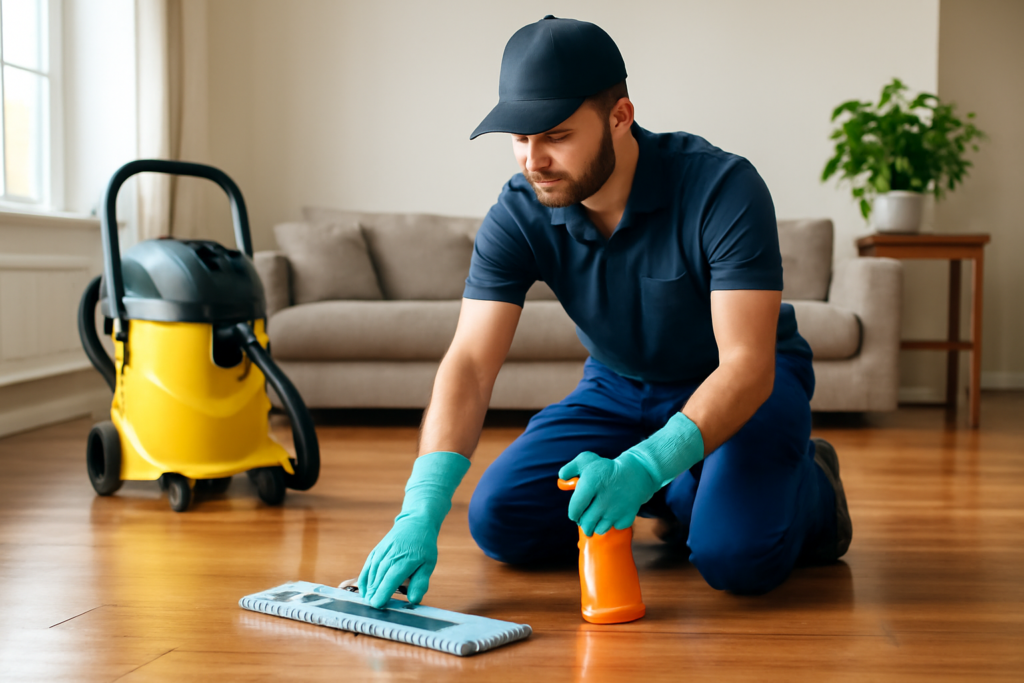
A quality service goes far beyond running a wet mop across your boards. Technicians typically begin by dry-dusting and vacuuming to remove loose grit, which is the abrasive enemy of any wood floor. They then apply a professional-grade wood cleaner and agitate it with a soft mechanical scrubber or buffer fitted with a non-abrasive pad, working the solution into the finish to break down layers of built-up residue.
The dirty solution is immediately extracted with a specialized wet-vac or auto-scrubber, so standing water never lingers on the wood. Many companies finish by applying a fresh coat of protective polish or a maintenance sealer that restores sheen and adds a sacrificial layer of protection. The whole process is engineered to clean deeply while keeping moisture exposure to a safe minimum.
Why Not Just Do It Yourself
Plenty of homeowners can maintain their floors day to day, and you should. The gap shows up in the deep-clean stage, where professionals have three real advantages: equipment, chemistry, and experience. Their buffers and extraction machines remove residue that a household mop simply smears around, and their neutral-pH cleaners will not haze or degrade a polyurethane finish the way vinegar, oil soaps, or steam mops can.
Experience is the quiet differentiator. A seasoned technician reads your floor, identifies the finish type, spots areas of wear before they become damage, and adjusts the approach accordingly. That judgment protects an expensive floor from the well-meaning mistakes, like over-wetting or using the wrong product, that cause cupping, dulling, and cloudy buildup in the first place.
There is also a time-and-effort factor worth naming. Deep-cleaning a whole floor by hand is slow, physically demanding work, and most homeowners give up before the residue is truly gone. A crew with the right machines completes in a few hours what would take you an exhausting weekend, and the result is more consistent from board to board because the equipment applies even pressure across the entire surface.
What a Professional Hardwood Floor Cleaning Service Costs
Pricing usually runs by the square foot. For a straightforward deep clean, expect roughly $0.50 to $2.00 per square foot, which puts a typical 500-square-foot main level somewhere between $250 and $500. Add a rejuvenating polish or recoat of maintenance finish, and the rate climbs to about $1.50 to $3.00 per square foot.
Several factors move the number. Heavily soiled floors, intricate layouts with lots of furniture, staircases, and travel to rural areas all add cost. Many companies set a minimum service charge of $150 to $250 for small jobs. Always ask whether the quote includes moving furniture, applying a protective topcoat, and treating high-traffic problem areas, so you can compare bids fairly.
How to Prepare for the Appointment
A little preparation helps the crew work efficiently and keeps your final bill predictable. Clear small furniture, rugs, floor lamps, and breakables from the rooms being cleaned, and secure pets in a separate area for the day. Point out any trouble spots in advance, such as pet-stain zones, sticky patches near the kitchen, or areas where the finish already looks worn.
It also pays to tell the technician what you have been using on the floors. If you have applied oil soaps or acrylic waxes, mention it, because those residues change how a cleaner behaves and may require an extra stripping step. Plan for the floor to be off-limits for a few hours while any polish or maintenance coat dries fully before you walk on it.
Deep Cleaning Versus Refinishing
This is the decision that saves or costs you the most money, so it deserves careful thought. A professional cleaning restores floors that are dull, dirty, or hazy but structurally sound, with a finish that is still intact. If your boards simply look tired and grimy, cleaning at a few hundred dollars is dramatically cheaper than sanding.
Refinishing, by contrast, is the answer when the finish itself has failed. Deep scratches that reach bare wood, gray or black water stains, worn traffic paths down to raw fibers, and widespread flaking all signal that no amount of cleaning will help. A full sand-and-refinish typically costs $3 to $8 per square foot, many times the price of a clean, so an honest technician will tell you which stage your floors are truly in.
A Middle Ground: Screen and Recoat
There is a valuable option many homeowners overlook that sits between cleaning and full refinishing. Known as a screen and recoat, or a buff and coat, it involves lightly abrading the existing finish with a fine screen, then applying one fresh coat of polyurethane. It refreshes worn-looking floors without the dust and expense of sanding down to bare wood.
A screen and recoat usually runs $1 to $2 per square foot and works only when the original finish is intact and free of waxes or oil-based residues. It is an ideal choice when a deep clean is not quite enough but the floor does not yet need a complete overhaul. Ask your cleaning service whether they offer it, since it can add years of life for a modest investment.
Choosing a Reputable Provider
Not every carpet cleaner who advertises wood floor service truly specializes in it, so vet your provider. Look for companies with specific hardwood experience, verifiable reviews, and liability insurance, and ask what cleaning system and finish products they use. A reputable outfit will happily explain their process and set realistic expectations rather than promising a like-new floor from cleaning alone.
Request an on-site or photo-based estimate rather than a phone quote sight unseen, and be wary of prices that seem suspiciously low. Confirm whether they guarantee their work and how they handle problem areas that do not respond to cleaning. A trustworthy technician would rather tell you a floor needs refinishing than take your money for a service that will disappoint.
Making the Call for Your Floors
Booking a professional hardwood floor cleaning service is one of the most cost-effective ways to protect a major investment in your home. For a few hundred dollars, you can strip away years of residue, restore the natural glow of the wood, and add a protective layer that keeps grime from digging in again. Regular professional cleaning, perhaps every one to three years depending on traffic, also stretches the time between costly refinishes.
The smartest homeowners combine consistent day-to-day maintenance with a periodic professional deep clean, and they call in a specialist to honestly assess whether cleaning, a screen and recoat, or full refinishing is warranted. Match the service to your floor’s real condition, choose a qualified provider, and your hardwood will keep its warmth and character for decades to come.
Prefer to explore on your own?
See how new flooring looks in your actual room in seconds — free, no signup.
Try the free Floor Studio →