Whether you are hosting a kitchen remodel, moving furniture across new hardwood, or simply trying to keep an entryway from wearing thin, protective floor coverings are the cheapest insurance you can buy for one of the most expensive surfaces in your home. A single dropped tool or dragged sofa leg can gouge a floor that cost thousands to install, and the coverings that prevent that damage often cost only a few dollars. This guide walks through every major type, when to use each, and how to choose the right product for temporary jobs and everyday protection alike.
Floors take a beating from foot traffic, spills, dropped objects, rolling loads, and construction debris. The good news is that there is a purpose-built covering for each of those threats, and knowing the difference saves both your floors and your money.
Why Floor Protection Pays for Itself
Refinishing hardwood runs $3 to $8 per square foot, replacing damaged tile means matching discontinued lots, and a scratched luxury vinyl plank often cannot be spot-repaired at all. Against those numbers, protective floor coverings are trivially cheap. Contractors use them not only to protect the client’s floors but to protect themselves from liability, and homeowners should adopt the same habit for any project or high-wear zone.
Beyond damage prevention, coverings keep dust and debris contained, reduce slip hazards during work, and make cleanup dramatically faster. The right covering turns a risky afternoon of moving appliances into a routine one.
Temporary Coverings for Projects and Moves
When you are painting, remodeling, or relocating furniture, you need coverings that go down fast and lift away clean. Several products dominate this category, each suited to a specific hazard.
- Adhesive floor film: A self-sticking plastic film that rolls out over hard floors and clings without residue. Ideal for protecting finished floors during painting or drywall work.
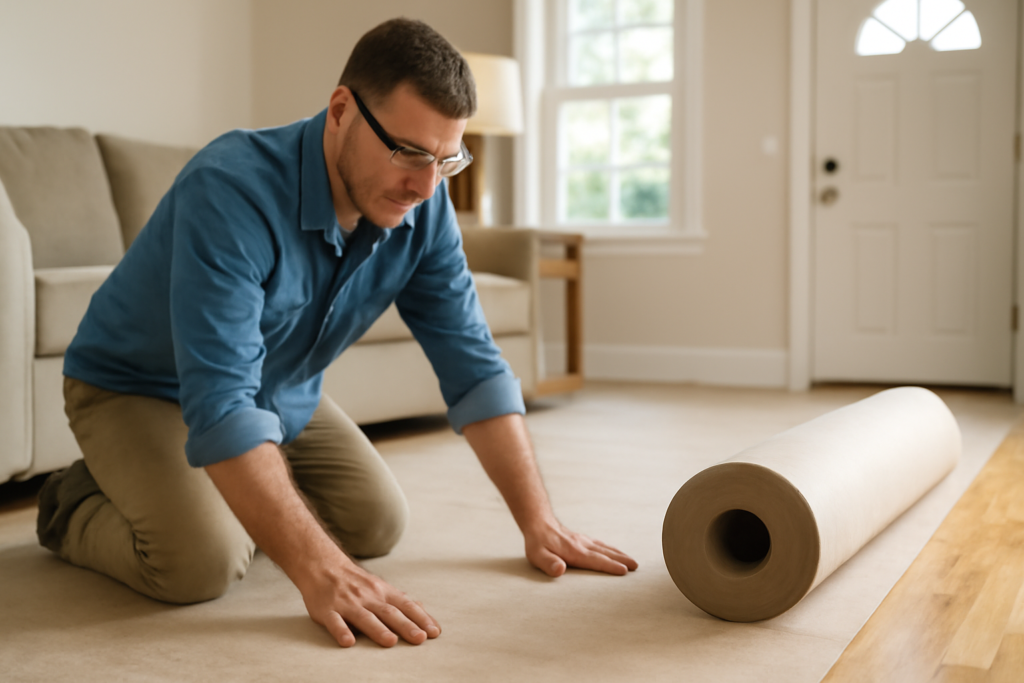
- Ram Board and heavy paper: Thick, breathable temporary flooring board that resists spills and dropped tools. The contractor standard for whole-room renovations.
- Canvas and butyl drop cloths: Reusable, slip-resistant, and absorbent for paint jobs. Canvas stays put better than plastic sheeting.
- Corrugated cardboard rolls: Cheap cushioning for moving day, protecting floors from furniture legs and dollies.
- Ram-style carpet film: A sticky film made specifically for carpet, keeping it clean during construction traffic.
Match the product to the surface. Sticky film that grips hardwood beautifully will pull fibers loose if you slap it on carpet, so always use the carpet-specific version there. For heavy rolling loads like appliance dollies, layer hardboard or Ram Board over film for both cushioning and grip.
Everyday Protective Coverings
Not all protection is temporary. Some of the best protective floor coverings live in your home permanently, quietly absorbing daily wear. Entry mats catch grit and moisture before shoes track them across the floor, and a good mat setup, one outside the door and one inside, stops the majority of abrasive dirt at the threshold. Runners protect hallways and stair treads, the highest-traffic paths in any house, and area rugs shield the open floor under dining tables and living-room seating.
Under rolling office chairs, a hard chair mat prevents caster wear that will otherwise carve a visible arc into hardwood or vinyl within a year. In kitchens, anti-fatigue mats at the sink and stove protect both your back and the floor from constant standing and dropped cookware.
Furniture Pads and Point Protection
Some of the most damaging events are also the smallest: a chair leg dragged an inch, a table foot pressing into vinyl. Felt pads under every furniture leg are the single highest-value protective covering in the house, costing a few dollars and preventing countless scratches. For heavy pieces, use larger self-adhesive felt or a slip-on cup. Under exercise equipment and appliances, rubber or PVC mats spread the load and stop point pressure from denting softer floors.
Refresh felt pads at least once a year, because they compress, collect grit, and eventually let the leg contact the floor again. Vacuum around furniture feet so trapped debris does not turn a protective pad into a piece of sandpaper.
Matching the Covering to the Floor
The right protective floor covering depends heavily on what is underneath. Hardwood and laminate demand non-adhesive or gentle-adhesive products and hate trapped moisture, so use breathable board rather than sealed plastic for long jobs. Tile is tough but grout is not, so cushion against dropped tools. Luxury vinyl and linoleum can react badly to rubber-backed mats, which sometimes stain or discolor the surface, so choose coverings labeled non-staining for those floors.
Carpet needs breathable, low-tack products; anything fully sealed traps humidity and risks mildew during a long project. When in doubt, test any adhesive product on a hidden corner for 24 hours before committing to a full room.
Buying Tips and Reusability
For a one-time move, cheap cardboard and a canvas drop cloth get the job done for under $50. For a multi-week renovation, invest in Ram Board and quality floor film, which protect better and hold up to constant traffic. For permanent protection, spend on durable mats and rugs with non-slip, non-staining backings rather than the bargain versions that curl and discolor.
Think in terms of reusability: canvas cloths, Ram Board, and quality mats last for years and pay back their cost many times over, while single-use film and paper are best reserved for messy or short jobs.
Common Mistakes to Avoid
The most frequent error homeowners make is leaving a covering down too long. Adhesive films and sealed plastic sheeting are meant for days or a few weeks, not months. Left in place through a long renovation, they can trap moisture against hardwood or react with a floor finish and leave a hazy residue or discoloration that is worse than the damage you were trying to prevent. Always check the manufacturer’s maximum recommended duration and lift a corner periodically to inspect the surface underneath.
The second mistake is using the wrong product on the wrong floor: sticky film on carpet, rubber-backed mats on vinyl, or thin paper where a heavy tool is going to land. A covering that grips a tile floor perfectly might pull up laminate’s wear layer or stain luxury vinyl. When you are unsure, spend the extra dollar on the surface-specific version, and never assume that because a product protects one floor it is safe on another. A little research up front prevents the ironic outcome of a protective covering causing the very damage it was bought to stop.
With the right mix of protective floor coverings, temporary for projects and permanent for daily life, you can keep expensive floors looking new for a fraction of what a single repair would cost.
Prefer to explore on your own?
See how new flooring looks in your actual room in seconds — free, no signup.
Try the free Floor Studio →