
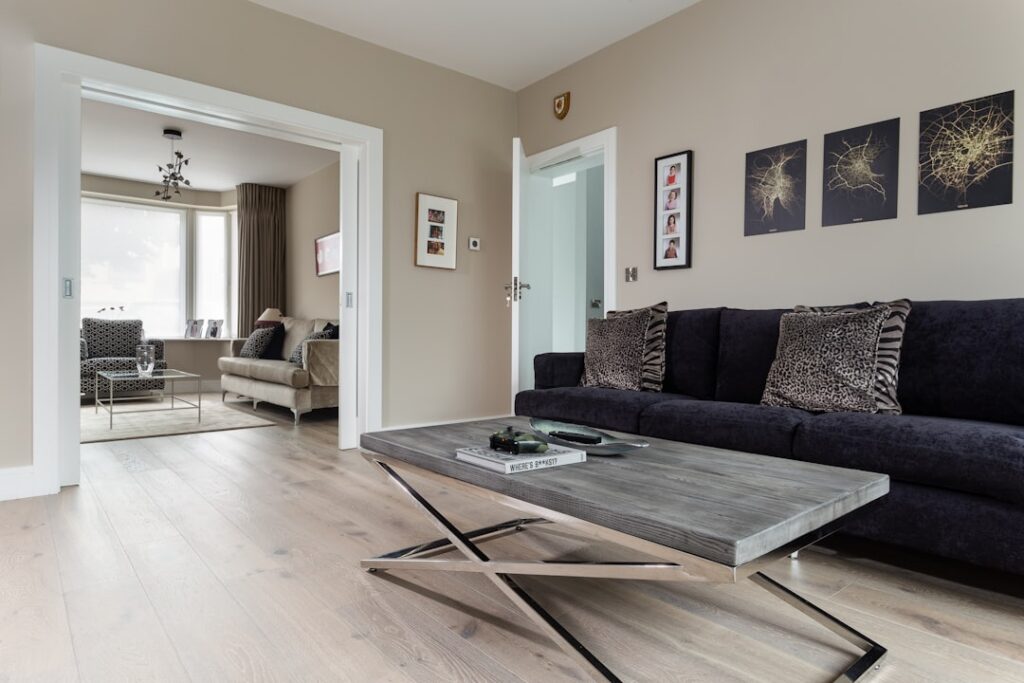
A decade ago, waterproof wood-look flooring meant a thin sheet of vinyl that looked like vinyl. Today, PVC wooden flooring can fool a flooring inspector at three feet, complete with registered embossing that matches the printed grain pattern and beveled edges that hide seams. The technology has come far, but the category still contains plenty of junk products sold next to genuinely excellent ones. Here is how to tell them apart.
What the Category Actually Is
This product family is a broad umbrella term for vinyl-based planks printed to look like hardwood. Depending on the construction, it goes by several names: luxury vinyl plank (LVP), rigid core vinyl, stone polymer composite (SPC), wood polymer composite (WPC), and simply waterproof plank. All share a polyvinyl chloride base layer, a printed wood-grain film, and a urethane wear layer on top.
The differences matter. Flexible LVP is thinner, cheaper, and telegraphs every subfloor lump. Rigid core products add limestone or foamed PVC to stiffen the plank, which hides minor subfloor imperfections and installs faster. Premium brands now include attached underlayments, antimicrobial treatments, and even embossed-in-register textures.
Wear Layer and Thickness Decoded
Two numbers determine durability: total thickness (in millimeters) and wear layer (in mils, which are thousandths of an inch). Total thickness affects feel and stability. Wear layer affects scratch and scuff resistance. A 5 mm plank with a 20 mil wear layer outperforms an 8 mm plank with a 6 mil wear layer in every real-world test.
- 6 to 8 mil wear layer: rental properties, low-traffic rooms
- 12 mil: residential, moderate traffic, no pets
- 20 mil: family homes with pets and kids
- 22 to 30 mil: light commercial, exceptional residential
- 40 mil and above: heavy commercial installations
Core Construction Compared
Flexible LVP has no rigid core. It bonds to the subfloor with pressure-sensitive or full-spread adhesive and requires very flat substrates. WPC uses a foamed core that feels warmer underfoot and is quieter acoustically. SPC uses a denser stone-polymer core that resists dents from heavy furniture and appliances.
For most American homes, SPC wins the argument. It tolerates temperature swings in sunrooms, dent resistance handles refrigerators and piano legs, and it handles the occasional spill or washing machine leak without swelling. WPC feels nicer in bedrooms but loses to SPC in kitchens and entryways.
Cost Ranges for 2026
Prices have stabilized after five years of inflation in the category. Here is what you will pay in most US markets this year:
- Budget imported LVP: $0.99 to $1.99 per sq ft
- Mid-range SPC/WPC at big-box stores: $2.50 to $4.50 per sq ft
- Premium SPC with 20 to 30 mil wear layer: $4.50 to $7 per sq ft
- Designer collections (Karndean, Mannington): $6 to $10 per sq ft
- Installation labor floating: $1.50 to $3 per sq ft
- Installation labor glue-down: $2.50 to $5 per sq ft
Pros of PVC Wooden Flooring
- 100 percent waterproof on premium products
- Works in basements, kitchens, bathrooms, and laundry rooms
- Installs over existing hard surface floors in most cases
- No sanding, staining, or acclimation drama
- Scratch and dent resistant with a proper wear layer
- Compatible with radiant heat up to 85 degrees F
Cons Worth Taking Seriously
- Does not add the same resale value as real hardwood
- PVC off-gases VOCs, especially in the first weeks
- Cannot be refinished when the wear layer eventually fails
- Some products still look plasticky under direct sunlight
- Ends up in landfills; recycling options remain limited
- Strong direct sunlight can cause fading and thermal expansion
How to Spot Quality at the Store
Pick up a plank. If it feels like a roof shingle, put it back. A quality product has heft to it; an SPC plank at 6 mm should weigh around 2 pounds per square foot. Flex a corner gently. The click lock should snap crisply; a mushy feel means the extrusion is soft and the joint will fail early.
Look at the print. Premium products use 4 or 6-color direct printing with registered embossing, meaning the texture follows the grain pattern. Budget products use 2-color printing with random embossing, which looks fake once you know what to spot. Finally, check the warranty. Commercial warranties over residential prices signal confidence. Warranties under 10 years signal a product the maker does not trust.
Installation Done Right
Most rigid core planks install as a floating floor with tongue-and-groove or drop-lock click joints. Prepare the subfloor first: sweep, vacuum, check flatness with an 8-foot straightedge, and fix anything worse than 3/16-inch variation. Lay a vapor barrier over concrete, even if the product has an attached pad.
- Acclimate the planks 48 hours in the installation room
- Start with a 1/4-inch expansion gap at all walls and fixed objects
- Stagger end joints 6 to 8 inches minimum
- Cut with a utility knife (flexible) or miter saw (rigid core)
- Install transitions at doorways and in rooms larger than 30 feet in any direction
Top Brands Worth Shopping
COREtec remains the category leader with excellent visuals and a 25-year residential warranty. Shaw Floorte Pro, Mohawk SolidTech Plus, and Armstrong Luxe Rigid Core all offer strong mid-range options. LL Flooring CoreLuxe and Home Depot LifeProof provide solid value at lower prices. For designer visuals and commercial durability, Karndean Korlok Select and Mannington Adura Rigid lead the premium tier.
Where It Belongs and Where It Does Not
This category is my first choice for basements, kitchens, laundry rooms, mudrooms, and homes with pets. It handles water, kids, and heavy traffic better than any other wood-look option. I reach for engineered or solid hardwood instead in formal living rooms, primary bedrooms, and high-end homes where authenticity drives value. A well-chosen PVC floor will serve you 15 to 25 years, and that is plenty of life for the money.
Prefer to explore on your own?
See how new flooring looks in your actual room in seconds — free, no signup.
Try the free Floor Studio →

