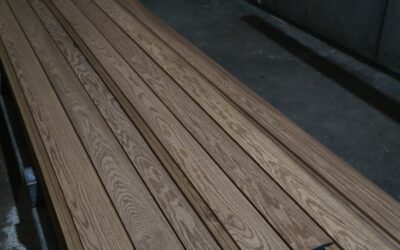
Bamboo can be one of the hardest, most striking floors in your home, or a warped, formaldehyde-laden disappointment, and the difference comes down to how it was made. Quality bamboo flooring is engineered from mature, properly harvested bamboo using tight manufacturing tolerances and low-emission adhesives, and it can outperform many traditional hardwoods on hardness. The problem is that the market is flooded with cheap imports that share the name but none of the performance. This guide shows you how to tell them apart.
How Bamboo Flooring Is Made
Bamboo is technically a grass, not a wood, but it is milled into planks that install just like hardwood. There are three main constructions, and they perform very differently.
- Horizontal (flat-grain): strips glued side by side, showing the classic knuckle pattern. Attractive but the softest of the three.
- Vertical: strips stood on edge and fused, giving a uniform, striped look with moderate hardness.
- Strand-woven: shredded bamboo fibers compressed under intense heat and pressure with resin. This is the gold standard, and it is what most quality bamboo flooring is today.
Strand-woven bamboo can reach a Janka hardness rating of 3,000 to 5,000 pounds-force, compared with about 1,290 for red oak. That is why it stands up so well to kids, pets, and heavy furniture.
How to Spot Quality Bamboo Flooring
Price alone will not tell you what you are buying. Use these markers to separate genuine quality from bargain-bin product:
- Harvest age: the bamboo should be harvested at 5 to 6 years of maturity. Younger bamboo is soft and dents easily.
- Construction: favor strand-woven for durability; confirm it is not just a thin veneer over a cheap core.
- Emissions certification: look for CARB2 or TSCA Title VI compliance, plus FloorScore or GREENGUARD Gold for low VOC off-gassing.
- Wear layer and finish: multiple coats of aluminum-oxide urethane, ideally 7 or more, signal a durable surface.
- Warranty: reputable brands back residential wear for 25 years or more. A 5-year warranty is a red flag.
Ask the retailer for the moisture content at the time of manufacturing too. Well-made bamboo is milled to around 6 to 9 percent moisture so it stays stable once installed.
What It Costs
Expect to pay $3 to $8 per square foot for the material, with premium strand-woven and engineered click-lock lines running $6 to $10. Installation adds $3 to $5 per square foot for nail-down or glue-down, and floating click floors can be a weekend DIY job that saves that labor entirely.
For a 400-square-foot living room, a realistic installed total is $2,400 to $6,000 depending on grade and method. That puts quality bamboo roughly on par with mid-range oak while often exceeding it in hardness. Cheaper bamboo exists at $2 per square foot, but it is usually horizontal-grain, thinly finished, and prone to denting and cupping, so it is a false economy.
Durability and Moisture
Strand-woven bamboo resists dents and scratches remarkably well, but it is not immune to moisture. Like hardwood, it can swell, cup, or gap if it gets wet or lives in wildly swinging humidity. Keep indoor relative humidity between 30 and 50 percent, and wipe spills promptly rather than letting them sit.
Bamboo is a strong choice for living rooms, bedrooms, hallways, and offices. Kitchens are fine with prompt spill cleanup. Avoid installing standard bamboo in bathrooms, laundry rooms, or below-grade basements where humidity and standing water are a constant threat. If you need bamboo in a damp area, choose an engineered strand-woven product with a waterproof core rated for those conditions.
Installation Methods
Quality bamboo comes in three install formats. Solid strand-woven planks are typically nailed or stapled to a wood subfloor. Engineered bamboo can be glued down over concrete or floated as a click-lock system over an underlayment. Whichever you choose, acclimate the boxes in the installation room for at least 72 hours so the planks reach equilibrium with your home’s climate.
Two details make or break the result. Keep a 1/4- to 1/2-inch expansion gap around every wall and fixed object, since bamboo moves with seasonal humidity. And verify the subfloor is flat and dry, testing concrete with a calcium chloride or in-situ probe test before you glue anything down. Rushing acclimation is the most common cause of gapping and cupping in an otherwise good floor.
Bamboo Versus Traditional Hardwood
The most common question homeowners ask is how bamboo stacks up against oak or maple. On hardness, strand-woven bamboo usually wins outright, often doubling or tripling the Janka rating of common domestic species. On sustainability it wins too, since bamboo matures in five to six years versus the decades an oak needs.
Where hardwood holds an edge is in refinishing and resale perception. Solid hardwood can be sanded and refinished many times over a century of use, while most bamboo tolerates only one or two refinishes. Some buyers and appraisers still perceive solid hardwood as more premium, though that gap narrows every year as quality bamboo becomes mainstream. Grain character differs too. Bamboo offers a cleaner, more contemporary look with subtle nodes, while hardwood delivers the varied knots and figure many traditional buyers prefer. Neither is objectively better; the right pick depends on your budget, your style, and how much you value renewability.
Formaldehyde and Air Quality Concerns
Bamboo’s reputation took a hit years ago when cheap imports were found off-gassing formaldehyde from the adhesives used to bond the strands. The industry has largely fixed this, but the burden is on you to buy responsibly. Any product sold legally in the United States should meet the CARB2 and federal TSCA Title VI emission limits, which cap formaldehyde release to safe levels.
For extra assurance, especially in bedrooms and homes with children, look for FloorScore or GREENGUARD Gold certification on the box or spec sheet. These third-party programs test the finished product, not just the raw material, and confirm it will not meaningfully degrade your indoor air. If a retailer cannot produce emission documentation for a suspiciously cheap floor, walk away without hesitation. The short-term savings are simply not worth breathing formaldehyde for years, and a genuinely quality bamboo floor will always have this paperwork readily available on request.
Cleaning and Long-Term Care
Care mirrors hardwood. Sweep or dust-mop regularly, and damp-mop with a barely moist microfiber and a hardwood-safe, pH-neutral cleaner. Skip water floods, steam mops, vinegar, and wax-based products, all of which can dull or damage the finish over time.
Protect the surface with felt pads under furniture, area rugs in high-traffic lanes, and a no-shoes or soft-sole policy where you can manage it. Many strand-woven floors thick enough to sand can be refinished once or twice over their life, extending a good floor past 25 years. With sensible care, quality bamboo keeps its color and character for decades.
Is Quality Bamboo Flooring Worth It
If you want a hard, sustainable, good-looking floor and you are willing to buy from a reputable brand with real certifications, quality bamboo flooring is an excellent value. The material renews far faster than hardwood, the strand-woven grades are extremely tough, and the modern finishes look sharp. Just refuse to shop on price alone. Insist on strand-woven construction, low-emission certification, and a strong warranty, and you will get a floor that competes head-to-head with oak while costing the planet a good deal less.
Prefer to explore on your own?
See how new flooring looks in your actual room in seconds — free, no signup.
Try the free Floor Studio →