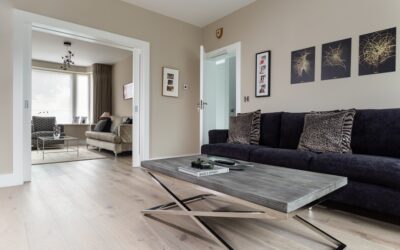
Cheap laminate earned the whole category a bad reputation, and that is a shame, because the good stuff is genuinely excellent. Quality laminate flooring looks convincingly like hardwood, shrugs off scratches that would scar real wood, and installs over a weekend without a single nail. The difference between a floor you regret and one you love comes down to a handful of specs most shoppers never learn to read.
Choosing quality laminate flooring means understanding the AC wear rating, plank thickness, core material, and finish, then matching those to how your household actually uses the room. This guide breaks down every spec that matters, weighs the honest pros and cons, and tells you what to spend so you buy a floor that lasts 20 years instead of five.
What Sets Quality Laminate Flooring Apart
Laminate is a layered product: a clear wear layer on top, a printed design layer that mimics wood or stone, a dense core board, and a backing layer. Quality lives in each of those layers. Budget laminate uses a thin wear layer, a low-density core, and a flat, unrealistic print. Premium laminate uses a tough wear layer, a dense moisture-resistant core, embossed texture that lines up with the grain, and beveled edges that read like real planks.
The result is a floor that resists dents, fading, and moisture far better than the bargain-bin version, while still costing a fraction of hardwood. Learning to read the specs is how you tell them apart on a showroom floor where they can look similar at a glance.
Decoding the AC Wear Rating
The single most important spec is the Abrasion Class, or AC rating, which measures durability against wear, impact, and staining on a scale from AC1 to AC5. Match the rating to your traffic:
- AC1 — light residential, closets and bedrooms only. Skip it for main areas.
- AC2 — moderate residential, living and dining rooms with normal use.
- AC3 — heavy residential and light commercial; the sweet spot for most busy homes.
- AC4 — general commercial and homes with pets and heavy traffic.
- AC5 — heavy commercial; overkill for most homes but bulletproof.
For a family home with kids and pets, look for AC3 or AC4. Anything below AC3 in a hallway or kitchen will show wear paths within a few years. Do not pay AC5 prices for a guest bedroom, but never cheap out below AC3 in your main living space.
Thickness and Why It Matters
Plank thickness ranges from about 6 mm to 12 mm, and thicker generally means better. Thicker planks feel more solid underfoot, sound quieter and less hollow, and bridge minor subfloor imperfections more forgivingly. They also have deeper, more convincing embossing and stronger locking joints.
For quality laminate, target 10 mm to 12 mm. An 8 mm plank is acceptable for lighter-use rooms and tighter budgets, but 6 mm feels cheap and clicks together loosely. Remember that thickness measurements sometimes include an attached underlayment pad, so ask whether the number is the board alone. Thicker planks with a pre-attached pad make installation faster and quieter.
Core Material and Moisture Resistance
The core board is the hidden hero. Most laminate uses high-density fiberboard, or HDF, and the density of that core determines how well the floor resists dents and moisture. A denser core stands up to a dropped pan or a dog’s nails; a soft core dents and swells.
Traditional laminate is not waterproof, and its Achilles’ heel is standing water swelling the core at the seams. Newer water-resistant and waterproof laminates use a treated core and tighter joints, and some add a rigid or stone-plastic component. If you are putting laminate in a kitchen, entry, or anywhere spills happen, spend up for a water-resistant product rated for those areas. For dry bedrooms and living rooms, standard HDF laminate is fine as long as you wipe spills promptly.
The Honest Pros and Cons
Laminate is not perfect, and knowing the trade-offs helps you decide. The strengths:
- Convincing wood and stone looks at a fraction of hardwood cost
- Excellent scratch and dent resistance from the tough wear layer
- Easy floating-floor installation with click-lock joints, no glue or nails
- Low maintenance and no refinishing needed
- UV-stable colors that resist fading
The drawbacks are worth respecting:
- Standard laminate is vulnerable to standing water and cannot be refinished
- It can sound hollow underfoot without a good underlayment
- It does not add the resale value of real hardwood
- Once the wear layer is breached, the plank must be replaced, not repaired
Installation Essentials
One reason laminate is so popular is that a determined DIYer can install it. It floats over the subfloor, meaning it is not fastened down, which allows for expansion. Key steps for a lasting job:
- Acclimate the planks in the room for 48 hours so they adjust to temperature and humidity.
- Start with a flat, clean, dry subfloor; laminate telegraphs bumps and dips over 3/16 inch in 10 feet.
- Lay a quality underlayment, or use planks with an attached pad, to quiet the floor and add moisture protection.
- Leave a 1/4- to 3/8-inch expansion gap around all walls and fixed objects, hidden by baseboard or quarter-round.
- Stagger end joints by at least 8 to 12 inches so seams do not line up and weaken.
The expansion gap is the rule people break most, and skipping it causes the floor to buckle when it grows in humid weather.
Reading the Texture and Finish
Visual realism separates convincing laminate from the obvious fake, and it comes down to the surface treatment. The best quality laminate uses embossed-in-register texture, where the surface bumps and grooves line up exactly with the printed wood grain. Run your hand across it and you feel the grain where you see it, just like real wood. Cheaper laminate has a generic repeating texture that does not match the print, which reads as plastic up close.
Look also at the number of unique plank designs in a box. Premium lines use 8, 12, or more distinct board images so the floor does not show an obvious repeating pattern every few planks. Beveled or micro-beveled edges create the shadow line of individual boards, adding to the illusion. Finish sheen matters too: a low-gloss or matte finish looks more like natural wood and hides scuffs and footprints far better than a shiny surface. When comparing samples, lay several planks together and step back to spot repeats and judge the realism from standing height.
Best Rooms for Laminate and Where to Avoid It
Matching laminate to the right rooms is half the battle. It excels in bedrooms, living rooms, dining rooms, hallways, and home offices, where it delivers a wood look with excellent durability and easy installation. With a water-resistant product, it also works well in kitchens and entryways that see occasional spills.
Be cautious in full bathrooms, laundry rooms, and basements. Standard laminate and standing water do not mix, and the core can swell if water sits in a seam. For those wet or below-grade spaces, either choose a specifically waterproof laminate rated for them or consider luxury vinyl plank instead, which handles moisture without worry. Basements bring a second issue: concrete slabs can wick moisture, so use a vapor-barrier underlayment and test the slab for moisture before installing. Put quality laminate where its strengths shine and keep it out of standing-water zones, and it will reward you with years of good-looking, low-maintenance floor.
What Quality Laminate Costs
Prices reflect the specs. Budget laminate runs $1 to $2 per square foot, but it is thin, low-AC, and not worth it for main areas. Quality laminate, meaning AC3 to AC4, 10 to 12 mm, with realistic texture and water resistance, runs $2.50 to $5 per square foot. Premium waterproof laminate with high-end visuals reaches $5 to $7.
Professional installation adds $2 to $5 per square foot, though DIY can eliminate that entirely. For a 300-square-foot room, quality materials run about $750 to $1,500, with pro install adding $600 to $1,500. That is a strong value against hardwood at two to four times the price.
When you compare products in the store, ask to see the spec sheet rather than trusting the display. Confirm the AC rating, the total thickness and whether it includes an attached pad, the core type and any moisture rating, and the warranty length. A strong residential warranty of 25 to 30 years signals a manufacturer’s confidence in the wear layer. Bring home a few sample planks and lock them together on your own floor to feel the joint quality and hear whether they click tight or loose.
Spend on the AC rating, thickness, and moisture resistance, install it with a proper expansion gap and underlayment, and quality laminate flooring will look great and hold up for two decades. Put it in the right rooms, keep it out of standing water unless it is rated waterproof, and give it a flat subfloor to float over. Get those fundamentals right and you end up with a convincing wood look, real durability against kids and pets, and a floor you installed yourself for a fraction of what hardwood would have cost.
Prefer to explore on your own?
See how new flooring looks in your actual room in seconds — free, no signup.
Try the free Floor Studio →