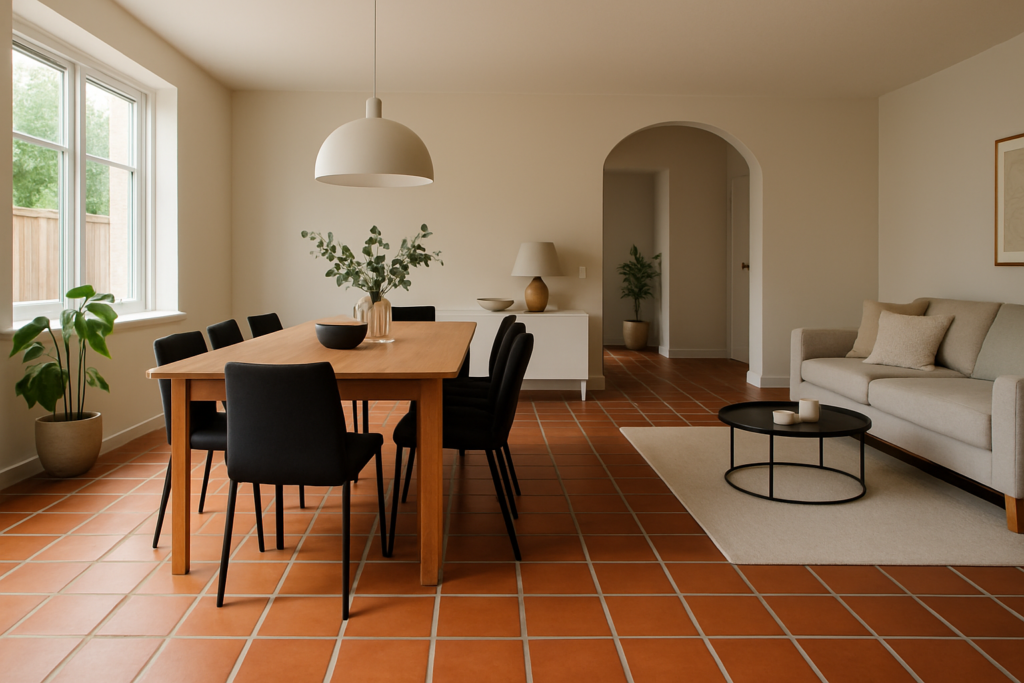
Quarry tile is a dense, unglazed clay tile that has been the flooring standard in commercial kitchens, breweries, and high-traffic institutional spaces for over a century. Made from natural clay or shale fired at extremely high temperatures, quarry tile delivers exceptional durability, superior slip resistance, and a distinctive earthy aesthetic that is equally at home in a busy restaurant kitchen or a rustic residential entryway.
This guide covers everything you need to know about quarry tile — what it is, how it differs from ceramic and porcelain, available colors, cost, installation, sealing, maintenance, and the indoor and outdoor applications where quarry tile excels.
What Is Quarry Tile?
Despite the name, quarry tile does not come from a quarry. The name derives from the Middle English word “quarrel,” meaning a small square. Quarry tile is manufactured by extruding natural clay or shale through a mold and firing it at temperatures between 2,000°F and 2,200°F — significantly higher than standard ceramic tile. This extreme firing process creates a tile that is exceptionally dense, hard, and resistant to moisture, chemicals, and physical impact.
The defining characteristic of quarry tile is that it is unglazed — the color runs entirely through the body of the tile rather than being applied as a surface coating. This means that chips, scratches, and wear do not expose a different-colored base material. The through-body color maintains a consistent appearance even under heavy wear, which is why quarry tile has been the default choice for commercial kitchens and high-traffic institutional floors for decades.
Standard quarry tile sizes include 6×6, 8×8, and 4×8 inches, with thicknesses ranging from 0.5 to 0.75 inches. The tile is typically square-edged (not cushioned) and installed with narrow grout joints for a dense, uniform floor surface.
Quarry Tile Colors
Because quarry tile is unglazed, its color comes entirely from the natural clay composition and firing temperature. The color range is more limited than glazed ceramic or porcelain but offers a rich palette of natural earth tones.
Classic red (terracotta): The most traditional and widely available quarry tile color. The warm reddish-brown tone is the signature look of commercial kitchens, Mediterranean interiors, and Southwestern design. Natural variation in the clay creates subtle tone differences between tiles, adding visual depth.
Brown and chocolate: Darker clay compositions produce rich brown tones that work well in rustic, traditional, and industrial settings. Brown quarry tile is popular for entryways and mudrooms where it conceals dirt effectively.
Gray: Higher firing temperatures and specific clay types produce gray quarry tile that suits modern, industrial, and contemporary design. Gray quarry tile has gained popularity for residential use as an alternative to more common gray porcelain.
Tan and buff: Lighter clay compositions create warm tan tones that pair well with Southwestern, Mediterranean, and transitional interiors. Tan quarry tile brightens spaces while maintaining the warm, earthy character of the material.
Flash (multi-toned): Some quarry tiles are fired to intentionally create color variation across each tile — darker at the edges and lighter in the center, or vice versa. Flash-fired quarry tile creates a more dynamic, visually interesting floor surface.
Quarry Tile vs Ceramic vs Porcelain
| Feature | Quarry Tile | Ceramic Tile | Porcelain Tile |
|---|---|---|---|
| Material | Natural clay, unglazed | Clay, glazed surface | Refined clay, glazed or unglazed |
| Firing temperature | 2,000 – 2,200°F | 1,800 – 2,000°F | 2,200 – 2,400°F |
| Water absorption | 1 – 5% | 3 – 7% | < 0.5% |
| Slip resistance | Excellent (naturally textured) | Varies (depends on glaze) | Good (varies by finish) |
| Through-body color | Yes | No (glaze surface only) | Varies (some full-body) |
| Stain resistance | Low (porous, needs sealing) | High (glazed surface) | Very high |
| Durability | Very high | Moderate | Very high |
| Cost per sq ft | $2 – $7 | $1 – $15 | $3 – $20 |
| Design options | Limited (earth tones) | Unlimited | Unlimited |
The key advantage of quarry tile over ceramic and porcelain is its superior natural slip resistance and through-body color durability. The key disadvantage is its limited color palette and need for sealing. For a broader comparison of all tile types, visit our tile flooring guide.
Slip Resistance
Slip resistance is quarry tile’s most important functional advantage. The unglazed surface texture provides outstanding traction, even when wet — which is why quarry tile has been the standard flooring in commercial kitchens, breweries, and food processing facilities where wet floors are constant.
Quarry tile typically achieves a DCOF (Dynamic Coefficient of Friction) rating of 0.60 or higher, well above the ADA minimum of 0.42 for level surfaces. Some textured quarry tiles exceed 0.70 DCOF. By comparison, polished porcelain tile may rate as low as 0.30 to 0.40 when wet — potentially hazardous in commercial environments.
For commercial kitchens and areas subject to constant water and grease exposure, look for quarry tile with an abrasive surface texture or select tiles specifically rated for wet commercial use. Avoid sealing commercial kitchen quarry tile with topical sealers that can reduce surface friction.
Quarry Tile Cost
| Cost Component | Price Range |
|---|---|
| Quarry tile (material) | $2 – $7 per sq ft |
| Professional installation | $4 – $8 per sq ft |
| Total installed | $6 – $15 per sq ft |
| Sealer | $0.50 – $2 per sq ft |
| Thinset mortar | $0.25 – $0.75 per sq ft |
| Grout | $0.25 – $0.50 per sq ft |
Quarry tile is one of the most affordable durable flooring options available. Standard 6×6 red quarry tile can be purchased for as little as $2 per square foot, making it significantly less expensive than porcelain or natural stone for large commercial installations. Premium colors and sizes cost more but rarely exceed $7 per square foot for material.
Common Uses
Commercial kitchens: The #1 application for quarry tile. Its slip resistance, durability, resistance to chemical cleaners, and ability to handle thermal shock (hot water, grease, dropped equipment) make it the standard in restaurants, cafeterias, and institutional kitchens.
Breweries and wineries: Quarry tile resists the acidic spills, caustic cleaning chemicals, and constant moisture exposure common in beverage production facilities. The unglazed surface maintains traction even on wet, slippery brewery floors.
Entryways and mudrooms: Residential quarry tile excels in entryways where it handles muddy boots, wet shoes, and heavy foot traffic without showing wear. The dark earth tones conceal dirt naturally.
Patios and outdoor areas: Quarry tile with appropriate freeze-thaw ratings works well for covered patios, courtyards, and porches. Its natural slip resistance makes it safer than glazed tile for outdoor use.
Sunrooms: The warm, earthy tones of quarry tile complement sunroom design beautifully, and the tile’s thermal mass absorbs and radiates solar heat in passive solar applications. For similar clay-based flooring options, see our terracotta tile guide.
Installation Guide
Quarry tile is installed using standard tile installation methods, but there are specific considerations unique to the material.
Substrate preparation: Quarry tile requires a flat, stable substrate. Concrete slabs and cement board over plywood are the standard substrates. Because quarry tile is rigid and thick, any subfloor irregularity will prevent the tile from lying flat and may cause cracking under load.
Thinset selection: Use a polymer-modified thinset mortar rated for the tile thickness and application. Quarry tile is thicker and heavier than standard ceramic tile, requiring a thinset with higher bonding strength. For exterior applications, use a thinset rated for freeze-thaw resistance.
Layout and spacing: Quarry tile is typically installed with 3/8 to 1/2 inch grout joints — wider than ceramic or porcelain tile joints. The wider joints accommodate slight size variations inherent in the extrusion manufacturing process and provide better water drainage in commercial applications.
Cutting: Quarry tile is dense and hard. A wet saw with a diamond blade is required for clean cuts. Score-and-snap tile cutters are not recommended — quarry tile’s density makes clean snapping unreliable.
Grouting: Use sanded grout for the wide joints. In commercial applications, epoxy grout is preferred for its chemical resistance and non-porous nature. Allow grout to cure fully (typically 28 days) before sealing.
Sealing Quarry Tile
Because quarry tile is unglazed and porous, sealing is recommended for most residential applications to prevent stain absorption. The specific sealing approach depends on the application.
Residential floors: Apply a penetrating sealer after installation and grout curing. This fills the pores without changing the tile’s appearance or reducing slip resistance. Reseal every 2 to 5 years.
Commercial kitchens: Many commercial kitchen operators intentionally leave quarry tile unsealed to maximize slip resistance. The constant cleaning and drying cycle in commercial kitchens limits stain penetration. If sealing is desired, use only a penetrating sealer that does not reduce surface friction.
Outdoor installations: Seal with a breathable penetrating sealer that allows moisture vapor to escape. Non-breathable topical sealers can trap moisture beneath the tile in exterior applications, causing the tile to spall in freeze-thaw cycles.
Maintenance and Care
Quarry tile is low-maintenance when properly sealed. Sweep or vacuum regularly to remove grit and debris. Mop with warm water and a pH-neutral cleaner. For commercial kitchen floors, use a degreasing cleaner formulated for quarry tile — standard dish soap and water leave a slippery residue that reduces traction.
Avoid acidic cleaners (vinegar, citrus-based products) on unsealed quarry tile — acid can etch the clay surface over time. For stubborn stains on sealed quarry tile, a paste of baking soda and water applied for 15 minutes before scrubbing is effective.
The biggest maintenance concern with quarry tile is efflorescence — white mineral deposits that can appear on the tile surface as moisture wicks through the clay and deposits dissolved salts. Efflorescence is cosmetic and can be removed with an efflorescence remover or diluted muriatic acid. Proper sealing significantly reduces efflorescence occurrence. For broader tile cleaning strategies, visit our commercial flooring guide.
Pros and Cons of Quarry Tile
| Pros | Cons |
|---|---|
| Excellent slip resistance, even when wet | Porous — requires sealing for stain resistance |
| Through-body color hides chips and wear | Limited color options (earth tones only) |
| Extremely durable and long-lasting | Hard and cold underfoot |
| Affordable ($2 – $7 per sq ft material) | Can develop efflorescence |
| Chemical and heat resistant | Heavier than ceramic or porcelain tile |
| Natural, eco-friendly material | Fewer design choices than glazed tile |
| Works indoor and outdoor | Wider grout joints collect more dirt |
| Industry standard for commercial kitchens | Not suitable for walls (too heavy) |
Frequently Asked Questions
Is quarry tile the same as terracotta?
No. While both are made from clay, quarry tile is fired at much higher temperatures (2,000°F+) than terracotta (1,800°F or less), making quarry tile significantly denser, harder, and less porous. Quarry tile is also extruded through a mold rather than hand-pressed, resulting in more uniform thickness and dimensions.
Does quarry tile need to be sealed?
For residential use, yes — sealing prevents stain absorption and makes cleaning easier. For commercial kitchen use, sealing is optional and sometimes avoided to maintain maximum slip resistance. The decision depends on whether stain resistance or maximum traction is the higher priority.
Is quarry tile good for residential kitchens?
Yes. Quarry tile’s durability, heat resistance, and slip resistance make it an excellent residential kitchen floor. The earthy aesthetic pairs well with farmhouse, rustic, Mediterranean, and industrial kitchen designs. Seal the tile to prevent cooking oil and food stains from absorbing into the porous surface.
Can quarry tile be used outdoors?
Yes, provided you select quarry tile rated for exterior use and appropriate for your climate’s freeze-thaw cycle. Not all quarry tile is freeze-thaw rated — check the manufacturer’s specifications. Use a breathable penetrating sealer for outdoor installations.
How long does quarry tile last?
Quarry tile installations routinely last 50 to 100+ years in commercial applications with proper installation and basic maintenance. The through-body color means the tile looks consistent even after decades of heavy wear. Many historic commercial buildings still have their original quarry tile floors.
What is the best cleaner for quarry tile?
Use a pH-neutral tile and stone cleaner for routine maintenance. For grease removal in kitchen settings, use a commercial quarry tile degreaser. Avoid vinegar, citrus-based cleaners, and bleach on unsealed quarry tile. For efflorescence, use a dedicated efflorescence remover following the manufacturer’s instructions.
Prefer to explore on your own?
See how new flooring looks in your actual room in seconds — free, no signup.
Try the free Floor Studio →