
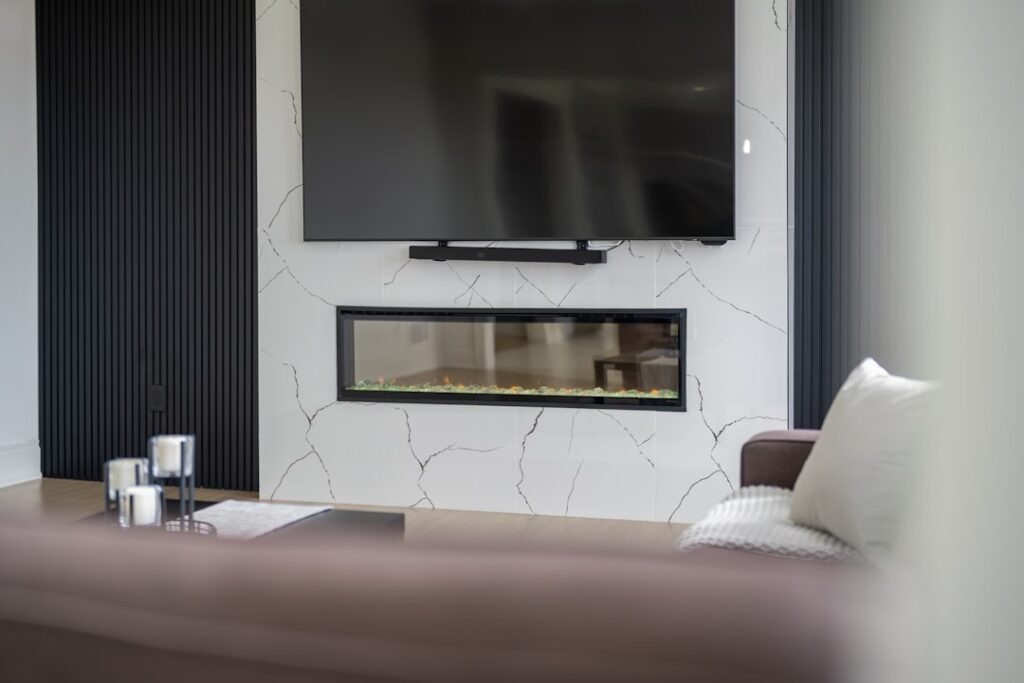
Wall tiles for living room spaces have evolved far beyond the utilitarian kitchen backsplash and bathroom shower. In 2026, living room wall tiles are a leading design trend — used to create stunning accent walls, fireplace surrounds, feature walls behind televisions, and full-wall treatments that add texture, depth, and personality to the most important room in the home. From large-format porcelain tiles to 3D textured panels, stone veneer, brick-look, and wood-look options, the range of styles available makes tile one of the most versatile wall-covering materials for living rooms.
This guide covers every popular type of wall tile for living rooms — accent wall tiles, fireplace surrounds, 3D textured tiles, stone veneer, brick-look, wood-look, and large-format options — along with installation methods, design ideas, cost expectations, and practical considerations. For floor tile options, see our tile flooring guide and modern living room floor tiles guide.
Why Use Wall Tiles in the Living Room?
Wall tiles for living room applications offer advantages that paint, wallpaper, and wood paneling cannot match.
Texture and dimension. Tiles add physical depth to walls that flat paint cannot achieve. Three-dimensional tiles, stacked stone veneers, and textured surfaces create visual interest through shadow, relief, and tactile variation. This textural quality transforms a plain drywall surface into an architectural feature.
Durability. Unlike paint that scuffs and wallpaper that peels, wall tiles are impact-resistant, stain-proof, and virtually maintenance-free. In high-traffic living rooms, behind sofas, and around fireplaces, tiles maintain their appearance for decades without touch-ups.
Moisture and heat resistance. Tiles around fireplaces provide non-combustible, heat-resistant surfaces that meet code requirements. In living rooms adjacent to kitchens or in humid climates, tiles resist moisture damage that can affect drywall and paint.
Design statement. A single accent wall tiled in a bold material — marble-look porcelain, 3D geometric panels, or natural stacked stone — anchors the room’s design and creates a focal point that draws the eye. It is one of the most impactful design upgrades per square foot in home interiors.
Types of Living Room Wall Tiles
Large-Format Porcelain Tiles
Large-format porcelain tiles (24×48, 32×32, or even 48×48 inches) are the most popular choice for modern living room accent walls. Their oversized dimensions create a seamless, sophisticated look with minimal grout lines. Available in marble-look, concrete-look, stone-look, and metallic finishes, large-format porcelain delivers luxury-hotel aesthetics at a fraction of the cost of real marble or stone. These tiles are ideal for full-height accent walls, TV feature walls, and fireplace surrounds. See our porcelain tile guide for material details.
3D Textured Tiles
3D textured tiles feature raised geometric patterns, waves, organic forms, or architectural reliefs that project from the wall surface. Materials include porcelain, ceramic, gypsum, and PVC. The dimensional surface catches light and shadow, creating a dynamic visual effect that changes throughout the day as lighting shifts. Popular 3D patterns include wave, diamond, hexagon, scale (fish scale), and origami-fold designs.
3D tiles are best used on a single accent wall — covering an entire room in 3D texture can be visually overwhelming. They are particularly effective behind a sofa, behind a floating shelf arrangement, or flanking a fireplace.
Stone Veneer
Natural stone veneer (thin-cut natural stone) and manufactured stone veneer (concrete molded to look like stone) bring the rugged beauty of stacked stone, ledgestone, and fieldstone to living room walls. Stone veneer is typically 1 to 2 inches thick and much lighter than full-thickness stone, making it suitable for interior walls without structural reinforcement.
Stone veneer is the go-to choice for rustic, mountain lodge, farmhouse, and traditional living rooms. It pairs naturally with wood beams, leather furniture, and natural textiles. Popular styles include stacked ledgestone (linear, horizontal layers), fieldstone (irregular, natural shapes), and splitface (rough-hewn, heavily textured).
Brick-Look Tiles
Brick-look tiles replicate the appearance of exposed brick using thin porcelain, ceramic, or clay tiles. They deliver the industrial, loft-style aesthetic of exposed brick without the structural and insulation challenges of real brick walls. Brick-look tiles are available in classic red, whitewashed, grey, and painted-over looks.
For a more authentic result, thin brick veneer (actual thin-cut clay bricks, typically 1/2 inch thick) provides real brick texture and color variation that porcelain reproductions cannot perfectly match. Thin brick veneer is heavier and requires adhesive application, while porcelain brick-look tiles install like standard wall tile.
Wood-Look Tiles
Wood-look porcelain tiles bring the warmth and grain pattern of natural wood to accent walls without the moisture, fire, and maintenance concerns of real wood. These tiles are especially effective behind fireplaces (where real wood would be a fire hazard) and in rooms with high humidity. Popular looks include reclaimed barn wood, whitewashed plank, walnut, and weathered oak.
Subway Tiles and Decorative Ceramic
While subway tiles are primarily associated with kitchens and bathrooms, they can create a clean, classic accent wall in living rooms — particularly in modern farmhouse and transitional interiors. Zellige tiles (handmade Moroccan glazed tiles), encaustic cement tiles, and hand-painted decorative ceramic tiles offer artisanal character for living room niches, built-in bookshelf backings, and small accent areas.
| Tile Type | Style | Material Cost (per sq ft) | Best Application |
|---|---|---|---|
| Large-format porcelain | Modern, luxury | $3.00 – $12.00 | Full accent walls, TV walls |
| 3D textured | Contemporary, dramatic | $5.00 – $20.00 | Single accent walls |
| Stone veneer (natural) | Rustic, traditional | $6.00 – $15.00 | Fireplace walls, full feature walls |
| Stone veneer (manufactured) | Rustic, farmhouse | $4.00 – $10.00 | Fireplace walls, accent walls |
| Brick-look | Industrial, loft | $3.00 – $10.00 | Full walls, chimney breasts |
| Wood-look porcelain | Warm, natural | $3.00 – $9.00 | Accent walls, fireplace surrounds |
| Decorative ceramic | Artisanal, eclectic | $5.00 – $25.00 | Niches, small accent areas |
Design Ideas for Living Room Wall Tiles
TV Feature Wall
Tiling the wall behind a wall-mounted television creates a striking focal point. Large-format marble-look porcelain (in bookmatched pairs for a symmetrical vein pattern), dark slate-look tiles, or concrete-look tiles in grey tones provide a sophisticated backdrop that elevates the TV from an electronic eyesore to an integrated design element. Extend the tile from floor to ceiling and from wall to wall for maximum impact, or frame a centered section with recessed LED strip lighting for a floating-panel effect.
Accent Wall Behind the Sofa
The wall behind the main sofa is the second most popular location for living room wall tiles. 3D textured tiles in white or neutral tones work exceptionally well here — they add depth and interest without competing with artwork, shelving, or the furniture itself. Stacked stone veneer also works in traditional and rustic living rooms, creating a warm backdrop that anchors the seating area.
Full-Height Feature Wall
Running tiles from floor to ceiling on a single wall creates a monolithic, gallery-like statement. This works best with large-format tiles that have minimal grout lines — the fewer interruptions in the surface, the more dramatic the effect. Rectified (precision-cut) tiles with matching grout color achieve the closest thing to a continuous stone slab.
Half-Wall Wainscot
Tiling the lower half (36 to 48 inches) of a living room wall in a contrasting material creates a modern wainscot effect. Marble-look porcelain on the lower half with painted drywall above, separated by a simple cap molding, adds architectural detail without the commitment of a full tiled wall. This approach is also more budget-friendly than full-wall tiling.
Niche and Built-In Backing
Tiling the backs of built-in bookshelves, display niches, or recessed wall alcoves adds color and texture in small, contained areas. Decorative tiles, zellige tiles, or patterned cement tiles work perfectly in these small-scale applications where their detail and character can be appreciated up close.
Fireplace Surround Tiles
The fireplace is one of the most popular locations for wall tiles in living rooms. Tile provides a durable, heat-resistant, and visually striking surround that frames the firebox and anchors the room’s design.
Best Tiles for Fireplace Surrounds
Porcelain tile: The most versatile option — available in marble-look, stone-look, concrete-look, and wood-look finishes. Porcelain handles heat well and comes in large formats that create a seamless, modern surround.
Natural stone: Marble, slate, limestone, and travertine deliver authentic luxury. Marble surrounds (Calacatta, Carrara) suit formal and transitional living rooms. Slate suits rustic and contemporary spaces. Natural stone requires sealing but lasts indefinitely.
Stacked stone veneer: Creates a dramatic, textured surround that draws the eye. Floor-to-ceiling stacked stone around a fireplace is one of the most sought-after living room design features.
Ceramic tile: Handmade ceramic, encaustic, and patterned tiles create unique, artisanal fireplace surrounds with personality and color. These tiles work best on the surround itself (not directly inside or touching the firebox).
Heat Clearance Requirements
All tiles used on and around fireplaces must be rated for the expected temperatures. The firebox itself and the area immediately surrounding the opening (typically within 6 to 12 inches) may require specific fire-rated materials. Porcelain and natural stone handle fireplace heat without issue. Verify clearance requirements with your fireplace manufacturer and local building codes.
Installation Methods
Installing wall tiles for living room applications uses several methods depending on the tile type and wall condition.
Thin-Set Adhesive (Standard Tile Installation)
Standard porcelain, ceramic, and natural stone tiles install with thin-set mortar — the same adhesive used for floor tile. The wall should be clean, flat, and structurally sound. For heavy tiles (large format, natural stone) on drywall, use a premium modified thin-set rated for vertical applications and consider installing cement board (Hardiebacker, Durock) over drywall for better adhesion and a more secure substrate.
Adhesive Mat Systems
Peel-and-stick adhesive mat systems (like MusselBound) simplify wall tile installation for DIYers. You stick the mat to the wall, then press tiles into the adhesive surface — no thin-set mixing required. These systems work well for light to medium-weight tiles (ceramic, thin porcelain) on clean, flat drywall. They are not recommended for very heavy tiles or stone veneer.
Mechanical Fasteners (Stone Veneer)
Natural and manufactured stone veneer can be installed with thin-set adhesive on cement board (for lighter veneers) or with mechanical fasteners and metal lath (for heavier applications). Metal lath is attached to the wall studs, scratch coat mortar is applied over the lath, and individual stone pieces are adhered with mortar. This method handles the weight of heavy stone veneer securely.
Peel-and-Stick Tiles
Peel-and-stick (self-adhesive) tile panels are the easiest, most renter-friendly option. These thin vinyl, foam, or composite panels adhere directly to clean drywall and can be removed without damage. They are available in brick-look, stone-look, subway, and 3D patterns. While not as durable or authentic as real tile, peel-and-stick panels provide a quick, affordable accent wall upgrade.
| Method | Tile Types | DIY Difficulty | Durability | Removable |
|---|---|---|---|---|
| Thin-set adhesive | Porcelain, ceramic, natural stone | Moderate to difficult | Permanent (decades) | No |
| Adhesive mat | Ceramic, thin porcelain | Easy to moderate | Long-term (years) | Difficult |
| Mechanical (lath + mortar) | Stone veneer | Difficult (pro recommended) | Permanent | No |
| Peel-and-stick | Vinyl, composite panels | Easy | Temporary (1–5 years) | Yes |
Cost Breakdown
The cost of wall tiles for living room projects varies widely based on tile type, wall size, and installation method.
| Component | Cost Range |
|---|---|
| Porcelain wall tiles (material) | $3.00 – $12.00 per sq ft |
| 3D textured tiles (material) | $5.00 – $20.00 per sq ft |
| Natural stone veneer (material) | $6.00 – $15.00 per sq ft |
| Manufactured stone veneer (material) | $4.00 – $10.00 per sq ft |
| Brick-look tiles (material) | $3.00 – $10.00 per sq ft |
| Professional wall tile installation | $5.00 – $15.00 per sq ft |
| Professional stone veneer installation | $10.00 – $25.00 per sq ft |
| Typical accent wall (80–120 sq ft) | $800 – $3,500 installed |
| Fireplace surround (30–60 sq ft) | $500 – $2,500 installed |
A single accent wall (approximately 80 to 120 square feet) in a living room costs $800 to $3,500 fully installed, depending on tile selection and installation complexity. A fireplace surround (30 to 60 square feet) typically runs $500 to $2,500. Peel-and-stick alternatives can reduce costs to $100 to $400 for a full accent wall.
Pros and Cons
Pros
- Dramatic visual impact — a single tiled wall transforms the entire room’s character
- Extremely durable — tile walls last decades without fading, peeling, or scuffing
- Low maintenance — wipe clean with a damp cloth; no repainting or touch-ups needed
- Fire and heat resistant — ideal for fireplace surrounds and walls near heat sources
- Moisture resistant — will not swell, mold, or deteriorate in humid conditions
- Vast design options — stone, marble, wood, brick, 3D, and decorative patterns available
- Increases perceived home value — tiled feature walls are a selling point in real estate listings
Cons
- Higher cost than paint or wallpaper — tile installation is a significant investment
- Permanent (usually) — removing tile from walls damages drywall, requiring repair and refinishing
- Weight considerations — heavy tile and stone veneer may require wall reinforcement or cement board backing
- Professional installation often needed — large-format and stone veneer tiles are difficult DIY projects
- Cold to the touch — tile walls feel cold compared to drywall, though this is rarely a practical concern on vertical surfaces
- Grout maintenance — grout lines can stain or discolor over time without sealing (though wall grout stays cleaner than floor grout)
Frequently Asked Questions
Can you put wall tiles on drywall in a living room?
Yes. Most wall tiles for living room applications install directly onto drywall using thin-set mortar or adhesive mats. The drywall must be clean, flat, and in good condition. For very heavy tiles (natural stone, large-format porcelain over 15 inches), install cement board over the drywall for a stronger substrate. Lightweight ceramic, porcelain up to 12×24, and decorative tiles adhere to standard drywall without issues.
Do you grout living room wall tiles?
Most wall tiles require grout in the joints. Use unsanded grout for joints 1/8 inch or narrower and sanded grout for wider joints. Matching the grout color to the tile color minimizes the visibility of grout lines. Some peel-and-stick tile panels and interlocking stone veneers are installed without grout for a zero-maintenance look.
What is the best wall tile for behind a TV?
Large-format porcelain in marble-look, concrete-look, or dark slate finishes is the most popular choice for TV feature walls. The large tile format minimizes grout lines, creating a clean, uninterrupted surface that does not compete with the TV screen. Choose a matte or honed finish to avoid glare and light reflections that can interfere with TV viewing.
Is stone veneer too heavy for interior walls?
Manufactured stone veneer (lightweight concrete) and thin-cut natural stone veneer are designed for interior walls and are significantly lighter than full-thickness stone. Most interior walls can support stone veneer without structural modification. However, for full-height stone walls (floor to ceiling) or natural stone thicker than 1.5 inches, consult a contractor to verify that the wall framing can handle the weight.
Can I tile a living room wall myself?
DIY installation is feasible for ceramic tiles, small porcelain tiles, peel-and-stick panels, and some lightweight decorative tiles using adhesive mats. Large-format tiles (24×48 and larger), natural stone veneer, and floor-to-ceiling installations are significantly more challenging and usually benefit from professional installation. The weight, precise leveling, and cutting of large tiles require experience and specialized tools.
How do you clean wall tiles in a living room?
Living room wall tiles require very little cleaning — simply wipe with a damp microfiber cloth occasionally to remove dust. Unlike floor tiles that collect foot traffic dirt, wall tiles stay clean almost indefinitely. For grout lines, a damp cloth or mild all-purpose cleaner handles any occasional spots. Seal grout on wall tiles once after installation to prevent future staining from splashes or cooking fumes in open-plan spaces.
Prefer to explore on your own?
See how new flooring looks in your actual room in seconds — free, no signup.
Try the free Floor Studio →

