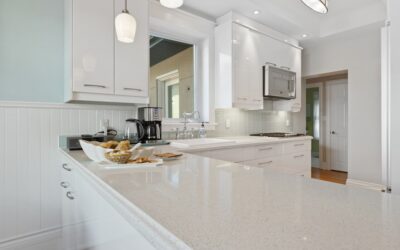
Shopping for a quartz countertop in Springfield VA means navigating a Northern Virginia market that’s both competitive and pricey, where labor and demand run higher than the national average. Springfield sits right in the busy Fairfax County corridor, so you’ll find plenty of fabricators and showrooms within a short drive, but you’ll also pay Northern Virginia rates. Knowing how local pricing works and what to ask before you sign keeps you from overpaying and helps you spot a quality fabricator from a middleman marking up someone else’s work.
Part of our Countertops guide — explore the full guide →
This guide focuses on what actually matters for a Springfield-area homeowner: how regional factors shape your quote, the questions that separate good fabricators from bad ones, and what the timeline from template to install really looks like around here.
What Drives Quartz Pricing in Northern Virginia
Nationally, installed quartz runs roughly $60 to $100 per square foot, but Northern Virginia consistently sits at the higher end of that band and often above it. The Springfield area’s cost of living, strong housing market, and steady remodeling demand all push labor and installation rates up. A kitchen that might cost $3,500 in a rural market can easily run $5,000 to $7,000 or more here for the same square footage and material grade.
Several factors move your number within that range. The quartz brand and color matter, since premium lines and trendy patterns cost more than builder-grade colors. Edge profiles beyond a standard eased or beveled edge add labor. Cutouts for sinks, cooktops, and faucets add cost, and so does the number of seams your layout requires. Bigger slabs that avoid seams look better but cost more to handle. Finally, tearing out and hauling away an old counter is usually a separate line item that many first-time buyers forget to account for.
Buying Local vs. Big-Box in the Springfield Area
You have three main paths in this market. Independent local fabricators cut and install the stone themselves, which usually means better craftsmanship, more control over seam placement, and a person you can actually talk to about your slab. Home-improvement warehouses offer convenience and financing but typically subcontract the fabrication out, so you’re paying a markup and losing direct contact with the people doing the work.
The third option is buying directly from a stone yard that also fabricates, which many Northern Virginia homeowners find gives the best combination of selection and price. Whichever route you choose, the most important step is seeing your actual slabs in person before fabrication. Quartz is manufactured, so it’s more consistent than granite, but batches and patterns still vary. Visiting the shop also lets you judge whether they run a clean, professional operation.
Questions to Ask Any Fabricator
The right questions quickly reveal who knows what they’re doing. Start with whether they fabricate in-house or subcontract, since that determines who’s accountable if something goes wrong. Ask which quartz brands they carry and whether the price includes tearout, disposal, sink cutouts, and edge work, or whether those are add-ons that will inflate the final invoice.
Dig into the details that affect the finished look and longevity:
- How do you decide where seams go, and can I approve seam placement before cutting?
- Is templating done digitally with a laser, or by hand? Laser templating is far more accurate.
- What’s your warranty on the fabrication and installation, separate from the manufacturer’s material warranty?
- Are you licensed and insured to work in Fairfax County, and can you provide references from recent local jobs?
- Who handles reconnecting the plumbing, or do I need my own plumber?
A reputable Springfield fabricator will answer all of these without hesitation. Vague answers about seams, subcontractors, or hidden fees are a signal to keep shopping.
The Install Timeline You Can Expect
From the day you sign, a typical quartz project in this area runs two to four weeks. It starts with an in-home template appointment, where the fabricator measures your cabinets precisely, ideally with a laser. Your old countertops usually need to be off and the base cabinets fully cleared before templating, and your sink and faucet should be on-site so the cutouts are exact.
After templating, fabrication in the shop takes about one to two weeks depending on how busy the shop is, and Northern Virginia shops stay busy. Installation day itself is often just a few hours for a standard kitchen, with the crew setting the slabs, seaming them, and securing everything. Plan for a brief window afterward before you use the counters heavily, and remember that plumbing reconnection may be a separate visit. Building this timeline into your kitchen project keeps you from being without a working sink longer than necessary.
Getting the Best Value Locally
The smartest move for a quartz countertop in Springfield VA is to collect at least three itemized quotes and compare them line by line rather than by bottom-line price alone. One quote might look cheaper until you notice it excludes tearout, disposal, or a better edge profile. Matching the quotes on scope is the only way to compare fairly.
Because this is a higher-cost market, resist the urge to jump at the lowest bid without checking references and seeing the shop. The difference between a clean, well-placed seam and a sloppy one lasts as long as the counter does, and in a competitive area like Springfield, a slightly higher price from a skilled in-house fabricator is often the better long-term value. Do the homework up front, and your quartz counters will look sharp and hold up for decades.
Choosing a Color and Edge That Fit Your Home
Once you’ve settled on a fabricator, the color and edge decisions shape both the price and the long-term look. In the Northern Virginia market, the perennial favorites are soft whites and grays with subtle veining that mimic marble, since they brighten kitchens and appeal to future buyers if you ever sell in this active housing market. Bolder, high-movement patterns cost more and date faster, so if resale is on your mind, a timeless neutral is the safer play. Ask to see full slabs rather than small samples, because the veining and pattern read very differently across a two-foot chip versus a full counter run.
Edge profiles are the other lever. A standard eased or straight edge is included in most base quotes and looks clean and modern, while ogee, bullnose, and mitered waterfall edges add labor and cost. A mitered edge that makes the counter look like a thick slab is popular right now but requires skilled fabrication and precise seaming, so it’s exactly the kind of detail where a quality in-house Springfield fabricator earns their rate over a discount subcontractor. Confirm which edge is priced into your quote and what upgrades cost, so the final look matches your budget and there are no surprises when the crew arrives on install day.