Run your hand across one and you understand the appeal instantly. A rabbit fur rug offers a softness that few other materials can match, adding a layer of tactile luxury to a bedroom, reading nook, or nursery. But this is a purchase that rewards research, because there is a wide gulf between genuine pelts and high-quality faux versions, and each comes with real tradeoffs in cost, durability, and ethics. As someone who has advised plenty of homeowners on accent pieces, here is the honest breakdown.
Real vs. Faux: The First Decision
This choice shapes everything else about your purchase. Genuine rabbit fur rugs are made from real pelts, often sewn together in patchwork panels to create larger sizes. They deliver unmatched natural softness and a subtle sheen, but they demand careful maintenance, cannot get wet, and raise ethical questions that matter to many buyers.
Faux rabbit fur, by contrast, is a synthetic pile, usually acrylic or a polyester blend, engineered to mimic the plush hand of real fur. Modern faux versions have improved dramatically and are now soft enough that casual observers cannot always tell the difference. They are washable, more durable, cruelty-free, and far cheaper. For most homeowners, especially those with kids and pets, faux is the practical winner.
Where a Rabbit Fur Rug Works Best
Fur rugs, real or faux, are accent pieces rather than workhorses. They belong in low-traffic, comfort-focused spots:
- Bedside — A soft landing for bare feet first thing in the morning.
- Reading nooks and accent chairs — Draped or laid to add texture and warmth.
- Nurseries — Faux versions add cozy softness to a baby’s space.
- Vanity and dressing areas — A touch of plush luxury underfoot.
Keep them out of high-traffic hallways, dining rooms, and entryways, where matting, shedding, and dirt will quickly ruin the plush texture. Fur is about comfort and looks in a controlled spot, not durability in the flow of daily life.
Sizes and What They Cost
Fur rugs come in small accent sizes far more often than large room-covering formats, because larger genuine pelts require extensive stitching. Common sizes range from a 2×3 foot accent up to roughly 5×8 patchwork panels. Faux versions are available in more sizes, including larger area-rug formats.
On price, faux rabbit fur is the budget-friendly option, with small accent pieces starting around $30 to $80 and larger faux area rugs running $100 to $300. Genuine rabbit pelt rugs cost considerably more, often $100 to $400 for small pieces and climbing well past $500 for large patchwork panels. Weigh that premium against the added maintenance real fur demands before deciding.
Caring for a Rabbit Fur Rug
Maintenance separates real from faux more than any other factor. Genuine rabbit fur is delicate and cannot be machine washed or soaked; water damages the hide and causes stiffness and shedding. Care for real fur by:
- Shaking it gently outdoors to remove dust and loose hair.
- Spot cleaning small marks with a barely damp cloth, working with the direction of the fur.
- Brushing with a soft pet brush or wide-tooth comb to keep the pile fluffy and untangled.
- Keeping it out of direct sunlight, which fades and dries the pelt over time.
- Using a professional fur or leather cleaner for any serious cleaning.
Faux fur is far more forgiving. Many faux rugs are machine washable on a gentle cold cycle, or at minimum spot-cleanable with mild soap and water. Always air dry faux fur flat and never use high heat, which can melt or matt synthetic fibers. Give either type a gentle brush after cleaning to restore loft.
Managing Shedding and Matting
Both real and faux fur shed somewhat, especially when new. A light regular brushing keeps loose fibers under control and prevents the pile from tangling into clumps. In spots that get foot pressure, fur will eventually matt, which is why placement in low-traffic areas matters so much.
If a faux rug starts to look flat, a gentle brush-out and a quick fluff, sometimes with a hair dryer on a cool setting, revives the pile surprisingly well. Real fur that has matted or stiffened is harder to restore and may need professional attention, another point in favor of faux for everyday use.
Styling With Fur Texture
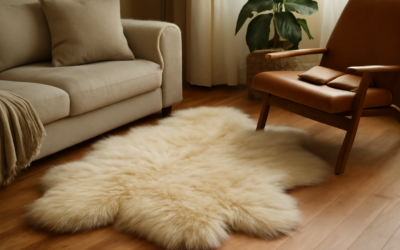
Fur adds contrast, so it looks best against harder, cooler materials. Layer a small white faux rabbit rug over a large flatweave jute or a hardwood floor to create depth and a play of textures. Draped over the seat of an accent chair or the corner of a bed, it reads as a designed, cozy detail rather than an afterthought.
Neutral colors, white, cream, gray, and soft taupe, are the most versatile and timeless. Bold-colored faux fur can work in a playful or eclectic space, but the neutrals blend into any decor and stay stylish across seasons. Because fur is inherently a statement of softness, let it be the tactile star and keep surrounding elements simple.
How to Judge Quality Before You Buy
Whether you go real or faux, quality varies enormously, and a few checks separate a rug that stays plush from one that mats into a sad clump within months. For faux fur, density is the number one indicator. Push your fingers into the pile; a quality faux rug has thick, tightly packed fibers that spring back and hide the backing, while a cheap one shows the backing through thin, sparse fur. Longer fibers should feel silky rather than crunchy or coarse, since stiff synthetic fibers tangle and matt fastest. A heavy, well-constructed backing with a non-slip surface signals better overall build.
For genuine rabbit fur, examine the stitching on patchwork panels, since larger rugs are sewn from multiple pelts. Seams should be tight, flat, and even, with no gaps or puckering that will pull apart under use. The hide side should feel supple, not dry, brittle, or cracked, because a dried-out pelt sheds heavily and stiffens over time. Run your hand over the fur; healthy pelts have a consistent sheen and minimal loose hair, while excessive shedding on a brand-new rug is a warning sign. With either type, check that the color is even and free of bald patches. Read recent buyer reviews specifically for comments about shedding and matting after a few months of use, not just first impressions, because those are the traits that determine whether the rug still looks good a year in. Spending a little more on density and construction pays off in a rug that stays soft and full.
Making the Right Choice
A rabbit fur rug is ultimately about comfort and atmosphere, a small luxury that makes a specific corner of your home feel indulgent. For nearly all homeowners, a quality faux rabbit fur rug is the smarter buy: it delivers the plush look and feel at a fraction of the cost, cleans easily, and sidesteps the ethical and maintenance headaches of real pelts. Reserve genuine fur only if you specifically want the authentic material and are prepared to care for it gently. Whichever you choose, place it where feet and eyes will appreciate the softness, brush it regularly, and it will stay irresistibly plush for years.