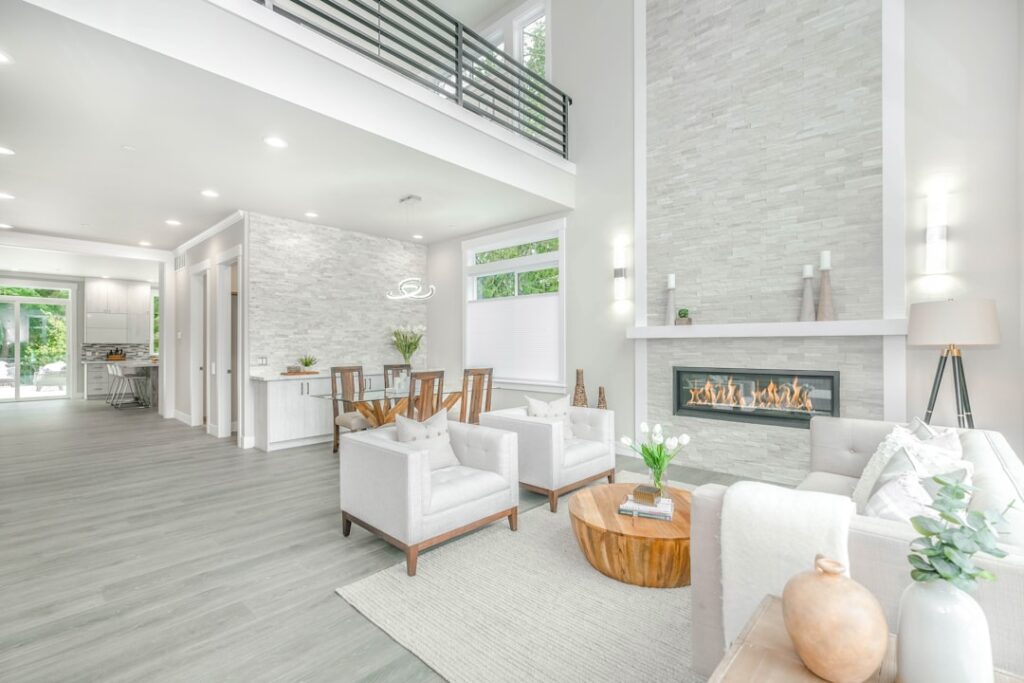
A real flame electric fireplace from the brand Real Flame is furniture first and heater second, which is exactly why it sells so well. The company builds solid-wood and veneered mantels, media consoles, and corner units, then drops in a plug-in LED firebox that needs nothing but a standard outlet. If you’ve priced masonry or gas, you already know the appeal — no chimney, no gas line, no permit for the surface-mount versions.
I’ve set up plenty of these for clients who wanted the look of a built-in without the build. Here’s how the lineup breaks down, how to size it, and what the flame actually does.
What “Real Flame” Actually Means
Don’t let the name fool you — there’s no combustion. Real Flame is a brand, and the “flame” is an LED effect, not fire. What sets the brand apart from generic import boxes is the cabinetry. The surrounds use kiln-dried solid wood and quality veneers with real furniture joinery, so a Real Flame mantel looks like a piece of furniture rather than a laminated shell. You’re paying a premium over no-name units, and in the finish and build, you generally get it.
The fireboxes themselves are the brand’s Vividflame LED units. They run on 120 volts, top out at 1,500 watts, and the flame operates with or without heat.
The Popular Model Families
- Chateau — a corner-capable mantel, roughly 41 inches wide, that sits flat against a wall or tucks into a corner. A favorite for bedrooms and smaller living rooms. Typically $450 to $650.
- Kipling — a wide media console, around 53 to 60 inches, rated to hold a large flat-screen on top. This is the living-room workhorse. Usually $600 to $900.
- Ashley / Antique White mantels — traditional 48-inch mantels with dentil molding and turned detailing, offered in white, oak, and dark espresso. $400 to $700.
- Callaway and other grand mantels — taller, more ornate surrounds, 58 inches and up, for a formal focal wall. $700 to $1,100.
- Insert-only Vividflame fireboxes — the LED heater alone, in widths like the 36-inch unit, to drop into your own millwork. $250 to $500.
Model names and finishes rotate year to year, so match the format — mantel, console, or corner — rather than chasing a specific SKU that may be discontinued.
The Vividflame LED Effect
The flame effect is the brand’s signature. Instead of the old orange rotating drum, Vividflame projects LEDs to mimic flame movement, and the better fireboxes give you real control:
- Five brightness settings so the flame reads soft at night and bright during the day.
- Adjustable flame color and speed — natural amber is the one you’ll actually leave on; the blue and multicolor modes are novelty.
- A glowing ember bed with faux logs that light independently of the flame for a layered look.
- A remote to run heat, flame, brightness, and the timer from the couch.
From six feet away in the evening, a well-tuned Vividflame reads convincingly as fire. Up close in daylight, you can tell it’s LED — that’s true of every electric unit, not just this brand.
Heat Output and the 1,500-Watt Ceiling
Every plug-in Real Flame electric fireplace uses a 120-volt firebox that tops out at 1,500 watts, drawing about 12.5 amps. That’s roughly 4,700 BTU of supplemental heat, enough to warm a room up to about 400 square feet. Treat it as zone heat for the room you’re sitting in, not as a whole-house furnace.
The firebox runs a fan-forced heater with a thermostat, so it cycles to hold a set temperature instead of blasting continuously. Two things worth knowing: the fan makes a low hum you’ll hear in a quiet room, and the heat and flame are independent, so you can run the LED ambiance in summer with the heater off.
Set your expectations honestly. In a well-insulated 300-square-foot bedroom, a Real Flame firebox on high will hold the room comfortably on a cold night and cut your reliance on the central furnace for that zone. In a drafty 600-square-foot great room with tall ceilings, you’ll feel warmth within a few feet of the unit but the space won’t reach 72 degrees on the heater alone. Buy it as the thing that warms the corner of the couch you actually sit in, and it never disappoints.
Electrical: Give It Its Own Outlet
A 1,500-watt heater is a heavy continuous load, so treat the outlet with respect:
- Plug straight into a wall receptacle. No power strips, no light-gauge extension cords — they overheat under a continuous 12.5-amp draw.
- Keep the circuit to itself. Running the fireplace plus a vacuum, space heater, or microwave on the same 15-amp circuit trips the breaker.
- Check the plug occasionally. Warm is fine; hot means a loose connection or an overloaded circuit — stop and get it checked.
- These plug-in units are 120-volt only. You won’t need an electrician for the standard mantels, which is a big part of their appeal.
Sizing and Placement
Measure your wall’s clear width and compare it to the mantel’s outside dimension, then leave a few inches on each side so the surround doesn’t crowd a corner or a door casing. For a media console like the Kipling, check the top’s weight rating against your TV — a 65-inch set runs 50 to 70 pounds, well within a console’s rating, but verify before you set it.
Keep the firebox vents clear. The Vividflame units pull air in and push warm air out through top and front vents, so don’t block them with a blanket, a stack of remotes, or a too-tight alcove. Blocked vents make the heater’s thermal cutoff shut the unit down. Center the firebox around seated eye level so the flame lands where you’ll look.
Assembly and Timeline
A Real Flame mantel ships flat-packed with the firebox already assembled. Plan on a two-person, one- to two-hour build with a screwdriver or a drill — it goes together like quality flat-pack furniture, and the panels are heavier and better-fitted than budget brands. The corner units like the Chateau are the same effort; you just angle the back into the corner.
No wiring, no wall demo, no permit for the surface-mount mantels. Set it against the wall, plug it in, and you’re done. If you later want the firebox recessed into a built-in, the insert-only Vividflame is the piece you’d frame into custom millwork, which turns it into a carpentry project.
Finishes and Matching Your Room
Real Flame leans into furniture finishes, which is a big reason the brand shows up in decorated rooms rather than basements. Popular options include a clean white, a warm chestnut or oak, and a dark espresso, and the grain and molding detail are what you’re paying the premium for. Pick the finish the way you’d pick a piece of furniture: match it to the wood tones already in the room, not to the wall color. A dark espresso mantel anchors a light-walled room; a white mantel keeps a small space feeling open. Because the surrounds are real wood and veneer, minor scuffs can be touched up rather than becoming a permanent eyesore the way melamine chips do.
Is It Worth the Premium?
Compared to a $200 import box, a Real Flame electric fireplace costs more — plan on $400 to $900 for most mantels and consoles. What you’re buying is furniture-grade cabinetry that holds up, a flame effect with genuine brightness control, and finishes that match real trim. If you want a disposable heater, buy the cheap box. If you want a piece that looks like it belongs in the room for a decade, the brand earns its price.
Running cost is the same as any 1,500-watt unit: about a quarter per hour at full heat, and just pennies per hour for flame-only ambiance. That’s cheap zone heating for the one room you’re actually using.
Bottom Line
Pick the format that fits — mantel for a flat wall, Kipling-style console for a TV wall, Chateau for a corner — insist on a firebox with adjustable brightness, and give the unit a dedicated 15-amp outlet. Do that and you get furniture-quality looks, a convincing LED flame, and honest supplemental heat with none of the mess of a real fire.