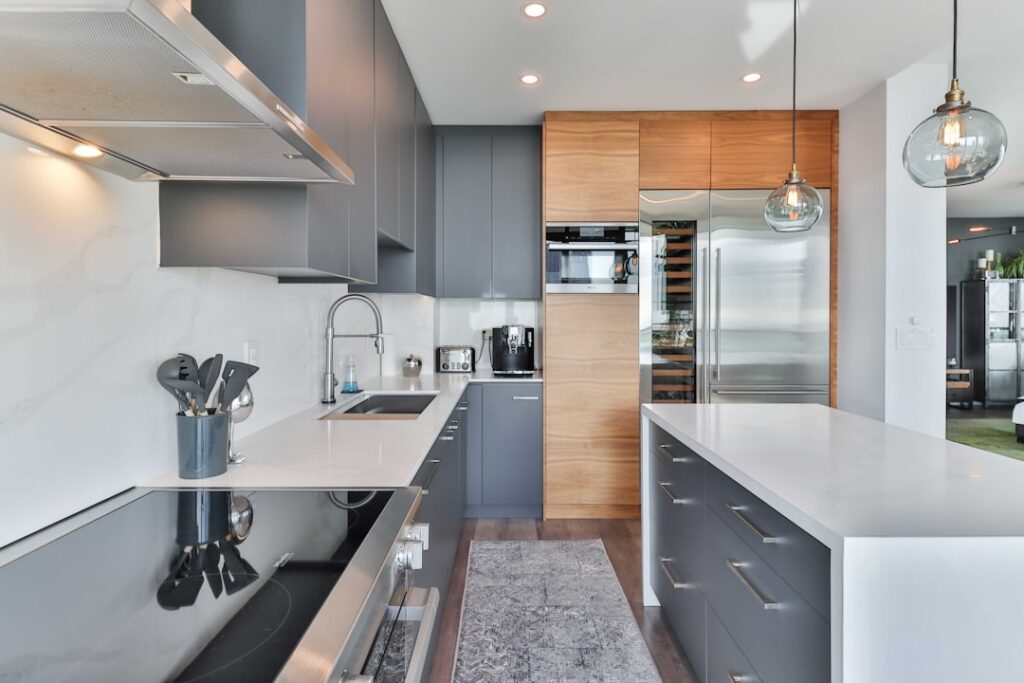
Full cabinet replacement averages $9,000 in a midsize kitchen. Refacing the same cabinets averages $2,500. The math is brutal in one direction. When homeowners decide to reface cabinet doors instead of tearing the boxes out, they keep the kitchen functional through the project, skip the dust storm of demo, and end up with a kitchen that looks brand new in 4 to 7 days. This guide covers every legitimate refacing method, what it actually costs, and when refacing is the wrong call.
What Refacing Actually Means
Refacing keeps your existing cabinet boxes (the carcasses screwed to the wall) and replaces or covers everything you can see: doors, drawer fronts, end panels, toe kicks, and sometimes the face frames. The hardware (hinges and slides) usually gets upgraded at the same time.
The original boxes have to be sound. Particleboard cabinets that are sagging, water-damaged, or pulling apart at the joints are not refacing candidates. Solid plywood boxes from any era refresh beautifully. If a contractor will not commit to refacing your boxes after a 10-minute inspection, they probably need replacement.
The Three Main Refacing Methods
Method one is full door and drawer front replacement combined with rigid thermofoil (RTF) or wood veneer applied to the visible cabinet exteriors. This is the standard pro process and runs $4,000 to $9,000 for a 30-linear-foot kitchen.
Method two is peel-and-stick veneer or laminate applied to the existing doors. DIY-friendly, $300 to $800 in materials, but limited to flat-panel door styles and shorter lifespan (8 to 12 years versus 20+ for replacement doors).
Method three is paint-only refresh of existing doors with new hardware. Cheapest option at $200 to $600 in materials, but only works if your doors are in good shape and you accept the reality that painted cabinet doors chip at touch points within 5 years even with the best products.
Door Style and Material Choices
Once you commit to new doors, the style choices drive the entire kitchen aesthetic. Shaker doors remain the most requested at $40 to $90 per door from suppliers like Cabinet Door World, Conestoga, or Barker Cabinet. Slab doors (flat with no profile) cost $30 to $70 and read modern. Raised-panel doors run $60 to $120 and lean traditional.
Material options: solid wood (paint-grade maple or stain-grade oak/cherry), MDF (paint-only, smoothest finish), thermofoil RTF (vinyl wrapped MDF, durable and inexpensive), and 5-piece doors with a veneered MDF center panel. For painted finishes, MDF or RTF outperforms solid wood because there are no grain seams to crack the paint film.
The Veneer Process Step by Step
For DIY refacing of the box exteriors with peel-and-stick veneer, start by removing all doors and drawers. Clean every visible surface with TSP substitute and degloss with 220-grit sandpaper. Wipe with a tack cloth.
Cut veneer with a sharp utility knife, leaving a 1/2-inch overhang on each side. Peel the backing in 6-inch increments and burnish with a J-roller as you go. Trim flush with a laminate trimming bit on a router or a sharp blade. End panels and tall sides take 20 to 40 minutes each. A 30-linear-foot kitchen needs about 60 square feet of veneer at $4 to $8 per square foot.
Hardware Upgrade Strategy
Soft-close hidden hinges (Blum Compact 38N or Blumotion 110-degree) cost $5 to $9 each and instantly modernize the user experience. A 30-cabinet kitchen needs about 60 hinges and runs $300 to $540 for the upgrade.
Drawer slides are the bigger improvement. Swapping side-mount metal slides for Blum Tandem undermount slides with Blumotion runs $40 to $80 per drawer installed. Knobs and pulls range from $3 (basic) to $25 (designer) per piece. Plan on 25 to 35 pulls in a typical kitchen.
Painting Existing Doors the Right Way
If you skip new doors and just paint, prep is everything. Remove doors and drawers, label each one with painter’s tape on the inside, and lay them flat on sawhorses. Clean with TSP substitute, fill any dings with two-part Bondo wood filler, and sand the entire surface with 220-grit.
Prime with a stain-blocking bonding primer like Zinsser BIN shellac or STIX urethane primer. Two coats. Topcoat with a high-quality cabinet enamel: Benjamin Moore Advance, Sherwin-Williams Emerald Urethane Trim Enamel, or Behr Cabinet, Door and Trim Enamel. Three coats with light sanding between, sprayed if possible. Total project takes 5 to 7 days for cure time alone.
What Refacing Cannot Fix
Refacing changes how cabinets look, not how they function. If you hate your layout, your storage capacity, or your countertop height, refacing locks all of those problems in place. Pull-out drawers, soft-close upgrades, and interior organizers can be added during refacing, but you still have the same number of cabinets in the same locations.
If the kitchen needs a layout change or the cabinets are 1980s flush overlay style with melamine interiors that are peeling, full replacement makes more sense.
Hiring a Pro vs DIY
Pro refacing companies (Kitchen Tune-Up, Reface It, regional independents) handle the full scope in 3 to 5 days with a 1 to 5 year warranty. Cost ranges from $135 to $350 per linear foot of cabinet.
DIY refacing is realistic for handy homeowners with 60 to 100 hours of free time, a router, a brad nailer, and patience. Material-only cost runs $1,200 to $3,000 for a midsize kitchen. The savings are real but the learning curve is steep on the first row of doors.
Timeline and Project Sequencing
A pro refacing job typically follows this schedule: day one is template, removal, and box prep. Day two is veneer or laminate application. Day three is door and drawer front installation. Day four is hardware, toe kicks, and punch list. The kitchen stays usable every night because the boxes never leave the wall.
For DIY, plan on 2 to 3 weekends. Order doors first (4 to 8 week lead time from custom shops). Do all the prep work and box veneering while you wait. Install new doors as a finishing weekend.
Frequently Asked Questions
How much does it cost to reface cabinet doors?
Professional refacing runs $4,000 to $9,000 for a 30-linear-foot kitchen ($135 to $350 per linear foot). DIY refacing with new doors costs $1,200 to $3,000 in materials. Paint-only refresh runs $200 to $600.
How long does cabinet refacing last?
Wood veneer and RTF refacing lasts 20 to 30 years with normal use. Peel-and-stick laminate lasts 8 to 12 years. Painted refacing typically needs touch-ups at 5 years and a full repaint at 10 years.
Is it worth it to reface kitchen cabinets?
Refacing makes financial sense when the existing cabinet boxes are structurally sound and you are happy with the layout. It saves 40% to 70% versus full replacement and takes 4 to 7 days instead of 4 to 8 weeks.
Can you reface cabinet doors yourself?
Yes. DIY refacing is feasible for homeowners with basic carpentry skills, a router, and 60 to 100 hours of available time. The most common approach is ordering pre-finished replacement doors and applying peel-and-stick veneer to box exteriors.
What is the difference between refacing and refinishing cabinets?
Refacing replaces doors, drawer fronts, and visible cabinet exteriors with new materials. Refinishing strips, sands, and re-stains or repaints the existing doors. Refacing is more expensive but delivers a more dramatic and durable transformation.