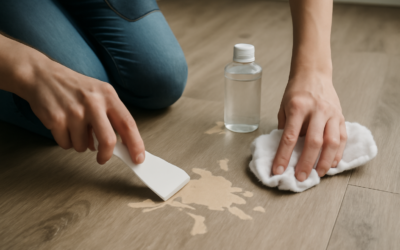
A single drip of latex that dried overnight, a whole splatter zone from a careless roller, or decades-old paint left by a previous owner all lead to the same question with different urgency. Learning to remove paint from hardwood floor the right way protects the finish underneath, because the real risk is not the paint but the aggressive method that strips the polyurethane and leaves a dull, raw patch worse than the spill. The safe approach is always gentlest-first: mechanical before chemical, and mild solvent before harsh stripper.
Part of our Paint & Walls guide — explore the full guide →
- Identify the Paint and the Finish First
- Always Test in a Hidden Spot
- Step-by-Step for Fresh Paint Spills
- Step-by-Step for Dried Paint
- Products and Tools Worth Having
- Matching the Method to the Paint Type
- Protecting the Surrounding Finish
- A Realistic Step-by-Step Recap
- When to Stop and Refinish Instead
- Protect the Floor Going Forward
- Final Word
Identify the Paint and the Finish First
Your whole strategy hinges on two facts: what kind of paint you are removing, and what finish protects your floor. Water-based latex, the most common household paint, softens with warm water and mild solvents. Oil-based paint resists water and needs mineral spirits or denatured alcohol. As for the floor, most modern hardwood wears a polyurethane topcoat that tolerates brief solvent contact, while older floors may carry wax or shellac that dissolves the moment a strong solvent touches it. When in doubt, treat the finish as delicate.
Always Test in a Hidden Spot
Before you touch the visible spill, test your chosen method in a closet corner or under a rug. Apply the solvent to a rag, dab a small area, wait 60 seconds, and check whether the floor finish clouds, softens, or lifts. If the finish reacts, step down to a milder approach. This 5-minute test saves you from turning one paint drip into a refinishing job.
Step-by-Step for Fresh Paint Spills
Speed is your friend with wet paint. The faster you act, the less you need any solvent at all.
- Blot, do not wipe, with a damp cloth to lift the bulk without smearing it into the grain.
- For latex, wipe with a cloth dampened in warm water and a drop of dish soap.
- For oil-based, dampen a cloth lightly with mineral spirits and wipe in the direction of the grain.
- Follow immediately with a clean water-damp cloth, then dry the spot fully.
Never let water or solvent pool on the wood. Standing liquid seeps into seams and can raise the grain or stain the boards.
Step-by-Step for Dried Paint
Cured paint calls for patience and a light touch. Start mechanical, then escalate only if needed.
- Soften with heat: Hold a hair dryer a few inches away to warm the paint until it loosens. Skip the heat gun, which can scorch the finish.
- Scrape gently: Use a plastic putty knife or an old credit card at a low angle. Never use a metal scraper, which gouges the wood.
- Try mild solvent: Dab latex with rubbing alcohol on a cotton ball, letting it sit 30 to 60 seconds to soften, then lift with the plastic scraper.
- Step up carefully: For stubborn oil paint, move to mineral spirits, applied to a rag rather than poured on the floor.
Products and Tools Worth Having
- Plastic putty knife or old gift card: The safest scraper for a finished floor.
- Rubbing alcohol (isopropyl): Often removes latex without harming polyurethane.
- Mineral spirits: The go-to for oil-based paint; ventilate the room.
- Microfiber cloths: Soft, absorbent, and lint-free for wiping and drying.
- Hair dryer: Gentle heat to loosen cured paint without burning the finish.
Avoid harsh chemical paint strippers and acetone as first resorts. Both dissolve floor finishes as readily as they dissolve paint, and once the topcoat is gone you are looking at spot-refinishing.
Matching the Method to the Paint Type
Because latex and oil-based paints respond to completely different solvents, correctly identifying what you are dealing with saves you from wasted effort and unnecessary chemical exposure. A quick field test settles it: dab a cotton ball with rubbing alcohol and press it to the paint for a few seconds. If the paint softens and transfers to the cotton, it is water-based latex, and alcohol or warm soapy water will handle it. If it resists, you are dealing with oil-based paint, which needs mineral spirits.
- Latex paint: Start with warm water and dish soap, step up to rubbing alcohol for dried spots. Rarely needs anything stronger.
- Oil-based paint: Mineral spirits on a rag, worked gently along the grain, followed by a clean damp wipe.
- Unknown or very old paint: Assume it is delicate, test in a hidden area, and escalate slowly from the mildest method.
Never mix solvents, and always work in a ventilated room with the windows open, since mineral spirits and alcohol both give off fumes.
Protecting the Surrounding Finish
The real skill in paint removal is confining your effort to the paint itself without dissolving the floor’s protective coat around it. Work in small areas, wipe solvent on rather than pouring it, and lift the softened paint promptly before the solvent has time to attack the polyurethane beneath. Keep two cloths going, one for applying solvent and one clean, damp cloth to immediately neutralize and dry the spot. The longer any solvent lingers on a finished floor, the greater the chance it clouds or softens the topcoat, so speed and small work zones are your best protection.
For wax-finished and shellac floors, which older homes often have, be especially cautious. These finishes dissolve almost instantly in alcohol and mineral spirits, so a mechanical approach, gentle warming and plastic scraping, is far safer than any solvent. When in doubt about the finish type, treat it as the most fragile possibility.
A Realistic Step-by-Step Recap
Pulling the whole method together, here is the order of operations that protects your floor while removing the paint:
- Identify the paint (latex vs oil) and the floor finish (polyurethane, wax, or shellac).
- Test your chosen method in a hidden corner and wait a full minute to check for finish damage.
- Warm dried paint with a hair dryer and lift it with a plastic scraper before reaching for any solvent.
- Apply the mildest effective solvent to a cloth, dab, let it soften briefly, then lift.
- Wipe the area with a clean damp cloth and dry it immediately.
- Stop and reassess if the finish shows any clouding or softening, stepping back to a gentler approach.
When to Stop and Refinish Instead
Sometimes the honest answer is that removal will damage the floor more than the paint does. If the paint has bonded into bare, unfinished wood, or if removing it means stripping a large area of finish, sanding and refinishing that section, or the whole room, produces a cleaner result than chasing every fleck with solvent. Large, old, deeply cured spills across a high-visibility area often fall into this category.
Protect the Floor Going Forward
The best paint removal is the spill you never had. Whenever you paint near hardwood, lay down rosin paper or a canvas drop cloth, not thin plastic that lets drips soak through, and keep a damp rag in your pocket to catch drips the instant they land. A little prevention beats any solvent.
Final Word
To remove paint from hardwood floor without regret, work gentlest-first: act fast on wet spills, warm and scrape dried paint with plastic tools, and reach for mild solvents only after a hidden-spot test confirms your finish can take it. Respect the topcoat, keep liquids off the bare wood, and know when refinishing is the smarter fix. Patience protects the floor you are trying to save.
Prefer to explore on your own?
See how new flooring looks in your actual room in seconds — free, no signup.
Try the free Floor Studio →