Epoxy is engineered to bond permanently to concrete, which makes removing epoxy flooring one of the most labor-intensive demolition tasks a homeowner can take on. Whether you are dealing with a 1990s garage coating that has yellowed and flaked, a failed DIY two-part system that never properly cured, or a commercial industrial floor at end of service life, the removal method has to match the floor’s condition, the substrate underneath, and the budget. After managing six full-removal projects and three partial repairs since 2019, I can map the realistic options and what each one actually costs.
- Why Epoxy Removal Is Hard
- Method 1: Mechanical Grinding
- Pros and Cons of Grinding
- Method 2: Chemical Stripping
- Pros and Cons of Chemical Stripping
- Method 3: Mechanical Scraping (Thin Coatings Only)
- Realistic Cost Comparison
- Recommendations by Project Size
- After Removal: Substrate Preparation
- Final Verdict
Why Epoxy Removal Is Hard
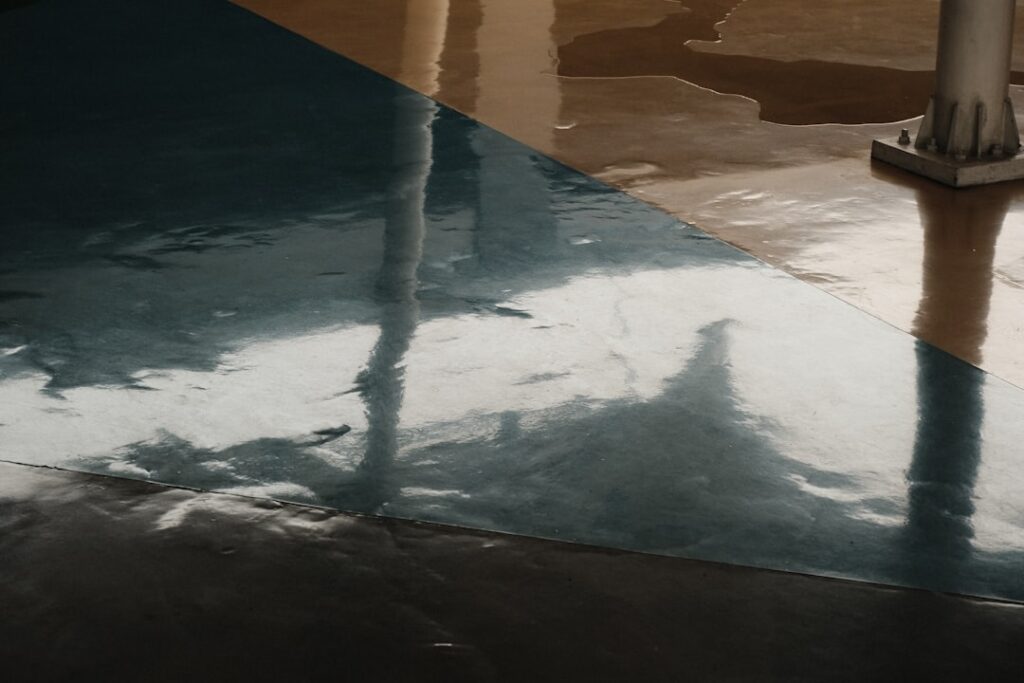
Properly applied two-part epoxy creates a chemical bond with concrete that exceeds the tensile strength of the concrete surface itself. That means in many cases the epoxy cannot be peeled, dissolved, or chipped without taking a thin layer of concrete with it. The removal job is really concrete surface profiling — you are grinding the top 1/16 to 1/4 inch of concrete substrate, not just lifting a coating.
Single-part “epoxy” products (which are not true two-part epoxies but acrylic or polyurethane-modified coatings) are easier to remove because they bond mechanically rather than chemically. Identifying which product is on your floor matters before you choose a removal method.
Method 1: Mechanical Grinding
Diamond grinding with a planetary or rotary grinder is the standard professional approach for true two-part epoxy. A 7-inch or 10-inch hand grinder with a PCD (polycrystalline diamond) cup wheel handles small areas; a walk-behind dual-head planetary grinder handles 200-plus square feet efficiently. Rental on a quality dual-head grinder runs $180 to $280 per day plus $45 to $80 per PCD wheel, which wears through every 200 to 600 square feet depending on coating thickness.
Dust control is mandatory. A HEPA-rated 15-gallon shop vacuum like the Bosch VAC140A pulls roughly 75 percent of dust at the grinder hood; concrete grinding dust contains crystalline silica, which causes silicosis with repeated exposure. Wet grinding (water-fed cup wheels) cuts dust to near zero but creates concrete slurry that must be collected and disposed.
Pros and Cons of Grinding
- Pro: Removes coating completely and profiles the concrete for any new coating or treatment
- Pro: Fast on large areas — a 400 square foot garage takes one experienced person about 4 to 6 hours
- Pro: No chemicals, no off-gassing, no ventilation requirements beyond dust control
- Con: Generates significant dust requiring HEPA collection
- Con: Grinder rental and PCD wheel costs add up on partial-day rentals
- Con: Will profile the concrete beyond what some replacement coatings require, potentially adding leveling cost
Method 2: Chemical Stripping
Chemical strippers — methylene chloride-based products in the past, now mostly benzyl alcohol or NMP-based formulations after the 2019 EPA methylene chloride restrictions — soften the coating enough to scrape it off. Sherwin-Williams Krud Kutter Concrete & Metal Prep, Eco Strip Solvent Free, and Smart Strip Pro are the commonly available options.
Application is straightforward but slow: apply at 100 to 150 sq ft per gallon, dwell 2 to 8 hours under a poly cover, scrape with a 6-inch floor scraper, repeat as needed. Cost runs $35 to $55 per gallon and you will typically need two to three applications for a full thickness coating.
Chemical stripping works best on thin (4 to 8 mil) acrylic-modified coatings and old single-part products. It struggles or fails completely on properly cured 12-mil-plus two-part epoxy. Test a 2-by-2 foot patch before committing to a full-room stripping plan.
Pros and Cons of Chemical Stripping
- Pro: No specialized equipment beyond scrapers and PPE
- Pro: Lower dust generation than grinding
- Pro: Better for partial-room removal where dust contamination of adjacent finished spaces is a concern
- Con: Slow — multi-day project for a typical 400 sq ft garage
- Con: Ineffective on true two-part epoxy at full cured thickness
- Con: Disposal of stripper-saturated coating residue must follow local hazardous-waste rules
- Con: Concrete substrate often still needs grinding afterward for proper profile
Method 3: Mechanical Scraping (Thin Coatings Only)
For 1980s-era oil-based concrete sealers and very old acrylic concrete paint, a riding ride-on floor scraper or a 14-inch power scraper like the Terminator T2200 can lift coating mechanically without chemicals or grinding. Rental runs $250 to $400 per day; the machines weigh 1,200 to 2,200 pounds and require trailer transport.
This method only works on coatings that have already lost some adhesion. Anywhere the coating is still well-bonded, the scraper skips off the surface without lifting material.
Realistic Cost Comparison
For a 400 sq ft residential garage: DIY grinding runs $400 to $650 total (rental, wheels, vacuum, PPE) plus 8 to 12 hours labor. Professional grinding runs $1,200 to $2,200 turn-key. Chemical stripping runs $350 to $550 in materials plus 12 to 24 hours labor. Mechanical scraping rental at $300 per day plus disposal runs $400 to $600 if the floor responds to it.
Recommendations by Project Size
Under 200 square feet: chemical stripping or hand grinding with a 7-inch tool, depending on coating type. 200 to 800 square feet: rent a walk-behind grinder and do it in a day. Over 800 square feet: hire a concrete coatings specialist; the equipment and disposal logistics get unwieldy fast for non-specialists.
After Removal: Substrate Preparation
Whatever method you use, the concrete substrate needs to be profiled to CSP-2 or CSP-3 (Concrete Surface Profile) before any new coating goes down. Test for chloride contamination if the floor was exposed to road salt; high chloride readings prevent proper coating adhesion regardless of profile.
Final Verdict
Removing epoxy flooring is achievable as a DIY project on small to mid-size residential garages if you rent the right grinding equipment and respect the dust hazard. Chemical stripping is appropriate only for thin, old coatings; do not waste money on it for true two-part epoxy. Match the method to the actual coating condition, and budget time and disposal logistics into the plan from day one.