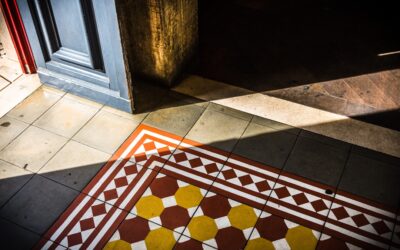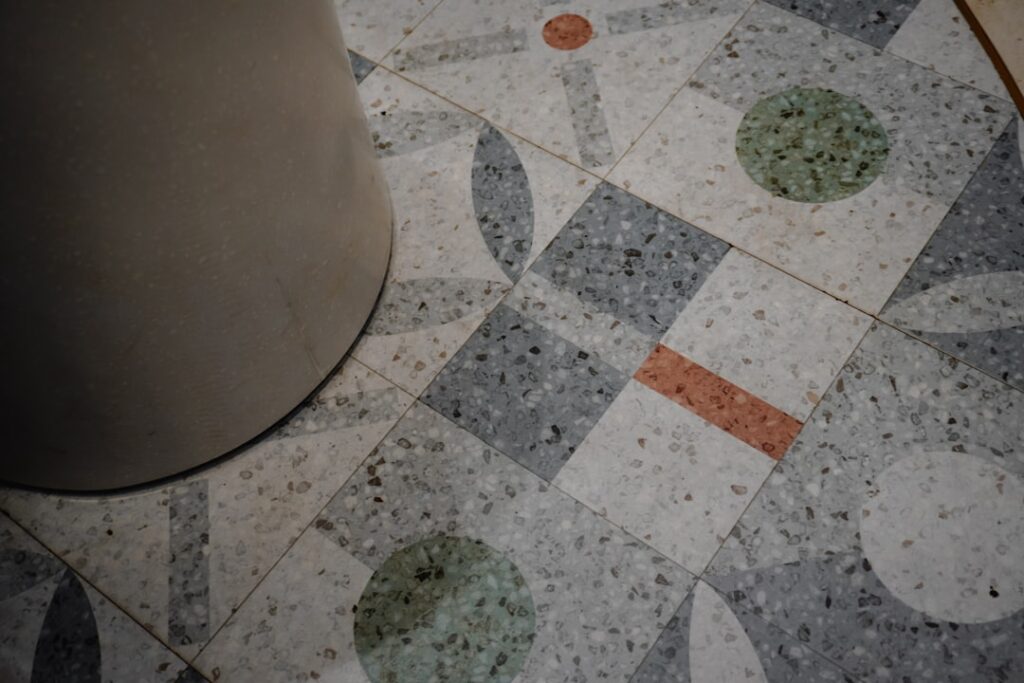
Terrazzo has paved Italian palazzos and American airport concourses for centuries, and it is now flowing back into homes as a high-design statement floor. Residential terrazzo flooring is made by embedding chips of marble, granite, glass, or quartz into a binder, then grinding and polishing the surface to a glassy, seamless finish. The look is unmistakable: a speckled, jewel-like field you can customize endlessly with chip color and size. Once associated with commercial lobbies, modern epoxy terrazzo has made the material practical and beautiful for living rooms, kitchens, and entries.
- What Terrazzo Actually Is
- Epoxy vs Cement Terrazzo
- Endless Design Possibilities
- Durability and Longevity
- Pros and Cons for the Home
- Installation Realities
- Terrazzo and Radiant Heat
- Comparing Terrazzo to Tile and Polished Concrete
- Maintenance and Care
- Is Terrazzo Right for Your Home?
- Terrazzo on Walls, Stairs, and Countertops
What Terrazzo Actually Is
Terrazzo is a composite. Aggregate chips are mixed into a binder, poured over a prepared substrate, allowed to cure, then ground flat and polished to reveal the embedded stone. The two main binder systems define the product. Cement terrazzo is the traditional, thicker method, while epoxy terrazzo is a thinner, modern resin system that allows brighter colors and a lighter installation, which is why it dominates residential work today.
Epoxy vs Cement Terrazzo
Choosing the binder is the first big decision.
- Epoxy terrazzo: Thin (about 3/8-inch), nonporous, available in vivid colors, and faster to install. Best for interior residential floors. Generally $20 to $40 per sq ft installed.
- Cement terrazzo: Thicker (1/2-inch or more), more durable outdoors, but heavier, slower-curing, and limited to earthier tones. Often $25 to $50 per sq ft and up.
For most homes, epoxy terrazzo is the practical choice because it is thinner, more colorful, and stain resistant.
Endless Design Possibilities
The defining advantage of terrazzo is customization. You select the binder color, the chip material, and the chip size to create a one-of-a-kind floor.
- Chip type: Marble for classic looks, recycled glass for color and sparkle, mother-of-pearl for shimmer.
- Chip size: Fine chips for a subtle texture, large chips for a bold Venetian look.
- Divider strips: Brass or zinc strips that create patterns, borders, and control cracking.
Because it is poured in place, terrazzo flows seamlessly around curves, columns, and custom shapes that tile cannot follow.
Durability and Longevity
Few floors last like terrazzo. A properly installed and maintained terrazzo floor can last the lifetime of the building, often 40 years or more, which is part of why historic terrazzo from the early 1900s is still in service. The hard, polished surface resists scratches and heavy traffic, and epoxy terrazzo’s nonporous finish shrugs off spills. It is one of the most enduring flooring investments you can make in a home.
Pros and Cons for the Home
Terrazzo is stunning and lasting, but it is not for every household.
- Pros: Extraordinary lifespan, seamless and hygienic surface, limitless custom design, low maintenance, and compatibility with radiant floor heating.
- Cons: High upfront cost; specialized installation that requires experienced crews; a hard, cold surface underfoot; slipperiness when wet unless treated; and a multi-day install with grinding dust.
Installation Realities
Terrazzo is a skilled, multi-step pour, not a DIY weekend project. The substrate must be sound and flat, often reinforced to prevent cracking. The binder and chips are poured, cured, then ground in several passes with progressively finer diamond pads and finally sealed and polished. The process takes several days and produces dust, so it is best scheduled before move-in or as part of a larger renovation. Hire installers with specific terrazzo experience, not general tile setters.
Terrazzo and Radiant Heat
One of terrazzo’s quiet strengths in a home is how well it pairs with radiant floor heating. Like tile and stone, terrazzo is a dense, conductive material that absorbs heat and releases it slowly and evenly, which makes the floor warm and comfortable rather than the cold slab people sometimes fear. This combination solves terrazzo’s main comfort drawback in one step. If you are pouring a new floor over a slab, it is worth installing electric or hydronic radiant tubing beforehand, because retrofitting heat under existing terrazzo is impractical. A warmed terrazzo floor in an entry, kitchen, or bathroom delivers both the dramatic look and the inviting warmth underfoot that homeowners want.
Comparing Terrazzo to Tile and Polished Concrete
Homeowners drawn to terrazzo often also consider tile and polished concrete, so it helps to see where each lands. Porcelain tile is cheaper and easier to install, but it has grout lines that collect dirt and lacks terrazzo’s seamless, custom-aggregate look. Polished concrete is the closest cousin in feel and durability and costs less, yet it offers a more industrial, monochrome appearance without the jewel-like chips. Terrazzo’s premium buys you a fully customizable, seamless, decades-long surface that neither alternative quite matches. If budget is the deciding factor, tile or polished concrete may win; if a singular statement floor is the goal, terrazzo stands apart.
Maintenance and Care
Once installed, terrazzo is easy to live with. Dust mop regularly and damp mop with a pH-neutral cleaner; avoid acidic or abrasive products that dull the polish. Epoxy terrazzo rarely needs resealing, while cement terrazzo benefits from periodic sealing. Every several years, a professional buff and polish restores the original shine. With minimal effort, the floor stays brilliant for decades.
Is Terrazzo Right for Your Home?
Terrazzo on Walls, Stairs, and Countertops
Terrazzo is not confined to floors, and that versatility is part of its appeal in a custom home. The same poured, ground, and polished system can wrap stair treads and risers for a seamless flow from floor to landing, climb a feature wall as a dramatic backdrop, or form integral skirtings that eliminate the dirt-catching joint where floor meets wall. Precast terrazzo is also fabricated into countertops, vanity tops, and even sinks, letting you carry a single aggregate and color palette through an entire room. Coordinating the floor with these elements creates a cohesive, designer-grade result that few other materials can achieve, though it does raise the cost and demands a fabricator experienced in terrazzo work.
For homeowners who want a statement floor that lasts a lifetime and never goes out of style, residential terrazzo flooring rewards the investment with unmatched durability and a fully custom design. The upfront cost and specialized installation put it out of reach for tight budgets, and the hard, cool surface suits some rooms better than others. But for an entry, kitchen, or open living space where you want one remarkable floor, terrazzo is in a class of its own.
Prefer to explore on your own?
See how new flooring looks in your actual room in seconds — free, no signup.
Try the free Floor Studio →