Hospitals, schools, and commercial kitchens have been buying the same product category for sixty years for one reason: it works. Resilient sheet flooring in the form of vinyl, linoleum, or rubber rolls delivers a continuous, water-resistant, low-maintenance surface that hard tile and engineered planks cannot match. The category fell out of residential favor during the LVP boom but is making a quiet comeback in basements, laundry rooms, and bathrooms because of the seam-free advantage. This guide walks through every type, what it actually costs installed, and where it outperforms the alternatives.
- What Counts as Resilient Sheet Flooring
- Sheet Vinyl: The Mainstream Option
- Sheet Linoleum: The Original Resilient Floor
- Sheet Rubber Flooring
- Real Installed Costs
- Installation Methods Compared
- Subfloor Requirements
- Best Use Cases for Sheet Flooring
- Maintenance and Longevity
- Frequently Asked Questions
What Counts as Resilient Sheet Flooring
The “resilient” label refers to the material’s ability to flex underfoot and bounce back from impact, distinguishing it from rigid surfaces like tile, stone, or concrete. “Sheet” refers to the format: large rolls 6 to 13 feet wide that install with minimal seams, as opposed to planks or tiles.
The three primary materials in this category are sheet vinyl, sheet linoleum (true linoleum, not vinyl marketed as linoleum), and sheet rubber. Cork sheet exists but is rare. Each material has different chemistry, different price points, and different ideal applications.
Sheet Vinyl: The Mainstream Option
Sheet vinyl dominates the residential category at $0.75 to $5.00 per square foot for materials. It comes in two construction types: felt-backed (cheaper, glue-down) and fiberglass-reinforced (better, often loose-lay or perimeter-bonded). Top brands include Armstrong Flexstep, Tarkett FiberFloor, IVC Pure, and Mannington Sobella.
Wear layer thickness drives durability. Residential-grade vinyl runs 6 to 20 mil wear layer. Commercial-grade runs 22 to 40 mil. A 22-mil wear layer in a busy entryway lasts 15 to 20 years; a 6-mil layer in the same spot is dented and discolored within five.
Installation is fast: a single seamless 12-foot piece can cover most bathrooms and small kitchens with no seam at all. Larger rooms get one carefully heat-welded seam that disappears when done properly.
Sheet Linoleum: The Original Resilient Floor
True linoleum is made from linseed oil, pine resin, cork dust, wood flour, and limestone pressed onto a jute backing. It has been in continuous production since 1864. Forbo Marmoleum is the dominant brand globally, with Armstrong Linoleum a distant second.
Linoleum costs $4 to $8 per square foot for material. The big advantages: it is biodegradable, naturally antimicrobial (linoxyn in cured linseed oil resists bacteria), and has a 25 to 40 year lifespan, often longer than the building it sits in. Vintage hospitals have original 1950s linoleum still in service.
The drawbacks: it is sensitive to alkaline cleaners (use neutral pH only), needs periodic sealing with a polish, and the surface can yellow temporarily when first installed before UV exposure clears it. Installation requires more skill than vinyl because the seams are heat-welded with a colored rod that must match the field.
Sheet Rubber Flooring
Rubber sheet flooring is the workhorse of gyms, hospitals, and labs. Brands like Nora, Mondo, and Roppe offer rolls in 4-foot widths and thicknesses from 2mm to 6mm at $7 to $15 per square foot for material.
Rubber is exceptional at sound dampening, slip resistance, and ergonomic comfort under foot for people standing all day. It cleans easily, resists chemicals (great for medical and lab settings), and lasts 30 to 40 years in commercial use.
The downside for residential use: it is expensive, the look skews industrial, and it requires very careful subfloor prep because every imperfection telegraphs through the relatively thin material.
Real Installed Costs
Sheet vinyl installed: $2.50 to $7.00 per square foot total (material plus labor). Sheet linoleum installed: $5.00 to $11.00. Sheet rubber installed: $9.00 to $20.00. The labor portion is roughly $1.50 to $3.50 per square foot for any of the three because the install methods are similar.
For a 12 by 14 foot kitchen (168 sq ft), expect to pay $420 to $1,180 for sheet vinyl installed. The same kitchen in commercial-grade Marmoleum runs $840 to $1,850.
Installation Methods Compared
Full-spread adhesive: the traditional method where adhesive is troweled across the entire subfloor and the sheet is rolled out and pressed in. Best for high-traffic areas, wet rooms, and rolling load applications. Most labor-intensive.
Perimeter-bonded: glue applied only around the room edges and seams. Faster, easier to remove later, but only suitable for fiberglass-reinforced products in low to medium traffic areas.
Loose-lay: heavy fiberglass-reinforced sheet vinyl simply laid in place and held down by its own weight (typically over 1.5 lbs per sq ft). Tarkett FiberFloor and Armstrong StrataMax are common loose-lay products. The fastest install but limited to rooms under 300 sq ft.
Subfloor Requirements
Subfloor smoothness is critical because sheet vinyl and linoleum show every bump, nail head, and trowel mark within weeks. Plywood subfloors should be 1/4-inch underlayment-grade (luan or plywood) installed over the structural subfloor with countersunk fasteners every 6 inches.
For concrete slabs, use a self-leveling underlayment to fill any low spots and grind down high spots. Run a calcium chloride moisture test (under 5 lbs per 1,000 sq ft per 24 hours) before installation. Concrete that fails the moisture test will cause adhesive failure and bubbling within a year.
Best Use Cases for Sheet Flooring
Bathrooms: the seamless installation locks out water far better than tile grout or LVP joints. Laundry rooms: same waterproofing benefit, plus appliance dolly resistance. Kitchens: comfort underfoot, easy cleanup of dropped food and spills.
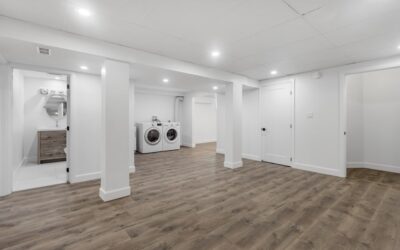
Basements: sheet vinyl tolerates the slight moisture variability of below-grade concrete better than most LVP click-locks, which can pop or buckle. Mudrooms and entryways: the seamless surface means no grout to scrub when winter slush dries. Healthcare facilities, daycares, and schools: durability, sanitation, and lifecycle cost favor sheet over plank.
Maintenance and Longevity
Daily maintenance is simple: dust mop or vacuum, then damp mop with a neutral pH cleaner like Bona Stone, Tile and Laminate Cleaner. Avoid bleach, ammonia, and acidic cleaners on linoleum. Use floor protectors under furniture (felt for light items, hard plastic disks for heavy).
Linoleum benefits from an annual application of acrylic finish or jute oil to maintain the surface. Vinyl needs no periodic finish but can be lightly buffed every few years to restore gloss. Properly maintained, all three materials hit the upper end of their lifespan range.
Frequently Asked Questions
Is sheet vinyl flooring still good?
Yes. Modern sheet vinyl with 22-mil or thicker wear layers and fiberglass reinforcement is durable, waterproof, and offers the seamless installation that LVP cannot match. It remains an excellent choice for bathrooms, laundry rooms, and basements.
What is the difference between sheet vinyl and luxury vinyl plank?
Sheet vinyl is one continuous roll with minimal seams. Luxury vinyl plank (LVP) is rigid 4 to 9-inch wide planks with click-lock edges. Sheet is more waterproof at seams; LVP looks more like real wood and is easier for DIY install.
How long does sheet flooring last?
Residential-grade sheet vinyl lasts 10 to 25 years. Commercial-grade vinyl and sheet linoleum last 25 to 40 years. Sheet rubber in commercial settings often lasts 30 to 40 years before replacement.
Can sheet flooring be installed over existing flooring?
Sheet flooring can be installed over single-layer existing vinyl or linoleum if the surface is intact, level, and well-bonded. It cannot be installed over carpet, cushioned vinyl, or any flooring with active adhesive failure.
Is linoleum the same as vinyl?
No. True linoleum is made from natural linseed oil, cork, and jute. Vinyl is a synthetic PVC product. The terms are often used interchangeably, but the materials have very different chemistry, durability, and environmental profiles.
Prefer to explore on your own?
See how new flooring looks in your actual room in seconds — free, no signup.
Try the free Floor Studio →