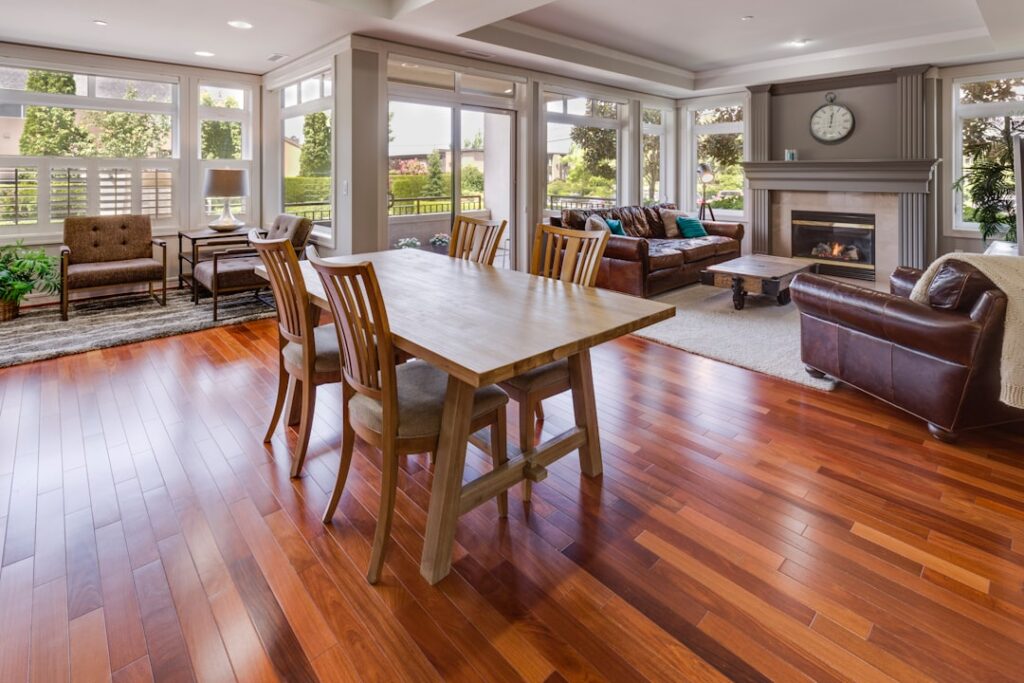
Dull, scratched hardwood does not mean you need new floors; it usually means you need to bring the ones you have back to life for a fraction of replacement price. The resurface wood floors cost for most homes lands between $3 and $8 per square foot for a full sand-and-refinish, which puts a typical 500-square-foot living area somewhere around $1,500 to $4,000. Understanding what drives that range, and where the cheaper recoat option fits, lets you budget accurately instead of getting blindsided by an estimate.
Resurfacing Versus Refinishing Versus Replacing
The terms get used loosely, so it helps to be precise. A full refinish, what most people mean by resurfacing, sands the floor down to bare wood, removing the old finish and surface scratches, then applies fresh stain and several coats of protective finish. This corrects deep scratches, gray water stains, and worn traffic paths, essentially resetting the floor to like-new condition.
A recoat, sometimes called a screen-and-recoat or buff-and-coat, is the lighter, cheaper cousin. Instead of sanding to bare wood, the existing finish is lightly abraded and a fresh coat of polyurethane is applied on top. It refreshes a floor with only minor surface wear but cannot fix deep scratches, stains, or worn-through spots. Replacement, tearing out and installing new wood, is the most expensive path by far and only necessary when the boards are structurally damaged or sanded too thin to refinish again.
Cost Per Square Foot Breakdown
For a standard sand-and-refinish, expect $3 to $8 per square foot including labor and materials, with most homeowners paying around $4 to $6. On that basis, a 200-square-foot bedroom runs roughly $800 to $1,600, a 500-square-foot area lands around $2,000 to $3,500, and a whole main floor of 1,000 square feet often totals $4,000 to $7,000. Labor makes up the bulk of the cost, typically 70 to 80 percent, since the process is labor-intensive and skilled.
A screen-and-recoat is dramatically cheaper because it skips the heavy sanding, usually $1 to $2.50 per square foot, so that same 500-square-foot room might cost just $500 to $1,000. Full replacement with new hardwood, by contrast, runs $8 to $15 or more per square foot installed once you add materials and demolition. The takeaway is clear: if your floor can be refinished, it is far cheaper than replacing, and if it only needs a recoat, cheaper still.
What Drives the Price Up or Down
Several factors push a quote toward the high or low end. Wood species and floor condition matter; harder woods and floors with heavy damage, pet stains, or many coats of old finish take more time and abrasive to sand. Intricate layouts, lots of closets, corners, stairs, and tight rooms slow the work because edge sanding by hand is the slowest, most labor-heavy part of any job.
Staining adds cost over a natural clear finish, since it is an extra labor step and material. The finish type also affects price: oil-based polyurethane is cheaper but slower to cure and higher in odor, while water-based finishes cost more but dry faster and yellow less. Stairs are priced separately, often $25 to $75 per step, because each tread and riser must be hand-sanded. Regional labor rates and how many rooms you do at once, larger jobs earn a lower per-foot rate, round out the variables.
The DIY Option and Its Real Cost
Refinishing yourself can cut the cost to roughly $1.50 to $3 per square foot in materials and rental, but it is demanding, dusty work with a real learning curve. You will rent a drum or orbital sander and an edger, typically $50 to $100 a day each, buy multiple grits of sandpaper, stain, and several gallons of finish, and commit a full weekend or more per room. Sandpaper alone for a large floor can run $100 or more across the grit progression.
The risk is the reason many people hire out. A drum sander in inexperienced hands can gouge or dish the floor in seconds, and uneven sanding or bad finish application shows permanently under the light. If you are handy, patient, and start in a low-visibility room to learn, DIY saves real money. If the floor is valuable, the layout is complex, or you want a flawless result, the labor premium for a pro is money well spent.
Additional Costs to Budget For
The per-square-foot figure rarely captures the whole project. Furniture removal and reinstallation may be extra if the crew handles it. Repairs to damaged boards, filling gaps, or replacing a few planks add to the bill before finishing even begins. If the old finish contains lead or the floor has decades of buildup, extra prep and disposal can nudge the cost up.
Plan for the practical side too. A refinished floor needs time to cure, often several days before you can walk on it in socks and up to two weeks or more before heavy furniture and rugs go back, especially with oil-based finish. You may need to stay elsewhere or close off the area during the work and cure time, and factor in the cost and disruption of being unable to use the space for that stretch.
Finish Options and Their Cost Impact
The finish you choose affects both the price and the day-to-day durability of the floor. Oil-based polyurethane is the traditional, budget-friendly choice at the lower end of the finish spectrum; it builds a warm amber tone and a tough film, but it takes longer to cure and off-gasses a strong odor for days. Water-based polyurethane costs more per gallon and often adds to the labor quote, but it dries in hours instead of days, stays clear without yellowing, and lets you use the room sooner.
Higher-end finishes push the cost up further. Penetrating hardwax oils give a natural, matte, low-sheen look that is easy to spot-repair but requires more maintenance, while commercial-grade aluminum-oxide and moisture-cure urethanes offer maximum durability at a premium. Decide based on how the room is used: a busy household with pets and kids benefits from a tough water-based or commercial finish, while a low-traffic formal room can take a less expensive option. Ask each contractor exactly which finish and how many coats their price includes, since two coats versus three is a real difference in both cost and longevity.
Signs Your Floor Can Still Be Refinished
Before budgeting for a refinish, confirm the floor is a candidate, because not every hardwood can be sanded again. Solid hardwood typically has enough thickness above the tongue-and-groove to be sanded several times over its life, but a floor that has already been refinished many times may be too thin for another pass. Look at a floor register or a doorway threshold where you can see the board’s edge; if the wear layer above the groove is very thin, sanding risks exposing the fasteners.
Engineered wood is trickier, since it has only a thin veneer of real wood over a plywood core. A thick 4-to-6-millimeter veneer can usually be refinished once or twice, but a thin 2-millimeter veneer may only tolerate a light screen-and-recoat, not a full sanding. Deep gouges that reach the core, extensive water damage that has warped or cupped boards beyond flattening, or active structural problems point toward replacement rather than refinishing. When in doubt, have a flooring pro assess the wear layer before you spend on a refinish that the boards cannot support.
Is Resurfacing Worth It?
In almost every case where the wood is sound, resurfacing is the smart financial move. Solid hardwood can typically be sanded and refinished several times over its life, and each refinish costs a small fraction of replacement while restoring the floor to like-new appearance and adding real value to the home. A recoat every few years extends the life even further and costs the least of all.
Get two or three itemized quotes, ask specifically whether your floor needs a full refinish or just a recoat, and confirm the number of finish coats and the finish type included. With realistic expectations, the resurface wood floors cost is one of the best returns in home improvement: for a few thousand dollars, you get floors that look brand new and last for decades more, instead of paying two or three times as much to rip out wood that just needed refreshing.
Prefer to explore on your own?
See how new flooring looks in your actual room in seconds — free, no signup.
Try the free Floor Studio →