A roof replacement runs five figures; the inspection that tells you whether you need one runs about the price of a nice dinner. Typical roof inspection cost falls between $120 and $400 for a standard single-family home, with a national average around $220. Drone inspections, infrared moisture scans, and certified pre-purchase reports push the number higher, while plenty of roofing contractors will look for free — with a catch worth understanding. Here’s what each type of inspection costs, what you actually get for the money, and when paying is smarter than taking the freebie. (For what inspectors examine point by point and how the process works, see our full roof inspection guide — this article stays on pricing.)
Baseline Pricing by Inspection Type
Four tiers cover nearly every residential scenario:
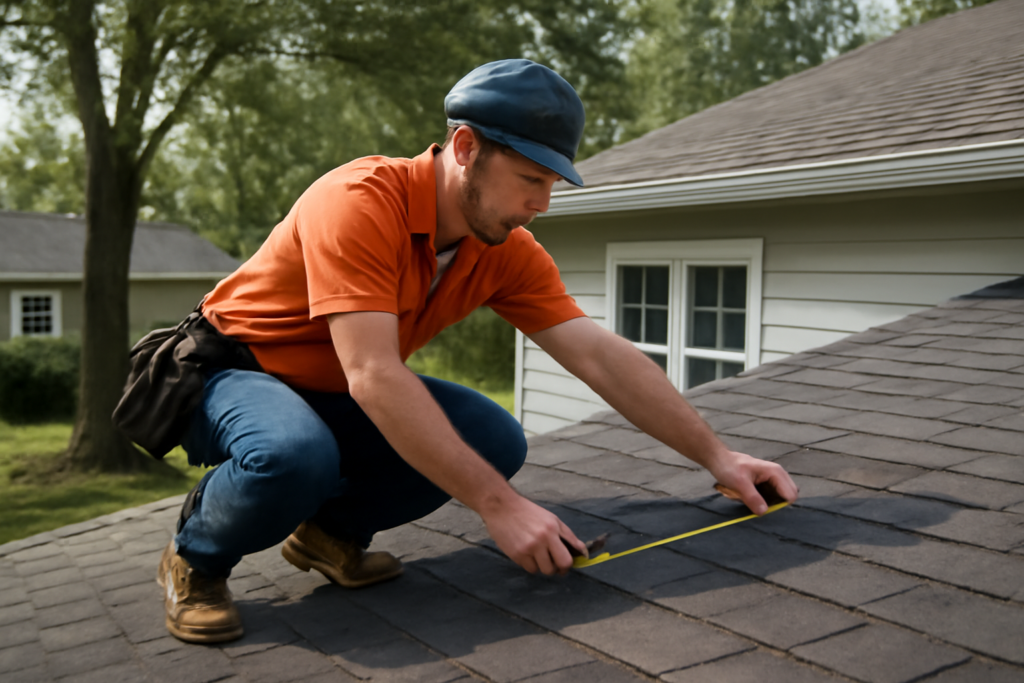
- Physical (walk-on) inspection: $120 – $400. An inspector climbs the roof, checks shingles, flashing, penetrations, gutters, and usually the attic. The standard product for most homeowners.
- Drone inspection: $150 – $500. High-resolution aerial imaging, often with a photo report. Standard pricing overlaps walk-on rates, but drones earn their keep on steep, high, slate, or tile roofs that can’t be safely walked.
- Infrared/thermal inspection: $400 – $800. A thermal camera (handheld or drone-mounted) maps trapped moisture invisible to the eye. The go-to for chronic mystery leaks and flat roofs, where a moisture survey should precede any coating decision.
- Certified/documented inspection: $250 – $600. A formal written report from a certified inspector (e.g., HAAG or InterNACHI credentials), used for real-estate transactions, insurance disputes, and warranty claims. The paper is the product.
What Moves the Price
Size matters less than you’d think — most inspectors price by complexity, not square footage, though homes over about 3,000 sq ft often add $50 to $150. The real multipliers are pitch and height (steep or three-story roofs add 20 to 50 percent for safety rigging or force a drone), material (slate, clay tile, and cedar demand specialty knowledge and gentler access — expect the upper half of every range), accessibility (skylights, solar panels, multiple dormers and valleys slow the work), and region (major metros run 20 to 30 percent above rural rates). Emergency or post-storm scheduling, when every inspector in the county is booked, can carry a $75 to $150 rush premium.
The Free Inspection: What It’s Really For
Most roofing contractors inspect for free, and after hail or wind events, canvassers offer them door to door. The economics are simple: the free inspection is a sales call, and the inspector is paid by finding replacement-worthy damage. That doesn’t make it dishonest — reputable roofers give accurate free assessments constantly — but the incentive tilts toward “replace” and away from “you’re fine for five more years.”
Use free inspections when you already suspect real damage and expect to hire the roofer anyway, or to gather competing opinions before an insurance claim. Pay for an independent inspection when the answer changes a big decision: buying a house, disputing an insurer’s denial, deciding restore-versus-replace, or evaluating a roof a contractor just condemned. An independent $250 report that contradicts a $15,000 replacement pitch is the best-leveraged money in home maintenance.
Special Cases That Change the Math
Real-estate transactions: a general home inspection ($300 – $500) includes only a ground-and-attic-level roof look; buyers of homes with 15+ year roofs should add a dedicated roof inspection ($150 – $400). Some lenders and insurers require a roof certification — an inspection plus a 2- to 5-year lifespan warranty letter — typically $75 to $200 on top of inspection pricing in markets like Florida, Texas, and California.
Insurance claims: the insurer’s adjuster inspects free, but they work for the carrier. If a claim is denied or lowballed, a HAAG-certified independent inspection ($300 – $600) is the standard rebuttal document. Public adjusters take it further, working on 10 to 20 percent contingency of the claim.
Commercial and flat roofs: priced by square footage, commonly $0.02 – $0.10 per sq ft with minimums, and infrared moisture surveys are near-mandatory before restoration coatings — budget $500 – $1,500 for a typical small commercial building.
Sample Costs by Home Type
Ranges are useful; anchored examples are better. A 1,600 sq ft single-story ranch with a walkable 4/12 asphalt roof sits at the bottom of the market — $120 to $200 for a thorough walk-on with photos. A 2,800 sq ft two-story colonial with a 8/12 pitch and two valleys lands mid-range, $250 to $350, with some inspectors opting to fly it instead. A 3,500 sq ft home with a 10/12 slate roof is specialist work — $400 to $600, drone-assisted, from an inspector who actually knows slate (an asphalt-oriented inspector will either refuse to walk it or, worse, walk it and break tiles). A flat-roofed mid-century modern with chronic leak history is the infrared case: $450 to $700 including a moisture map that tells you which third of the roof is wet instead of guessing at all of it. Condo and townhome owners usually pay nothing directly — the association owns the roof — but unit owners chasing an interior leak sometimes commission their own $150 inspection to force an HOA’s hand with documentation.
How Often to Pay for One
The industry recommendation is an inspection every 2 to 3 years for roofs under 10 years old, annually past year 10, and after any major hail or wind event regardless of age. That cadence sounds like a sales line but reflects real failure math: flashing and sealant failures — the cheap-to-fix leaks — develop silently in years 10 to 20, and a $200 inspection that catches a $350 flashing repair prevents the $3,000 decking-and-drywall version two winters later. Many roofers fold inspections into annual maintenance plans at $150 to $300 per year including gutter cleaning and minor sealing, which is the best per-visit pricing if the roof is entering its second decade.
Can You Inspect It Yourself?
A homeowner self-check costs nothing and catches the obvious: from the ground with binoculars, scan for missing, curled, or lifted shingles, sagging ridge lines, rusted or displaced flashing, and moss fields; in the attic with a flashlight, look for daylight at penetrations, water staining on decking, and damp insulation; at the gutters, check for heavy granule accumulation — the classic sign of shingles entering their final years. What self-inspection can’t do is what you’re actually paying professionals for: safely evaluating the roof surface up close, judging remaining service life with calibrated experience, and producing documentation that carries weight with insurers, buyers, and warranty departments. The sensible split: self-check every spring and after major storms (it’s free and takes twenty minutes), and put a professional on the schedule at the intervals above or the moment your ground-level check finds something. Don’t walk the roof yourself — falls from residential roofs injure far more homeowners annually than the $200 inspection fee ever will.
Getting Your Money’s Worth
Scheduling has a small strategy layer too. Book in the shoulder seasons — early spring before storm season or late fall after it — when inspectors have open calendars and quotes sit at the bottom of their ranges. Avoid the two weeks after any major regional hail event unless you have damage; you’ll pay rush pricing and wait behind every insurance claim in the county for a routine checkup that could have happened in April.
Whatever you pay, require the deliverables: a written report with photos of every defect, locations mapped, repair-versus-monitor recommendations, and a remaining-lifespan estimate. Ask up front whether the fee credits toward repair work (many contractors apply it). Verify licensing and insurance — anyone walking your roof should carry workers’ comp — and for dispute or transaction purposes, confirm certification before booking, since an uncredentialed opinion carries no weight with insurers. Roof inspection cost is one of the smallest line items in homeownership; the only expensive version is the one you skip until the ceiling stain shows up.