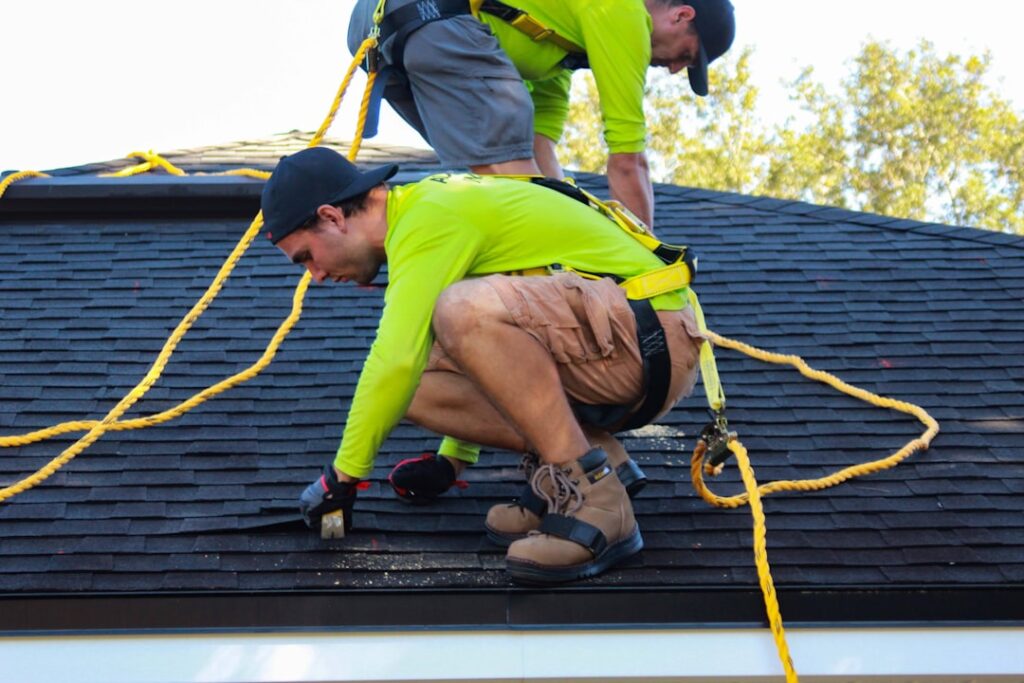
The general home inspector who checked your house before closing probably spent less than ten minutes on the roof — many never leave the ground. A dedicated roof inspection is a different animal: a trained roofer or certified inspector physically examining every slope, penetration, and flashing detail, plus the attic side of the decking, and producing a photo-documented condition report. At $120 to $400, it’s one of the cheapest pieces of expensive information in homeownership, whether you’re buying a house, filing a storm claim, or deciding if a 18-year-old roof has three years left or eight. Here’s what a real inspection covers, what it costs, and when to order one.
What a Professional Actually Inspects
A thorough inspection works through four layers. On the exterior, the inspector walks the roof (or examines it by drone) checking shingle condition — granule loss, cracking, cupping, blistering, thermal splitting — plus the ridge caps, hip lines, and valleys where wear concentrates. Every penetration gets individual attention: pipe boots, chimney step and counterflashing, skylight perimeters, vent housings, and satellite mounts, because penetrations cause the majority of leaks. They’ll also check drip edge, fascia, soffit, and gutters, since edge failures rot decking from the perimeter inward.
The structural pass looks for sagging ridgelines, uneven roof planes, and soft decking underfoot — signs of overloaded framing or delaminated sheathing. Inside the attic, a good inspector examines the underside of the decking for water staining, checks insulation depth and condition, tests moisture levels in suspect wood with a pin meter, and evaluates ventilation, comparing intake and exhaust vent area against the attic footprint. Finally comes the workmanship review: nail placement, shingle exposure, flashing integration. A shocking number of “storm damage” leaks turn out to be installation defects that took five years to show up.
Roof Inspection Cost in 2026
Prices vary by method and depth:
- Basic visual walk-on inspection: $120 to $300 for a typical single-family home
- Drone inspection: $150 to $400 — standard now for steep, high, or fragile roofs
- Infrared/thermal inspection: $400 to $600, used to map trapped moisture invisible to the eye
- Certified inspection with written certification letter: $75 to $200 added, often required by insurers or lenders
Many roofing contractors offer free inspections, and those are genuinely useful after a storm — but understand the incentive: a free inspection is a sales lead. For a purchase decision or an insurance dispute, pay for an independent inspection from someone with nothing to sell you, ideally a HAAG-certified inspector or a member of your state’s licensed home inspector roster with roofing specialization. The $250 fee buys objectivity.
When You Should Order One
Five situations justify a professional inspection rather than your own binocular scan. Buying a home tops the list — a roof at end of life is a $9,000 to $16,000 negotiation item, and a dated inspection report is leverage. After any significant hail or wind event, an inspection documents damage while the claim window is open; most policies give you six months to a year to file, and hail bruising is nearly impossible for an untrained eye to spot. Insurers themselves increasingly require inspections to write or renew policies on roofs over 15 to 20 years old. Before a solar installation, panel companies want confirmation the roof has 10+ years left, because removing and reinstalling an array later costs $3,000 to $6,000. And any roof past 15 years old benefits from a baseline inspection every two to three years to time the replacement decision intelligently instead of reactively.
Drone and Infrared: How Technology Changed the Game
A decade ago, steep or slate roofs simply didn’t get inspected closely — nobody walks a 12/12 pitch or a fragile tile field without risk. Today an FAA Part 107-licensed operator flies a 4K drone over every slope in 20 minutes, capturing close-up imagery of each penetration and producing measurable, timestamped documentation. Some services layer on photogrammetry that outputs exact roof measurements, useful later for replacement quotes. Infrared adds another dimension: scanned at dusk after a sunny day, wet insulation and soaked decking hold heat differently than dry material, so a thermal camera maps subsurface moisture across a roof plane without touching a shingle. It’s the standard for flat commercial roofs and increasingly common for tracking down elusive residential leaks. Neither tool replaces hands-on flashing checks entirely — a drone can’t lift a shingle tab or probe soft wood — so the best inspections combine methods.
Reading the Report Like a Pro
A quality report includes labeled photos of every finding, a slope-by-slope condition summary, an estimated remaining service life, and prioritized recommendations separated into “repair now,” “monitor,” and “budget for replacement.” Watch how findings are framed. Granule loss “consistent with age” is normal weathering; “impact bruising with granule displacement” is hail language your insurer will recognize. If a report jumps straight to full replacement without itemizing which slopes and components failed, treat it as a sales document and get a second opinion. Conversely, take seriously any finding of soft decking, widespread thermal cracking, or failed flashing at multiple penetrations — those patterns rarely justify patch-level fixes on an aging roof.
How the Visit Actually Goes
A residential inspection runs 45 minutes to two hours on site. The inspector starts with a ground-level walkaround photographing each elevation, then works the roof surface slope by slope, then finishes in the attic with a flashlight and moisture meter — expect them to ask for attic access up front, and be suspicious of anyone who skips it, since half the diagnostic evidence lives on the underside of the decking. Reports typically arrive within 24 to 72 hours as a PDF with embedded photos. Certification inspections for insurance carriers follow a set form (in Florida, the standard wind-mitigation and roof condition forms) and focus narrowly on remaining life, material condition, and attachment details rather than a full punch list.
Prepare the house before the appointment and you’ll get a better report: clear the attic hatch, move stored boxes off the insulation in key areas, unlock gates, and write down everything you already know — the ceiling stain that comes and goes, the ice dam two winters back, the repair receipt from the previous owner. History focuses an inspector’s attention the way symptoms focus a doctor’s.
Questions Worth Asking Before You Book
- What’s your certification? HAAG certification, state inspector licensing, or a roofing contractor license all signal real training
- Do you also sell roofs? Fine for a free storm assessment, disqualifying for an independent purchase or claim-dispute report
- Will you enter the attic? The correct answer is yes, access permitting
- Is the report photo-documented and slope-by-slope? A one-paragraph verdict isn’t worth paying for
- Do you carry E&O insurance? Errors-and-omissions coverage backs the opinion you’re buying
DIY Pre-Screening: What You Can Check Yourself
Between professional visits, you can do a meaningful screen without leaving the ground. Binoculars reveal missing tabs, curling, and nail pops. The attic reveals staining, daylight, and damp insulation. Downspout outlets reveal granule shedding rates. What you can’t do yourself is evaluate hail bruising, flashing integration, or fastener patterns — and self-inspection carries real fall risk the moment you step on a ladder. A sensible division of labor: homeowner scans twice a year and after storms, professional inspection at purchase, after major weather, and every two to three years past the roof’s 15th birthday.
The Payoff
Timing your inspection well multiplies its value. Book purchase inspections early in the option period so a bad report leaves room to renegotiate rather than just walk. Schedule routine inspections for late summer or early fall, when findings can be repaired before winter and before the seasonal rush inflates repair quotes. After a regional hail event, expect a backlog — reputable independent inspectors book out fast while storm-chaser “free inspections” multiply, which is exactly when independence is worth the wait. And keep every report in a single folder with your repair receipts; a documented condition history dated across years is the strongest evidence there is when an insurer questions whether damage was sudden or long-term.
Inspections earn their fee in three ways: catching $200 problems before they become $2,000 problems, timing replacement so you extract every serviceable year without gambling on a failure, and producing the paper trail that wins insurance claims and purchase negotiations. A homeowner who spends $250 on an independent report before signing a $14,000 replacement contract — or before accepting a denied claim — is making one of the best-leveraged bets in home maintenance. Schedule it before you need it, and the roof stops being a mystery over your head.