“Shingles” covers far more than the asphalt strips on most American homes — it is any roof covering installed in small overlapping units, and the material menu now spans century-old slate, cedar shakes, stamped steel, engineered polymer, and shingles that generate electricity. Comparing roof shingles types honestly means lining up six materials on the numbers that matter: installed cost per square (100 sq ft), realistic lifespan, weight, and where each one actually belongs. Here is the full comparison, one material at a time, with the summary table up front.
The Comparison Table
| Type | Installed Cost / Square | Lifespan | Weight (lb/sq ft) | Best For |
|---|---|---|---|---|
| Asphalt (architectural) | $450-$700 | 15-30 yr | 2.5-4 | Default value choice, any style |
| Wood shake/shingle (cedar) | $700-$1,600 | 20-40 yr | 2.5-4.5 | Rustic, coastal, historic looks |
| Metal shingles | $900-$1,400 | 40-70 yr | 0.7-1.5 | Longevity without a panel look |
| Slate (natural) | $1,500-$3,000+ | 75-150+ yr | 8-15 | Historic and forever homes |
| Composite/synthetic | $800-$1,600 | 40-50 yr | 1.5-4 | Slate/shake looks without weight |
| Solar shingles | $2,100-$3,000+ (whole-roof w/ system) | 25-30 yr | 4-6 | New roofs + solar in HOA-sensitive areas |
Asphalt Shingles: The 75% Market Share Baseline
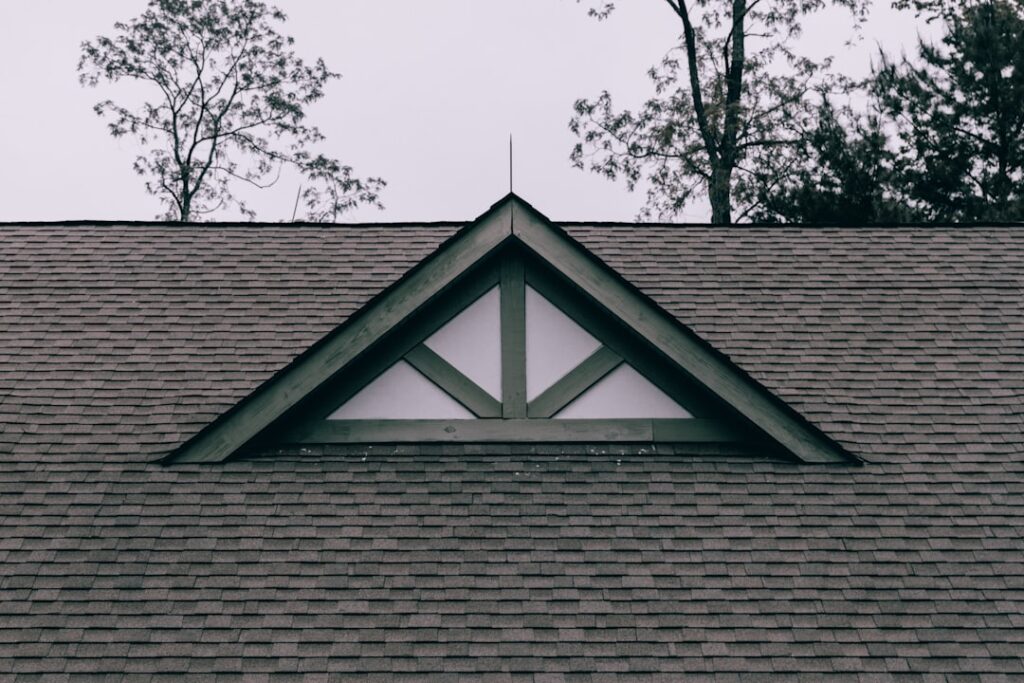
Asphalt dominates because nothing else touches its cost-to-performance ratio: fiberglass mat, asphalt, and ceramic granules, installed fast by every roofer in America. Three-tab entry shingles are fading from the market; architectural (laminated) shingles at $450-$700 per square installed are the modern standard, with designer/luxury asphalt reaching $700-$1,000 and mimicking slate or shake profiles. Expect 15-30 years of real-world life depending on climate and attic ventilation, Class A fire ratings as standard, and the widest color selection of any material. The site covers asphalt in depth — grades, brands, and failure modes — in the dedicated asphalt roof guide, so one paragraph here does it justice: for most houses and most budgets, architectural asphalt remains the rational default, and every other material on this page is a case for spending more to get more.
Wood Shakes and Shingles
Cedar delivers what nothing synthetic quite matches: genuine texture that weathers from amber to silver-gray. Terminology matters — shingles are sawn smooth and uniform; shakes are split, thicker, and more rustic. Installed costs run $700-$1,200 per square for shingles and $900-$1,600 for heavy shakes.
- Life: 20-40 years, but only with maintenance — periodic cleaning of moss and debris, and treatment every 3-5 years in damp climates.
- Fire: untreated wood roofs are banned or insurance-penalized in much of wildfire country; pressure-treated Class B/C (or Class A assemblies) exist at a premium.
- Where it belongs: coastal shingle-style homes, mountain lodges, historic districts — buyers choosing it for authenticity and accepting the upkeep. Where the look is wanted without the maintenance, composite shake (below) has taken much of this market.
Metal Shingles
Not panels — stamped steel or aluminum units that install shingle-fashion and mimic slate, shake, or tile profiles. At $900-$1,400 per square installed, they carry metal’s virtues (40-70 year life, 100+ mph wind ratings, Class A fire, featherweight at about 1 lb/sq ft) into neighborhoods where standing-seam panels read too agricultural or modern. Aluminum versions shrug off coastal salt. Watch two things: hail can dent aluminum cosmetically (steel with Class 4 impact ratings earns insurance credits instead), and quality varies widely — buy PVDF-coated products from established lines. If a panel look does appeal, the broader metal roofing guide covers standing seam and exposed-fastener options too.
Slate: The Century Roof
Natural quarried stone, split into shingles, installed one hook or nail at a time. Nothing else on this list is routinely warrantied for 75 years and regularly photographed at 150. The costs are equally monumental: $1,500-$3,000+ per square installed, 8-15 lb/sq ft requiring engineered framing on most modern homes, and a shrinking pool of qualified slaters — bad slate installs are common and heartbreaking at these prices. Hard slates (Vermont, Virginia) outlast soft Pennsylvania slates by decades; ask which quarry. Slate belongs on stone and brick architecture built to carry it, on owners with generational time horizons. For everyone drawn to the look but not the structure, that is exactly the gap composites fill.
Composite and Synthetic Shingles
Engineered polymer or rubber-plastic blends (brands like DaVinci, Brava, CeDUR, EcoStar) molded from real slate and shake so faithfully that at roofline distance most people cannot tell. This is the fastest-growing premium category for concrete reasons:
- Cost: $800-$1,600 per square installed — half of slate, near heavy shake.
- Weight: 1.5-4 lb/sq ft — no structural reinforcement, ever.
- Ratings: Class A fire and Class 4 hail versions widely available; 50-year limited warranties standard.
- Maintenance: essentially none — no treatments, no moss sensitivity, no brittleness for walkers.
The honest caveats: it is plastic, and in strong sun the best products hold color while cheap ones flatten and fade — stick to the established brands; and resale appraisers in slate-proud historic districts may still discount it against the real thing.
Solar Shingles
Building-integrated photovoltaics — Tesla Solar Roof, GAF Energy Timberline Solar, CertainTeed Solstice — replace the roof surface itself with generating shingles plus matching inactive ones. Whole-roof costs commonly land at $40,000-$80,000+ including the electrical system, or $2,100-$3,000+ per square blended. The case: you needed a new roof anyway, you want solar, and your HOA or your eye rejects rack-mounted panels. The counter-case: conventional panels on a new architectural asphalt roof deliver the same kilowatts for 30-50% less money and are far easier to service. Efficiency per square foot still trails good rack panels, and installer networks remain thin outside major metros. It is a design product first, an energy product second — priced accordingly, with the 30% federal credit softening the gap on the generating portion.
Choosing: Three Questions That Decide It
- How long will you own the roof? Under 15 years: architectural asphalt, full stop. 20-40: metal shingles or composite start beating asphalt on lifetime cost. Generational: slate or the best composite.
- What does the architecture ask for? Historic slate district, cedar-shingled coastal, farmhouse — let the house vote before the budget does; color logic is covered in our roof colors guide.
- What does your climate punish? Hail country: Class 4 steel or composite. Wildfire zones: anything Class A, never untreated wood. Coastal salt: aluminum or composite. Heavy snow: metal or slate shed best.
Lifetime Cost: The Math That Changes Minds
Upfront price per square tells half the story; cost per year of service tells the rest. Take a 25-square roof and run the numbers across a 50-year ownership horizon:
- Architectural asphalt at $575/square: $14,375 per roof, but you buy it twice (and possibly a third time) in 50 years — call it $30,000-$45,000 in today’s dollars, plus two tear-off disposal cycles.
- Metal shingles at $1,150/square: $28,750 once, likely lasting the full horizon — roughly $575 per year of service versus $600-$900 for the asphalt cycle.
- Composite at $1,200/square: $30,000 once with a 50-year warranty — nearly identical annualized cost to asphalt, with Class 4 insurance discounts (often 5-30% off the wind/hail portion of premiums in hail states) tilting the math further.
- Slate at $2,200/square: $55,000, amortized over a century — cheap per year, but only if someone owns the house long enough to collect.
The pattern: premium materials only pay when your ownership horizon (or your buyer’s willingness to pay for remaining life) captures the extra decades. A 60-year-old owner reroofing a forever home and a 30-year-old flipping in five years should read the same table and buy different shingles.
FAQ
What type of roof shingle lasts the longest?
Natural slate (75-150+ years), followed by metal shingles and quality composites (40-70 and 40-50 years). Asphalt is the shortest-lived at 15-30.
What is the cheapest shingle type to install?
Architectural asphalt, at $450-$700 per square installed — roughly half the cost of any alternative on this page.
Are composite shingles worth it over asphalt?
If you will own the home 20+ years or want the slate/shake look, yes — double the lifespan and top hail/fire ratings for roughly double the cost. For shorter horizons, asphalt wins the math.
Match the material to your ownership horizon and your climate’s worst habit, and let the architecture break the ties — the right shingle is the one whose strengths you will actually be around to collect.