
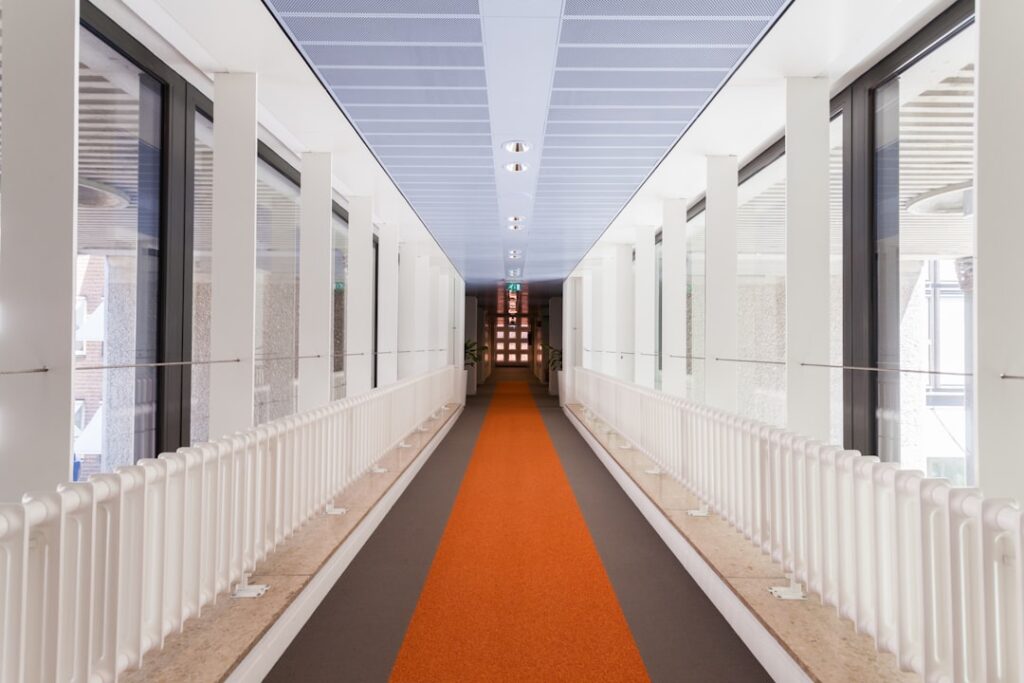
A ten-foot hallway is one of the most awkward spaces to furnish, which is exactly why rug runners for hallways 10 ft in length sell out so fast at the big-box stores. The corridor is too long for a standard 8-foot runner and too short for a 12-foot one, so homeowners end up either leaving cold bare flooring at the ends or buying something that bunches against the baseboard. Getting the length right is only half the battle. The material, pile height, and backing all decide whether the runner survives five years of foot traffic or looks matted and grimy within one.
- Why 10 Feet Is the Sweet Spot for Many Hallways
- Choosing the Right Width to Match a 10 Ft Length
- Best Materials for High-Traffic Corridors
- Pile Height and Why Low Wins in Hallways
- Don't Skip the Rug Pad
- Color, Pattern, and Hiding Everyday Dirt
- Care and Cleaning for a Long Life
- What to Budget Overall
Why 10 Feet Is the Sweet Spot for Many Hallways
Most interior hallways in American homes measure between 9 and 12 feet before they open into a room or hit a doorway. A 10-foot runner leaves a tidy 4 to 8 inches of exposed flooring at each end, which is the look designers actually want. That reveal frames the rug and keeps the runner from crowding transition strips or door thresholds. If you push a runner flush against a doorway, the leading edge becomes a trip hazard every time someone steps off it at speed.
Measure your hallway twice before you buy. Run a tape down the center, not along the wall, because baseboards and door casings can shave an inch or two off the usable width. Write down both the length and the narrowest point, then subtract roughly 4 to 5 inches from the width so the runner floats in the middle rather than wedging under the trim.
Choosing the Right Width to Match a 10 Ft Length
Runner widths are far more standardized than lengths. You will see 2 ft, 2 ft 2 in, 2 ft 6 in, and 3 ft as the common options. For a hallway that measures 36 to 42 inches wall to wall, a 2 ft 6 in runner leaves a balanced border of bare floor on both sides. Narrow hallways under 34 inches look best with a 2 ft or 2 ft 2 in width. Go too wide and the rug curls up the baseboard; go too narrow and it looks like a bookmark dropped in the middle of the floor.
Best Materials for High-Traffic Corridors
Hallways see concentrated, repetitive foot traffic, so fiber durability matters more here than in almost any other room. Here is how the common options stack up:
- Nylon: The most resilient synthetic. It springs back from crushing and hides wear patterns well. Expect to pay $60 to $150 for a quality 10-foot nylon runner.
- Polypropylene (olefin): Budget-friendly at $30 to $70, stain-resistant, and easy to clean, but it mats faster than nylon under heavy use.
- Wool: The premium choice at $150 to $400. Naturally stain-resistant and incredibly durable, though it sheds for the first few months.
- Jute and sisal: Great texture and a natural look, but they hold dirt and are hard to clean if something spills.
For a family home with kids and pets, a low-pile nylon or a flatweave polypropylene runner is the practical sweet spot. Save wool for formal entry halls where traffic is lighter.
Pile Height and Why Low Wins in Hallways
Pile height is the depth of the rug’s surface fibers. In a hallway you want low pile, generally under 1/4 inch, or a flatweave. Low-pile runners let doors swing over them without catching, vacuum easily, and dry fast when someone tracks in rain or snow. High shag piles look luxurious in a bedroom but trap grit in a corridor and wear unevenly right down the center line where everyone walks.
Don’t Skip the Rug Pad
A separate non-slip rug pad is not optional in a hallway. Bare runners slide on hardwood, laminate, and tile, and a sliding runner in a narrow corridor is a genuine fall risk. Buy a felt-and-rubber pad cut about an inch smaller than the runner on every side so it stays hidden. A good pad also adds cushion, protects the floor finish from grit abrasion, and extends the life of the runner by keeping it from creeping and folding. Expect to spend $20 to $40 on a quality 10-foot pad.
Color, Pattern, and Hiding Everyday Dirt
Hallways have little natural light and take a beating from shoes, so pattern does real work here. Busy patterns and medium tones like charcoal, taupe, and multicolor geometrics hide crumbs, pet hair, and salt stains far better than solid cream or pale gray. If your hallway is short on windows, a runner with lighter accents can bounce what light there is and make the space feel less like a tunnel. Runners with a defined border also visually lengthen a corridor, which is a handy trick in a cramped entry.
Care and Cleaning for a Long Life
Vacuum a hallway runner at least twice a week, since embedded grit is what actually destroys fibers over time. Rotate the runner end to end every few months so the wear evens out instead of concentrating near the busiest doorway. Blot spills immediately with a clean cloth and never rub, which pushes the stain deeper into the pile. Most synthetic runners can be spot-cleaned with a mix of warm water and a teaspoon of dish soap. Check the label before steam cleaning, because some latex backings break down under high heat.
What to Budget Overall
For a complete setup, plan on $50 to $200 for the runner itself plus $20 to $40 for a pad. Spending in the middle of that range on a low-pile nylon runner with a proper felt-rubber pad gives most homeowners the best balance of looks, safety, and lifespan. When you shop rug runners for hallways 10 ft long, confirm the listed length is the finished size and not a rounded-up nominal measurement, since a real 9-foot-8-inch runner sold as “10 ft” can leave you with an uneven reveal. Order from a retailer with free returns so you can lay it down, live with it for a few days, and send it back if the fit or color misses the mark.


