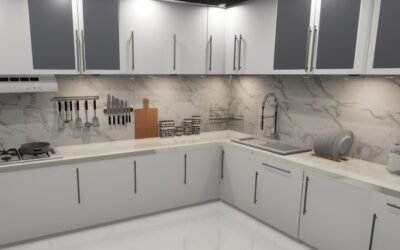
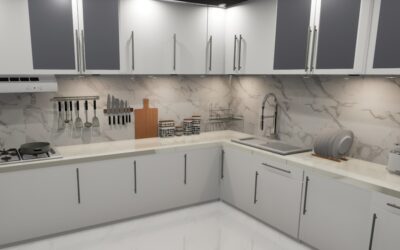
The right shade of blue can transform a generic white kitchen into a space that feels collected, lived-in, and 100 years old in the best way. A rustic blue farmhouse kitchen works because the cool blue offsets warm wood floors and brass hardware, while the muted, slightly weathered finishes keep the look from going too coastal or too modern. This guide walks through the specific paint colors that work, cabinet and island configurations that hold up over time, and the supporting materials (counters, backsplash, lighting) that complete the style without competing for attention.
Part of our Kitchen Remodeling guide — explore the full guide →
The Right Blue: Five Shades That Actually Work
Most homeowners gravitate to the wrong blue on the first try, picking something too bright or too saturated. The blues that work in a farmhouse kitchen are muted, slightly grayed, with a hint of green or warmth.
- Benjamin Moore Hale Navy (HC-154): deep saturated navy for islands and lower cabinets
- Sherwin-Williams Naval (SW 6244): rich, slightly cooler navy with high coverage
- Benjamin Moore Van Deusen Blue (HC-156): mid-tone dusty blue with green undertones
- Farrow & Ball Stiffkey Blue (No. 281): inky, complex blue that reads almost black at night
- Sherwin-Williams Slate Tile (SW 7624): dusty mid-blue that reads farmhouse-soft
Benjamin Moore Hale Navy is the most common pick for a 2026 farmhouse kitchen and is forgiving across north-facing and south-facing windows. Test a 2 by 2 foot painted sample board in your actual kitchen lighting before committing. Blues shift dramatically between morning sun and evening lamp light.
Cabinet Configurations That Read Farmhouse
The most common configuration is white upper cabinets and blue lower cabinets, often with a blue island as the focal point. This breaks up large expanses of color, keeps the room feeling bright, and aligns with the farmhouse principle of mixed materials.
A second strong configuration is all-blue cabinets with open shelving above. This works in kitchens with good natural light. Open shelves stocked with white ironstone, wooden cutting boards, and antique stoneware reinforce the rustic feel and give your eye a break from solid blue.
Avoid blue uppers with white lowers. The proportions read top-heavy and create a closed-in feeling, particularly in kitchens under 200 square feet.
Door Style and Cabinet Construction
Inset shaker doors are the default. Inset construction (where the door sits flush with the face frame rather than overlaying it) costs 20 to 30 percent more but gives the authentic 1900s look. For tighter budgets, overlay shaker doors painted the same shade still read farmhouse, especially when paired with cup pulls and exposed hinges.
Glass-front upper cabinets in either clear, seeded, or chicken wire panels are a farmhouse signature. Limit them to one or two cabinet runs to avoid the styled-storefront look. The contents of glass cabinets matter — keep them simple with ironstone, white plates, or amber glassware rather than the full junk drawer of mismatched mugs.
Hardware That Belongs
Mixed unlacquered brass and matte black is the current farmhouse default. Unlacquered brass develops natural patina over 2 to 5 years that pairs beautifully with the aged blue cabinet finish. Brands to look at: House of Antique Hardware, Rejuvenation, Schoolhouse Electric.
For pull style, cup pulls (Rejuvenation Putman in unlacquered brass, around 12 to 18 dollars each) on drawers and matching knobs on uppers form the classic combination. Bar pulls also work but read slightly more transitional than rustic.
Countertop Options
The three counter materials that work with rustic blue farmhouse kitchens are honed white marble (or marble-look quartz), butcher block walnut or maple, and soapstone. Polished quartz with heavy veining looks contemporary against blue cabinets and pulls the room away from rustic.
Honed Carrara marble runs 60 to 90 dollars per square foot installed and develops the etching and patina that fits the farmhouse aesthetic. For a low-maintenance alternative, Cambria Brittanicca Warm or Caesarstone Statuario Maximus give similar visual depth at 70 to 100 dollars per square foot without the staining concerns.
Soapstone (Black Venata or PA Soapstone Mineral Green) at 70 to 110 dollars per square foot adds character and pairs particularly well with darker blue cabinets like Hale Navy and Stiffkey Blue.
Backsplash Choices
White subway tile (3 by 6 inch or 4 by 8 inch) in a running bond or vertical stack remains the most common and reliable backsplash choice. Use white or ivory grout for a softer, vintage look. Dark gray grout reads more contemporary and clashes with the rustic intent.
For a step up in character, handmade or zellige tile (cle Tile, Tabarka Studio) in white or pale celadon adds the slight surface irregularity that machine-made subway tile lacks. Expect to pay 18 to 28 dollars per square foot for zellige versus 5 to 10 dollars for standard subway.
Avoid colored or patterned backsplash tiles. With blue cabinets doing the heavy lifting on color, a busy backsplash makes the room feel claustrophobic.
Flooring That Anchors the Look
Wide plank wood floors (5 to 8 inch boards) in a warm mid-tone finish are the standard. White oak with a natural or wire-brushed finish, hickory, or reclaimed pine all read farmhouse. Avoid orange-toned oak finishes (popular in the early 2000s) and dark espresso stains (too contemporary).
For practical purposes, a quality engineered hardwood (Stuga or Provenza, around 9 to 14 dollars per square foot) with a matte UV-cured finish handles dropped dishes and dog claws better than site-finished oil. The hand-scraped or wire-brushed texture hides minor wear and reinforces the rustic feel.
Lighting and Final Layers
Schoolhouse pendants or seeded glass globe pendants over the island carry the farmhouse signature. Hand-blown glass shades or polished nickel pieces from Rejuvenation, Visual Comfort, or Schoolhouse Electric run 200 to 600 dollars each. Use three pendants over a 6 to 8 foot island, two over shorter islands.
Final styling layers — a vintage Persian runner in faded blues and rusts, a stoneware crock holding wooden spoons, framed botanical prints — finish the room without feeling decorated. The rustic blue farmhouse kitchen succeeds when the layered details look gathered rather than purchased in a single shopping trip.