Every few years a single rug collection seems to show up in half the living rooms on Instagram, and for the vintage-flatweave look, the Safavieh Marbella rug is one of those quiet workhorses. It delivers the faded, old-world Persian and Moroccan patterns people love, in a low-profile flatweave that fits under doors and dining chairs, at a price that undercuts hand-knotted antiques by an order of magnitude. That combination is exactly why it turns up so often in budget-conscious design roundups.
This guide covers what the Marbella collection actually is, the materials and construction, how the sizes work, where it looks best in a home, and how to keep it looking good, so you can decide whether it belongs in your space.
What the Safavieh Marbella Collection Is
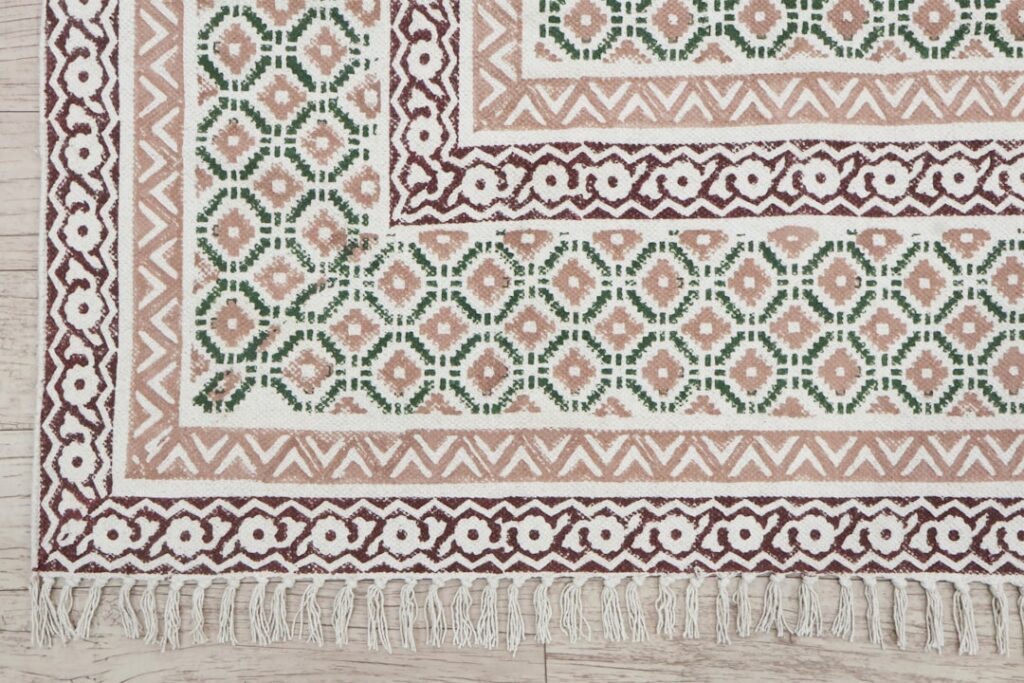
Safavieh is a long-established rug company known for producing a huge range of styles across many price points. The Marbella line sits in their machine-made, power-loomed category, designed to reproduce the look of worn vintage and tribal rugs. The hallmark of the collection is a flatweave, no-pile or very low-pile construction with distressed, muted color palettes: think faded blues, dusty rose, ivory, charcoal, and rust arranged in medallion, Moroccan trellis, and all-over Persian patterns.
Because it’s power-loomed rather than hand-knotted, it’s consistent, widely available, and far more affordable than a genuine antique. The trade-off is that it’s a manufactured reproduction, not a collectible heirloom, which is precisely what most buyers want at this price.
Materials and Construction
Most Marbella rugs are woven from synthetic fibers, and the exact blend varies by specific style within the collection. Common fiber content you’ll see includes:
- Polyester: Used for softness and rich, saturated color that holds up to light.
- Cotton or polyester-cotton blends: Some flatweave styles use a cotton content that gives the rug a slightly more natural hand and a lightweight, foldable body.
- Polypropylene: In certain variations, adding durability and stain resistance.
The flatweave build is the defining feature. With little to no pile, the rug lies thin and flat, which brings real practical advantages: it clears the swing of most interior doors, chairs slide over it easily, and it doesn’t crush or shed the way a plush pile rug can. The flip side is that it offers minimal cushioning underfoot, so a rug pad is close to mandatory if you want any softness and grip.
Available Sizes
The Marbella collection comes in the full range of standard rug footprints, which makes it easy to find a fit for almost any room:
- Accent sizes: Around 2×4 and 3×5 for entryways and reading nooks.
- Runners: Roughly 2×8 and longer for hallways and kitchen galleys.
- Mid sizes: 5×8 and 6×9, good for smaller living rooms and under queen beds.
- Large sizes: 8×10 and 9×12 for full living and dining rooms.
- Round options: Circular versions in the 5-to-7-foot range for round tables and entries.
As a rough guide on price, Marbella rugs typically land in the affordable-to-mid range for machine-made area rugs. A small accent might run around $40 to $80, a 5×8 often falls near $100 to $200, and an 8×10 or 9×12 commonly runs roughly $250 to $500 depending on the retailer and any sale. Treat those as approximate market ranges rather than fixed prices, since they shift with promotions and specific patterns.
Where the Safavieh Marbella Rug Looks Best
The muted, vintage palette of the Safavieh Marbella rug is its superpower, because faded tones blend into almost any color scheme instead of fighting it. A few rooms where it consistently works:
- Living rooms: The distressed medallion patterns hide everyday dirt and foot traffic well, making them practical for the busiest room in the house.
- Bedrooms: A 5×8 works at the foot of a bed, or an 8×10 under a queen with the flatweave extending past both sides.
- Dining rooms: The thin profile means chairs pull out smoothly without catching, a genuine advantage over pile rugs.
- Entryways and hallways: Low pile handles traffic and doesn’t block doors from swinging.
Style-wise, it slots naturally into modern farmhouse, boho, transitional, and eclectic interiors. Pair a faded blue-and-ivory Marbella with warm wood tones and linen upholstery and it reads collected and lived-in rather than showroom-new.
Care and Maintenance
A synthetic flatweave is forgiving, which is part of the appeal. Keep it looking its best with a simple routine:
- Vacuum regularly without a rotating beater bar on high, which can fray flatweave edges. Use suction or a low setting.
- Blot spills immediately with a clean cloth and a little mild soap and water. Synthetic fibers release most stains readily if you don’t let them set.
- Rotate the rug 180 degrees every few months so sun exposure and foot traffic wear evenly.
- Always use a rug pad. It adds grip on hard floors, prevents slipping, cushions the thin flatweave, and reduces wear from the subfloor rubbing the backing.
Check the specific care label before any deep cleaning. Many Marbella styles tolerate spot cleaning well, while professional or low-moisture cleaning is the safest route for a full refresh on larger sizes.
How It Compares to Similar Collections
Safavieh isn’t the only brand chasing the faded-vintage look, and the Marbella sits within a crowded field. Knowing the alternatives helps you confirm it’s the right pick.
- Vs. hand-knotted vintage rugs: A true antique Persian or Turkish rug is a one-of-a-kind, wool, heirloom piece running many hundreds to thousands of dollars. The Marbella reproduces the look at a fraction of the cost, with the trade-off that it’s a manufactured, repeatable design.
- Vs. other Safavieh vintage lines: Safavieh runs several distressed collections, some plusher, some thinner. Marbella’s calling card is the flat, low-profile weave with muted color, so if you want pile and softness, another Safavieh line may suit you better.
- Vs. washable vintage-look rugs: Fully machine-washable brands have exploded in popularity. If spills and pets are a daily concern, a washable rug may edge out the Marbella on practicality, though the Marbella often wins on price and pattern variety.
For most buyers, the Marbella lands in a genuinely useful middle: better looking and more substantial than the cheapest big-box rugs, far more affordable than a real antique, and available in enough sizes and patterns to fit almost any room.
Buying Tips to Get It Right
A few practical pointers save disappointment when the rug arrives:
- Confirm the exact fiber content on the specific pattern you like, since the blend varies across the collection and affects softness and cleanability.
- Order the right size, then size up if between two. A rug that’s slightly too small is the most common regret; too-large is rarely the problem in a living room.
- Budget for a rug pad in your total cost, roughly $30 to $80 depending on size. The thin flatweave genuinely needs it for grip and cushion.
- Expect some ship creases. Rolled rugs relax flat within a few days; a reverse-roll or gentle steam speeds it up.
Is It the Right Rug for You?
Choose a Marbella if you want the vintage, faded-Persian aesthetic without antique pricing, you value a thin flatweave that fits under doors and chairs, and you need something that hides everyday wear in a busy household. Look elsewhere if you’re after plush, sink-your-toes softness, since this collection is intentionally low and flat, or if you specifically want a natural-fiber or hand-knotted heirloom.
The Bottom Line
The Safavieh Marbella rug earns its popularity honestly: it packages a sought-after vintage flatweave look in durable, easy-care synthetic fibers, across every standard size, at a price most households can absorb. It’s a manufactured reproduction rather than a collectible, but for a living room, bedroom, or dining space that needs a forgiving, good-looking rug that plays well with almost any palette, it’s a smart, low-risk pick. Add a quality rug pad, vacuum it gently, rotate it a couple of times a year, and it will hold its faded charm through years of real use.