Most carpet stains are not really about the spill, they are about how fast the liquid soaks into the fiber before you can react. That is exactly the problem Scotchgard for carpet is designed to solve. It coats each fiber with an invisible barrier that makes spills bead up on the surface, buying you the precious minutes you need to blot them away before they become permanent stains. This guide explains how the protector actually works, how to apply it yourself, how long it lasts, what it costs, and whether it is worth the effort for your home.
What Scotchgard Actually Does
Scotchgard is a fabric and carpet protector that forms a thin, invisible shield around individual carpet fibers. Rather than sealing the carpet or changing how it feels, it lowers the fiber’s surface energy so liquids cannot easily wet and penetrate them. The practical result is that water, coffee, wine, and other spills sit on top as beads instead of instantly wicking into the pile, giving you time to blot them up before they set.
It is important to understand what it is not. Scotchgard is a stain repellent, not a stain remover and not a force field. Spills still need to be cleaned up promptly, it simply makes that cleanup dramatically more effective by slowing absorption. It also helps repel dry soil, so dirt vacuums out more easily and the carpet stays cleaner between deep cleanings.
How It Helps in a Real Home
The benefits show up most in the rooms where carpet takes abuse. In households with kids, pets, or heavy foot traffic, the extra reaction time turns would-be permanent stains into quick blot-ups. The repellency also reduces how much dirt grinds into and dulls high-traffic lanes, which helps the carpet keep its appearance longer.
- Spills bead up, giving you time to blot before they soak in.
- Dry dirt and soil release more easily when you vacuum.
- High-traffic areas resist matting-in of grime and stay brighter.
- Cleanup of everyday messes becomes faster and more reliable.
Many new carpets come with a factory-applied stain treatment, but that protection wears off over time, especially in traffic lanes and after cleanings. Reapplying a protector like Scotchgard restores that defense on older carpet or after a deep clean strips the original coating.
How to Apply Scotchgard to Carpet
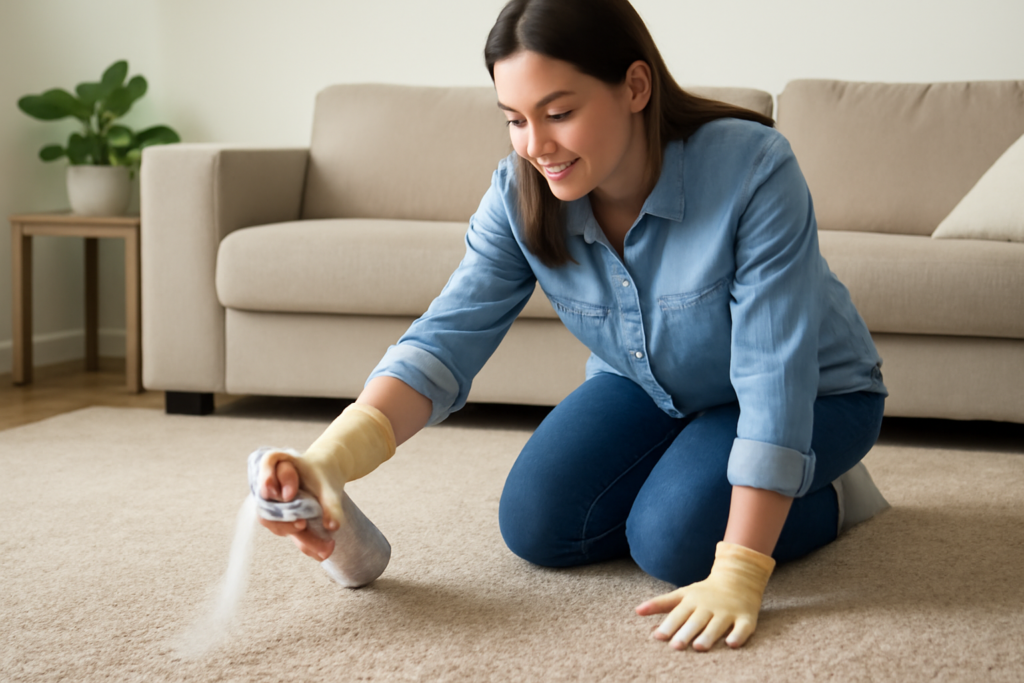
Applying carpet protector yourself is straightforward, and the single most important rule is to do it on a clean carpet. Applying protector over dirt just locks the dirt in, so always clean and fully dry the carpet first.
- Vacuum thoroughly, then deep clean the carpet and let it dry completely, or apply to a freshly cleaned, still-slightly-damp carpet if the product directs.
- Ventilate the room well and test a hidden spot first for colorfastness.
- Shake the can and hold it the recommended distance, spraying in even, overlapping passes so the fibers are lightly and uniformly coated, not soaked.
- For large areas, work in sections and lightly brush or rake the pile to distribute the product evenly into the fibers.
- Let it dry fully, often several hours, before walking on the carpet or replacing furniture.
Aerosol cans cover a limited area, so estimate how many you need based on your square footage, professional-grade products applied with a sprayer cover larger rooms more economically. Do not over-apply; a light, even coat works better and dries faster than a heavy soaking.
How Long It Lasts
Carpet protector is not permanent, it wears away with foot traffic, vacuuming, and cleaning. As a general guide, a DIY application lasts roughly six months to a year in normal use, and less in heavy-traffic lanes that see the most abrasion. Professional-grade applications, applied more heavily and evenly, can last longer, sometimes a year or two.
The key maintenance point is to reapply after every deep carpet cleaning, since shampooing and hot-water extraction strip much of the existing protector along with the dirt. Many professional carpet cleaners offer to reapply protector as an add-on after cleaning for exactly this reason, and it is the ideal moment to do it because the carpet is clean and the old coating is gone.
What It Costs
DIY Scotchgard is inexpensive. Aerosol cans typically run around $10 to $20 each, and the number you need depends on your square footage, so a single room might cost $20 to $50 in product. Professional application as an add-on to a carpet cleaning commonly runs in the range of $0.10 to $0.40 per square foot, or a flat add-on fee per room, which buys you a heavier, more even coat and saves the labor.
Weighed against the cost of replacing stained carpet or the frustration of permanent marks, the modest price of protector makes it a sensible insurance policy, particularly on light-colored carpet or in homes with children and pets.
Does It Work on Rugs and Upholstery Too?
The same repellent technology extends beyond wall-to-wall carpet, and many homeowners treat area rugs and fabric furniture at the same time. On washable and synthetic area rugs, a light application adds the same spill-beading protection, useful under a dining table or in a kid’s room. Upholstery versions of the protector guard sofas and chairs against the same coffee and food spills, though you should always use the product formulated for the surface and test an inconspicuous spot first for colorfastness.
Delicate and natural fibers need extra caution. Wool, silk, and viscose rugs can be sensitive, so check the manufacturer’s guidance before spraying, and when in doubt, have a professional treat valuable or natural-fiber pieces. For everyday synthetic carpet and rugs, though, DIY application is safe and effective, and treating rugs and traffic areas together means the whole room resists spills consistently rather than leaving unprotected gaps where accidents are most likely.
Is It Worth It?
For most homeowners with carpet in living areas, the answer is yes, provided you have realistic expectations. Scotchgard will not make carpet invincible, and it never replaces prompt cleanup, but it meaningfully improves your odds of getting spills out and keeps carpet looking cleaner between deep cleanings. It is most worthwhile on light-colored or high-traffic carpet, in homes with kids or pets, and right after a professional cleaning. If your carpet is dark, low-traffic, and rarely sees spills, the benefit is smaller.
Final Thoughts
Scotchgard for carpet is a simple, affordable way to tilt the odds in your favor against spills and everyday dirt. It works by making liquids bead up so you can blot them before they set, and it helps dry soil release when you vacuum. Apply it only to clean, dry carpet, use light even coats, and reapply after each deep cleaning to keep the protection working. Treated as an aid to prompt cleanup rather than a magic shield, it is one of the easiest ways to extend the life and appearance of your carpet.