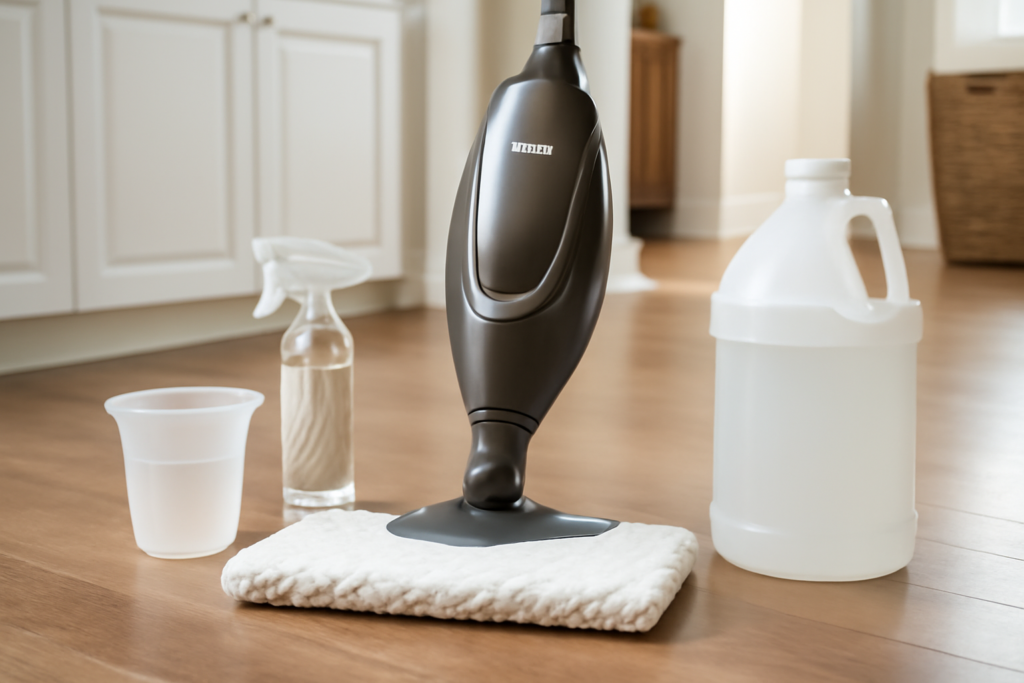
You unbox a shiny new steam mop, look at the empty tank, and wonder what to pour in. The short answer surprises most people: the best Shark steam mop cleaning solution is plain water, and Shark specifically designs its mops to run on water alone. Pouring in the wrong cleaner can clog the unit, spit residue on your floors, and void your warranty. This guide explains exactly what Shark recommends, why, and how to still get a deep, sanitized clean.
- What Shark Actually Recommends: Water Only
- Tap Water vs. Distilled Water
- Why Steam Alone Gets Floors Clean
- What NOT to Put in a Shark Steam Mop
- How to Add Scent or Extra Cleaning Power Safely
- Floor Types: Where Steam Is Safe
- What About Shark’s Own Accessories?
- Troubleshooting Weak or No Steam
- Keeping Your Shark Steam Mop in Top Shape
- Dos and Don’ts
- Frequently Asked Questions
- Final Thoughts
What Shark Actually Recommends: Water Only
Shark builds its steam mops – including popular models like the Genius, the Professional, and the Steam Pocket line – to work with water only. The heat and pressurized steam do the cleaning and sanitizing; no detergent is required. Shark’s own manuals and support materials warn that adding cleaning solutions, chemicals, scented oils, or descaling agents to the water tank can damage the mop and void the warranty.
The reason is mechanical. A steam mop heats water and forces it through a narrow nozzle at high temperature. Soaps, oils, and additives leave behind residue that cakes on the heating element and clogs the steam channels. That buildup weakens steam output, causes sputtering, and can permanently kill the mop.
Tap Water vs. Distilled Water
Both work, but there is a nuance. Ordinary tap water is fine for most homes and is what Shark says you can use. However, in hard-water areas, the minerals in tap water leave scale inside the boiler over time, shortening the mop’s life. If your water is hard, or you want maximum longevity, use distilled or demineralized water. It contains virtually no minerals, so it will not build up scale.
- Soft-water home? Tap water is perfectly fine.
- Hard-water home? Distilled water protects the heating element and prolongs the mop’s life.
- Either way, never add anything but water to the reservoir.
Why Steam Alone Gets Floors Clean
People are skeptical that water with no soap can truly clean, but steam is a powerhouse. Shark steam mops heat water to around 200 degrees F or higher, producing vapor that dissolves grease, lifts dirt, and kills a large share of common household germs and bacteria on sealed hard floors. The steam does the sanitizing that detergent normally provides, and the microfiber pad traps and removes the loosened grime. No soap means no sticky film left behind – which is why steam-mopped floors often look cleaner than detergent-mopped ones.
What NOT to Put in a Shark Steam Mop
Keep every one of these out of the water tank:
- Vinegar – the acid can corrode internal seals and the heating element, and it voids the warranty.
- Bleach or ammonia – dangerous when heated and vaporized, and corrosive to the mop.
- Dish soap or floor cleaner – foams, clogs the nozzle, and leaves residue.
- Essential oils or fragrance – oily residue gums up the steam channels.
- Commercial descaling liquids – not intended for the tank; can damage components.
- Alcohol or solvent-based cleaners – flammable and damaging.
Even products marketed as “steam mop safe” from other brands are not endorsed by Shark and can still void your coverage. When in doubt, leave it out.
How to Add Scent or Extra Cleaning Power Safely
If you crave a fresh scent or need to spot-treat a grimy patch, do it on the floor or the pad – never in the tank.
- Pre-treat tough spots by spraying a floor-appropriate cleaner directly on the stain, letting it dwell a minute, then steaming over it.
- Scent the pad by adding a drop or two of essential oil to the microfiber pad itself (not the reservoir) so the aroma releases as you steam.
- Mop first with your usual floor cleaner and water using a traditional mop, then follow with the steam mop and plain water to sanitize and rinse.
These workarounds give you fragrance and extra cleaning muscle without ever risking the mop’s internals or your warranty.
Floor Types: Where Steam Is Safe
Steam mops shine on sealed hard surfaces but can ruin others. Check your flooring before you steam:
- Safe: sealed ceramic and porcelain tile, sealed natural stone, sealed hardwood (briefly, on the lowest setting), and many sealed laminates rated for steam.
- Risky: unsealed wood, waxed floors, vinyl and LVP not rated for heat, and older laminate – steam can warp planks, dissolve adhesives, and cause swelling.
- Never: unsealed stone or grout, cork, and any floor the manufacturer says is not steam-safe.
Always check your flooring manufacturer’s guidance. When steam is not appropriate, a damp microfiber mop is the safer choice.
What About Shark’s Own Accessories?
Shark does not sell a proprietary detergent to pour into the tank, which reinforces the water-only message – if a chemical were needed, the company would market one. What Shark does sell are replacement microfiber pads, and choosing the right pad matters more than any solution. Shark offers different pad types: a standard pad for everyday cleaning, a scrubbing or dirt-grip pad with tougher fibers for grimy kitchen floors, and sometimes a mineral-infused pad. Swapping to a scrubbing pad gives you extra mechanical cleaning power on stuck-on messes without ever adding a chemical. Keeping two or three clean pads on hand means you can change to a fresh one mid-job when the first gets saturated with dirt.
Troubleshooting Weak or No Steam
If your Shark stops producing steam, the cause is almost always the water tank or scale buildup – not a missing cleaning solution. Confirm the tank is filled and seated correctly, and that the mop has had 30 seconds or so to heat up. If output is weak and you have been using hard tap water, mineral scale in the boiler is the likely culprit, which is exactly why distilled water is the safer long-term choice. A mop that sputters brown or white flecks onto the floor is shedding scale, a clear sign you should switch to distilled water going forward. These problems are far more common in homes that ignored the water-only rule and previously ran vinegar or cleaners through the tank.
Keeping Your Shark Steam Mop in Top Shape
- Empty the tank after every use so water does not sit and breed mineral scale or mildew.
- Wash the microfiber pads in the machine without fabric softener, which coats fibers and reduces absorbency.
- Use distilled water in hard-water regions to prevent scale in the boiler.
- Store the mop upright with the pad removed to let everything dry fully.
- Descale only per the manual – some models allow occasional flushing, but follow Shark’s exact instructions rather than pouring descaler in the tank.
Dos and Don’ts
Do
- Fill the tank with plain water – distilled if your water is hard.
- Pre-treat stains on the floor, not in the reservoir.
- Empty and dry the mop after every session.
Don’t
- Add vinegar, soap, oils, or any cleaning solution to the tank.
- Steam floors that are not sealed or steam-rated.
- Leave standing water in the reservoir between uses.
Frequently Asked Questions
What cleaning solution can I use in a Shark steam mop?
None. Shark designs its steam mops to use water only. Adding detergents, vinegar, oils, or commercial solutions can damage the mop and void the warranty. The steam itself does the cleaning and sanitizing.
Can I put vinegar in my Shark steam mop?
No. Vinegar’s acidity can corrode internal seals and the heating element and will void your warranty. If you want to use vinegar, apply a diluted solution to the floor separately, not in the tank.
Should I use distilled or tap water?
Tap water is acceptable, but distilled or demineralized water is better in hard-water areas because it prevents mineral scale from building up inside the boiler and extends the mop’s life.
Does a Shark steam mop sanitize without soap?
Yes. The high-temperature steam, around 200 degrees F or hotter, kills many common germs and bacteria on sealed hard floors while the microfiber pad removes the loosened dirt – no detergent needed.
How do I make my floors smell fresh without additives?
Add a drop of essential oil to the microfiber pad rather than the water tank, or pre-treat the floor with a scented, floor-safe cleaner before steaming. This keeps fragrance out of the mop’s internals.
Final Thoughts
The takeaway is simple: the ideal Shark steam mop cleaning solution is nothing more than water, ideally distilled if you have hard water. Skip the vinegar, soap, and additives that clog the machine and void your warranty. Let the heat and steam do the work, spot-treat stubborn messes on the floor, and your Shark will deliver sanitized, streak-free floors for years.