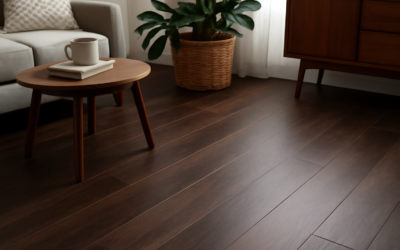
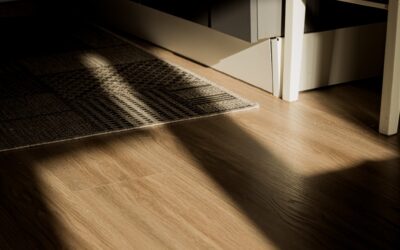
Shaw luxury vinyl plank is one of the most widely installed LVP brands in the United States, and I have put down a lot of it over the years. Shaw is one of the largest flooring manufacturers in the world, which means broad availability, consistent quality control, and warranties that the company actually stands behind. For homeowners weighing waterproof vinyl against other flooring, Shaw is a safe, well-supported choice, though like any brand it has tiers that range from budget-friendly to genuinely premium.
What You Get With Shaw LVP
Shaw’s luxury vinyl plank lines are engineered as rigid-core products, meaning they use an SPC (stone plastic composite) or WPC (wood plastic composite) core that resists dents and hides minor subfloor imperfections. Nearly all of it is 100 percent waterproof, which makes it viable in kitchens, bathrooms, basements, and laundry rooms where hardwood cannot go.
The visuals are where Shaw invests heavily. Their embossed-in-register texturing aligns the surface grain with the printed wood image, producing a realistic feel that cheaper vinyl skips. Wider and longer planks in the higher collections read convincingly as real hardwood underfoot.
Understanding Shaw’s Collections
Shaw sells vinyl under several brand names and collections, and knowing the hierarchy helps you shop. Rather than chase specific product names that change year to year, focus on the tier:
- Entry collections: thinner wear layers around 6 to 12 mil, priced near $2 to $3 per sq ft. Fine for bedrooms and light-traffic rooms.
- Mid-range collections: 12 to 20 mil wear layers, thicker cores, and better textures at $3 to $5 per sq ft. The sweet spot for most homes.
- Premium and designer collections: 20 to 28 mil wear layers, longer planks, and attached pads, running $5 to $8 per sq ft.
Shaw also sells commercial-grade vinyl through its Floorté and contract lines, which carry heavier wear layers for high-traffic use.
The Wear Layer Number That Matters
If you take one thing from this guide, make it this: the wear layer thickness, measured in mils, is the single best predictor of how long Shaw luxury vinyl plank will last. A mil is one-thousandth of an inch, and it defines the clear protective top layer.
- 6-12 mil: light residential, bedrooms and closets
- 12-20 mil: busy family homes, hallways, kitchens
- 20+ mil: heavy traffic, pets, light commercial
Do not fixate on total plank thickness alone. A thick plank with a thin wear layer scratches faster than a thinner plank with a robust top coat. For a household with dogs and kids, I recommend nothing under 20 mil.
Installation and Locking Systems
Most Shaw LVP uses a click-lock floating floor system, which snaps together over an underlayment without glue or nails. This makes it a realistic DIY project for a determined homeowner and keeps professional labor costs down. The rigid core tolerates minor subfloor irregularities better than flexible vinyl, but you still need a subfloor flat to within 3/16 inch over 10 feet.
Leave a 1/4 to 3/8-inch expansion gap around the perimeter, because even rigid vinyl moves with temperature swings. Skipping that gap causes buckling, the most common installation failure I see on floating floors. Many premium Shaw planks come with an attached acoustic pad, which saves the cost and step of a separate underlayment.
Warranty Coverage
Shaw backs its residential vinyl with warranties that typically span the lifetime of the floor for residential use, plus waterproof and wear guarantees. The exact terms scale with the collection, so premium products carry stronger coverage. As always, warranties require professional-grade installation and proper maintenance to stay valid, and improper subfloor prep will void them.
Register your floor with Shaw after installation and keep your purchase receipt. In the rare event of a manufacturing defect, that paperwork is what makes a claim go smoothly.
What It Really Costs Installed
Budgeting for a Shaw vinyl floor means adding material, underlayment, and labor:
- Material: $2 to $8 per sq ft depending on tier
- Underlayment (if not attached): $0.30 to $0.80 per sq ft
- Professional installation: $2 to $5 per sq ft
All-in, expect $4 to $12 per sq ft installed. A 400 sq ft living room lands somewhere between $1,600 and $4,800, with mid-range product and standard labor putting most projects near the middle.
Strengths and Honest Weaknesses
The strengths are real: waterproof, durable, DIY-friendly, and widely available with strong support. Shaw’s texturing and plank sizing at the mid and premium tiers genuinely rival more expensive brands. For a busy household that wants a wood look without wood’s fragility, it is hard to beat.
The honest weaknesses apply to all LVP, not just Shaw. Vinyl can dent under heavy static loads like a refrigerator leg or a piano wheel, and dark colors show dust and pet hair. It also cannot be refinished, so once the wear layer is gone, the plank is done. Understand those limits, choose an adequate wear layer, and Shaw luxury vinyl plank will serve a typical home well for 15 to 25 years.
Shaw’s LVP Lines and Wear Layers
Shaw is one of the largest flooring manufacturers in the country, and its luxury vinyl plank spans several collections at different price and performance points. The key spec to compare across them is the wear layer thickness, measured in mils, which determines how well the floor resists scratches and traffic. A 12-mil wear layer suits a normal residential home, while 20-mil and up handles pets, kids, and even light commercial use. Many Shaw lines are rigid-core SPC or WPC construction, which adds dent resistance and dimensional stability over temperature swings.
Most collections are waterproof, making them suitable for kitchens, baths, and basements where traditional wood cannot go.
Installation and Value
A big part of Shaw LVP’s appeal is the click-lock floating installation, which most confident DIYers can handle without glue or nails. The planks snap together over a flat, clean subfloor, and a thin underlayment or an attached pad improves comfort and sound. On pricing, Shaw LVP generally runs about $2 to $5 per square foot for materials, positioning it as a mid-market option with the brand’s reliability and warranty behind it. When shopping, weigh the wear layer, the core type, and the warranty together rather than fixating on price alone, since a slightly thicker wear layer often pays off in a household with pets or heavy traffic. For a durable, waterproof, wood-look floor from an established brand, Shaw is a dependable choice.
Prefer to explore on your own?
See how new flooring looks in your actual room in seconds — free, no signup.
Try the free Floor Studio →