The shower is the hardest-working fixture in your bathroom, used by every household member at least once a day, yet it often gets the least creative attention during remodels. Modern shower designs have moved far beyond the basic tub-shower combo, offering walk-in configurations, curbless entries, multiple showerheads, and tile patterns that turn a functional space into a genuine retreat. Whether your budget is $2,000 or $20,000, the right design choices maximize both style and daily comfort.
Popular Shower Layout Options
Walk-In Shower
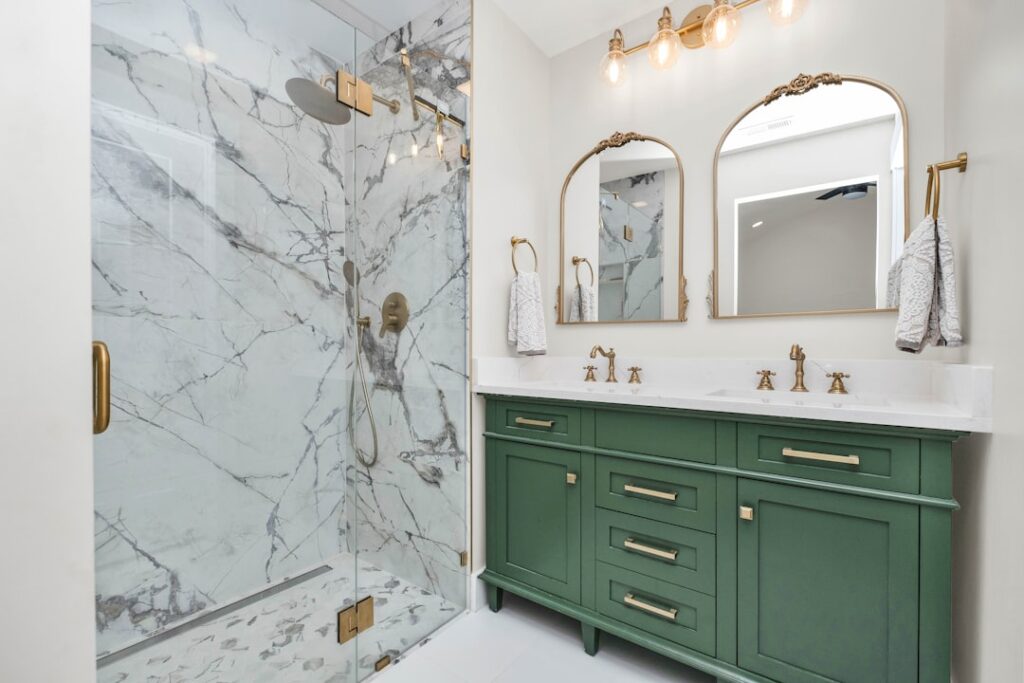
Walk-in showers feature a glass enclosure or half-wall without a bathtub, creating an open and spacious feel. Minimum recommended size is 36×36 inches, but 48×36 inches or larger delivers a much more comfortable experience. A single glass panel instead of a full enclosure reduces cost by $300-$800 and keeps the bathroom feeling open.
Curbless (Zero-Threshold) Shower
Curbless showers eliminate the raised lip at the entry, creating a seamless transition from bathroom floor to shower floor. The entire bathroom floor must slope toward the shower drain at a minimum pitch of 1/4 inch per foot. This design is ADA-accessible, visually sleek, and increasingly popular in modern and minimalist bathrooms. Installation costs 20-30% more than a standard curbed shower due to the precision waterproofing required.
Alcove Shower
The most common and budget-friendly option. Three walls form the enclosure, with a curtain or glass door on the fourth side. Standard alcove dimensions are 60×30 or 60×32 inches. Acrylic surrounds or tile over cement board keep costs between $1,500 and $5,000 for a complete remodel.
Corner Shower
Neo-angle and quadrant corner showers tuck into unused corners, making them ideal for small bathrooms. A 36×36-inch corner unit fits where a full walk-in cannot, and the angled glass door opens outward without blocking adjacent fixtures.
Tile Ideas That Transform the Space
Tile is where shower designs become personal. The shower floor, walls, and niche each present an opportunity to introduce color, pattern, and texture:
- Large-format porcelain (12×24 or 24×24): Fewer grout lines create a clean, modern look and simplify maintenance. Ideal for shower walls.
- Subway tile (3×6 or 4×8): A timeless choice that works in traditional, transitional, and modern bathrooms. Stack bond or herringbone patterns add visual interest over the standard brick lay.
- Penny round and hexagon mosaic: Perfect for shower floors because the numerous grout lines improve traction. Choose a matte or textured finish rated for wet areas.
- Zellige or handmade tile: Irregular surfaces catch light beautifully and add artisan character. Budget $15-$30 per sq ft compared to $3-$8 for standard porcelain.
- Natural stone (marble, travertine, slate): Luxurious but requires sealing every 6-12 months. Marble shower walls cost $10-$25 per sq ft for the tile alone.
An accent strip or feature wall inside the shower, often behind the showerhead or inside the niche, adds a design focal point without tiling the entire enclosure in an expensive material.
Showerheads and Fixture Options
The showerhead controls how the water feels, which matters more than almost any other design choice:
- Rain showerhead (ceiling or wall-mounted): Delivers a wide, gentle flow from directly overhead. Mount at least 84 inches high for clearance. Models from Moen, Delta, and Kohler range from $80 to $400.
- Handheld showerhead: Attached to a slide bar or wall bracket, it doubles as a fixed head and a flexible rinse tool. Essential for bathing children, washing pets, and cleaning the shower itself.
- Body jets: Wall-mounted jets at torso and hip height create a spa-like multi-directional spray. They require additional plumbing runs and a 3/4-inch supply line to maintain adequate pressure.
- Dual showerhead system: Combines a fixed rain head with a handheld on a diverter valve. This setup covers all needs without choosing one over the other. Budget $150-$500 for the complete system.
Niches, Benches, and Storage
Built-in niches eliminate the need for hanging caddies that rust, fall, and damage tile. Standard niche dimensions are 12×24 inches or 12×36 inches, recessed 3.5 inches deep between wall studs. Tile the niche interior with the same or contrasting tile for a polished look. A slight downward pitch on the niche shelf prevents water from pooling.
A shower bench provides seating for shaving, relaxation, or accessibility. Floating benches cantilevered from the wall save floor space and are easier to clean underneath. A built-in corner seat measuring 16-18 inches deep and 18 inches high meets ADA guidelines while fitting compactly.
Waterproofing: The Most Important Step
No matter how beautiful the tile, a shower that leaks behind the walls will cause thousands of dollars in mold and structural damage. Modern waterproofing systems like Schluter Kerdi membrane and Laticrete Hydro Ban provide reliable barriers when installed correctly. Every seam, corner, and penetration point (valve, showerhead pipe, niche edges) must be sealed with waterproof tape or fabric and membrane.
The shower pan requires either a traditional mortar bed with a PVC or CPE liner, or a prefabricated foam pan like the Schluter Kerdi-Shower-Kit, which simplifies waterproofing and pre-slopes the floor in one step. Budget $300-$600 for a quality shower pan system.
Budget Planning for Your Shower Remodel
Shower remodel costs vary widely, but these ranges help set expectations:
- Basic refresh (new tile, fixtures, glass door): $3,000-$6,000
- Mid-range remodel (custom tile, niche, rain head, frameless glass): $6,000-$12,000
- High-end build (curbless, body jets, natural stone, bench, linear drain): $12,000-$25,000+
Labor accounts for 40-60% of the total. Hiring an experienced tile setter who specializes in shower work is worth the premium over a general handyman, because proper waterproofing and tile installation require specialized skills that prevent costly failures down the road.