
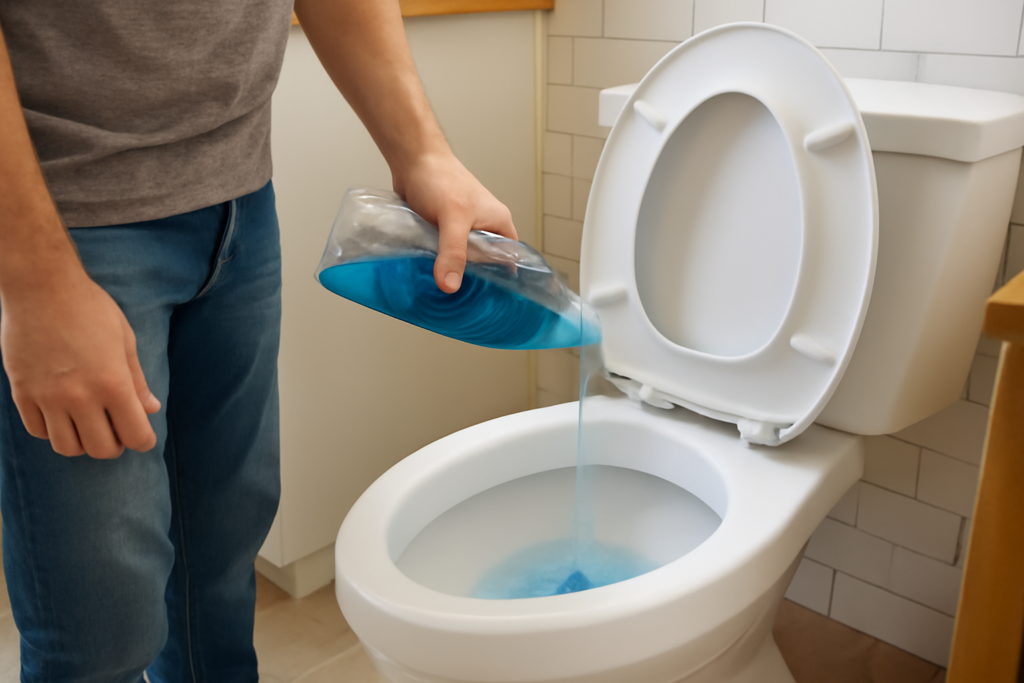
It sounds too simple to be true, but plumbers have used the trick for decades. Dawn dish soap for a clogged toilet is a genuinely effective first move for the common, everyday clog, and it costs nothing you do not already have under the sink. The method uses grease-cutting soap and hot water to lubricate and loosen a blockage so gravity can pull it through. It will not fix every clog, and there are real limits worth knowing, but for a mild-to-moderate toilet backup, it is often the easiest fix that spares you the plunger and the mess.
Part of our Bathroom Remodeling & Flooring guide — explore the full guide →
Why Dish Soap Works on a Clog
The logic is straightforward once you know what most toilet clogs are made of. Everyday blockages are usually a soft mass of waste and toilet paper lodged in the trap. Dawn is engineered to cut grease and reduce surface tension, so when it coats a clog it acts as a lubricant, letting the mass slide more freely through the trap. Add hot water and you soften the paper and help break the clog apart. Together, the soap slicks the pipe walls and the clog while the water pressure and heat encourage everything to move.
This is the same principle behind commercial drain products, minus the harsh chemicals that can damage older pipes or splash dangerously.
The Step-by-Step Method
Done right, this technique is nearly foolproof for a soft clog. Give it time to work rather than rushing.
- Add the soap: squeeze about 1/4 to 1/2 cup of Dawn directly into the bowl
- Let it sink: wait 10 to 20 minutes so the soap travels down and coats the clog
- Heat the water: warm about a gallon until hot but never boiling
- Pour from waist height: pour the hot water into the bowl in a steady stream to add pressure
- Wait and watch: give it another 20 to 30 minutes; a clearing clog will start to drain
If the water level drops on its own, the clog is breaking up. You can repeat the process once or twice for a stubborn but minor blockage.
The Critical Rule: Hot, Not Boiling
This is the one mistake that turns a cheap fix into an expensive repair. Never pour boiling water into a toilet. Porcelain is vitreous china, and the sudden thermal shock of boiling water can crack the bowl or the trap, and it can loosen the wax ring seal at the base. Hot tap water, or water heated to just below a boil, around 150 to 175°F, is plenty warm to soften a clog without risking a cracked toilet. If you would not comfortably put your hand under it, let it cool slightly before pouring.
When Dawn Dish Soap for a Clogged Toilet Falls Short
Honesty matters here, because the soap method only works on certain clogs. It is designed for soft, organic blockages of waste and paper. It will not clear a hard obstruction, and reaching for it repeatedly on the wrong kind of clog just wastes time while water risks overflowing.
Skip the soap and use another tool when the clog involves a foreign object, a toy, a wad of wipes, cotton products, or anything that does not dissolve. It also will not fix a blockage deep in the main line or a vent problem. And if the bowl is already full to the brim, adding water is risky; bail some out first or go straight to a plunger.
When to Plunge, Snake, or Call a Pro
If the soap-and-water method does not clear the clog after a couple of tries, escalate in order. A good flange plunger, the kind with an extended rubber sleeve made for toilets, creates the direct suction and pressure that dislodges most clogs the soap could not. Work it with firm, repeated plunges and a tight seal.
Still blocked? A toilet auger, or closet snake, reaches past the trap to grab or break up a deeper obstruction, and it is the right tool for foreign objects. If none of these work, or if multiple drains in the house are backing up at once, that points to a main-line clog, and it is time to call a plumber before you cause a bigger backup.
Variations and Substitutes That Work
Dawn gets the credit because it is a strong grease-cutter, but the method is flexible if you do not have it on hand. Any liquid dish soap works on the same principle of lubrication and reduced surface tension, so a generic brand will do in a pinch. Some people add a cup of baking soda followed by a cup of vinegar before the hot water, using the fizzing reaction to help agitate and break up the clog, though the soap and hot water are doing most of the work.
A small squirt of shampoo or body wash can substitute if the kitchen is out of dish soap entirely. What you should not reach for is a harsh chemical drain cleaner in a toilet; these are formulated for sink and tub drains, can crack the porcelain or damage seals, and create a dangerous situation if you later have to plunge and splash the caustic water. The gentle soap approach is safer for both you and the fixture.
Preventing Future Clogs
Once the toilet is flowing again, a few habits keep you from repeating the whole exercise. Most avoidable clogs come from flushing too much at once or flushing things that never belong in a toilet, so prevention is largely about what goes in the bowl.
- Use less paper per flush and flush twice for larger loads rather than all at once
- Never flush wipes, even ones labeled flushable, along with cotton, floss, or paper towels
- Keep small objects away from the bowl, especially in bathrooms used by young children
- Check an older, weak-flushing toilet, since low flow power makes clogs far more frequent
If your toilet clogs constantly despite good habits, the problem may be a partially blocked trap, a low-flow older model, or a venting issue, all worth having a plumber evaluate rather than fighting every week.
The Bottom Line
Dawn dish soap for a clogged toilet is a legitimate, low-effort first response for the ordinary soft clog. Squeeze in the soap, wait, then pour hot, not boiling, water from waist height and give it time. When it works, you have avoided a messy plunge. When it does not, reach for a flange plunger, then a toilet auger, and call a pro if the whole house is backing up. Knowing which clog you have is the key to fixing it fast.


