The viral hack works, but not in the way most YouTube videos claim. Pouring Dawn dish soap in toilet bowls is a legitimate technique for clearing certain types of clogs without a plunger or auger, and it has been used by plumbers as a lubrication trick for decades. What the social media versions usually leave out is which clogs respond to soap and which need a different approach entirely. Knowing the difference saves you from making a backed-up toilet worse, or pouring soap into a problem that needs a plumber.
Part of our Bathroom Remodeling & Flooring guide — explore the full guide →
Why Dish Soap Sometimes Clears a Clog
Dawn and similar dish soaps contain surfactants that lower the surface tension of water and allow it to penetrate organic matter more easily. Combined with hot water, the soap softens grease, breaks down soft organic clogs, and lubricates the inside of the trap so a partial blockage can slide through.
The mechanism is purely physical and chemical, not magical. Soap does not dissolve toilet paper instantly. It does not break through tree roots or hard mineral scale. What it does, sometimes effectively, is help a clog that is on the verge of clearing actually finish moving through the trap.
The Right Method
If you decide to try this approach, do it correctly. The basic protocol is:
- If the bowl is full or overflowing, stop the supply. Turn the shutoff valve at the base of the toilet to the right until it stops, or lift the float in the tank to prevent further fill.
- Remove some water from the bowl with a small container if it is dangerously full. Lower the level to about half full.
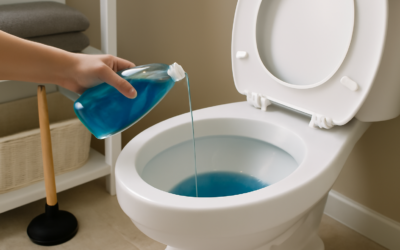
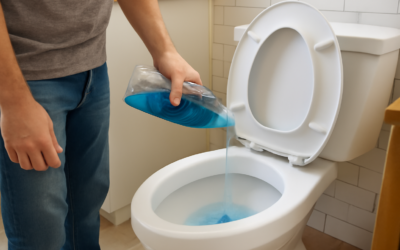
- Pour 1/4 to 1/2 cup of Dawn dish soap directly into the bowl. Aim for the center of the water, not the sides.
- Wait 15 to 20 minutes. The soap settles down through the trap by gravity.
- Heat 1 gallon of water to about 120 degrees Fahrenheit (hot tap water, not boiling).
- Pour the hot water from waist height into the bowl in a steady, controlled stream.
- Wait another 10 minutes and observe whether the water level drops on its own.
If the water level drops, the clog has cleared or weakened enough that you can flush. If the level stays the same or rises, the method is not going to work and you need a plunger or auger instead.
Critical Warning: Do Not Use Boiling Water
Boiling water (212 degrees Fahrenheit) can crack porcelain toilet bowls, especially older units or those with hairline stress cracks you cannot see. Most porcelain tolerates the thermal shock, but the failure mode is dramatic and expensive. A cracked toilet bowl is not repairable. Replacement runs $150 to $500 plus installation labor.
Stick to hot tap water around 120 degrees Fahrenheit, which is plenty hot to soften soap and grease without risking the bowl. Boiling water also has no meaningful effect on the clog itself beyond what hot tap water achieves.
When the Method Actually Works
Dish soap works on a specific subset of clogs. The likely successes are:
- Excess toilet paper that compacted in the trap but is still soft
- Greasy or organic matter from improper flushing
- Partial blockages where the water still drains slowly
- Soft clogs in homes with newer plumbing where pipes are smooth and free of buildup
For these cases, success rates run somewhere in the 50 to 70 percent range based on plumber-reported anecdotes. It is worth trying before pulling out a plunger, especially overnight when the soap has hours to work.
When It Does Not Work
Some clogs are immune to soap regardless of how long you wait. Avoid wasting time with this method if:
- You flushed a non-flushable item like a toy, paper towel, dental floss container, or sanitary product
- The clog is in the main sewer line rather than the toilet itself (multiple drains backing up simultaneously)
- You have hard mineral buildup or tree root intrusion
- The toilet has not flushed properly for days or weeks
For these situations, soap will not move the obstruction. A flange plunger, toilet auger (closet auger), or licensed plumber is the next step.
The Better First Tool: A Flange Plunger
For a routine clog, a quality flange plunger clears the issue faster and more reliably than dish soap. Skip the flat sink-style plunger that comes with most homes. A flange plunger has a tapered rubber sleeve that extends into the toilet drain and creates a proper seal.
The Korky Beehive Max ($15) and the Mr Clean Bowl Plunger ($25) are widely available at Home Depot and Lowe’s. Use a slow downward push followed by a sharp upward pull, repeated 5 to 10 times. The motion is the opposite of how most people instinctively plunge.
The Next Step: Closet Auger
If plunging fails, a toilet auger is the right next tool. The General Wire Spring 3-foot Teletube ($45) and the Cobra Drain King 3-foot ($30) handle most residential toilet clogs. Insert the auger head into the bowl, crank the handle while feeding the cable down the trap, and back out slowly. The auger either breaks through the clog or hooks foreign objects you can pull back out.
A toilet auger costs about the same as one service call, and a good one lasts decades. If you own a home, this tool earns its place in the basement.
When to Call a Plumber
If neither soap, plunger, nor auger clears the clog, the issue may be downstream of the toilet. Multiple slow drains, gurgling at other fixtures when you flush, or sewage backing up into tubs all indicate a main line clog or a venting problem.
A plumber service call runs $150 to $400 for a basic clog. Main line clearing with a power auger or hydro jetting runs $250 to $750. Both Roto-Rooter and Mr. Rooter franchises typically include a free camera inspection if their auger does not clear the line on the first attempt, which helps diagnose whether you have a structural issue like root intrusion or a collapsed pipe section requiring excavation. Catching these problems early prevents the much larger expense of replacing a section of sewer lateral, which can run $3,000 to $10,000 depending on depth and access.