No plunger in the house, guests arriving in 30 minutes, and the toilet is clogged. Before you panic, check under the kitchen sink. You can unclog a toilet with dish soap and hot water in most cases, no special tools required. This method works on organic clogs (waste and toilet paper buildup) and takes about 15-30 minutes. It will not fix toy-sized blockages or sewer line problems, but for the everyday clog, it is surprisingly effective.
Part of our Bathroom Remodeling & Flooring guide — explore the full guide →
Why Dish Soap Works on Toilet Clogs
Liquid dish soap is a surfactant, meaning it reduces the surface tension between water and solid material. When you pour soap into a clogged toilet bowl, it sinks to the bottom and coats the clog, lubricating the passage between the waste material and the porcelain drain. Hot water added on top softens the organic material and pushes the lubricated clog through the trapway and into the drain pipe.
This is the same principle that makes soap effective at cleaning greasy dishes. The soap molecules surround the clog material, break its grip on the pipe walls, and allow water pressure to flush it through. Standard clogs caused by excess toilet paper or waste respond well to this method because the material is already partially water-soluble.
Step-by-Step Instructions
- Stop the water from rising. If the bowl is nearly full, remove the tank lid and press down on the flapper valve (the rubber disc at the bottom of the tank) to prevent more water from entering the bowl. You can also turn the water supply valve behind the toilet clockwise to shut off flow completely
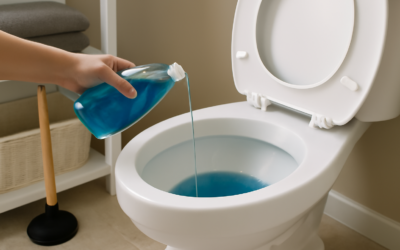
- Add dish soap. Squirt a generous amount of liquid dish soap into the bowl, roughly 1/4 to 1/2 cup. Dawn, Palmolive, or any standard liquid dish soap works. Avoid hand soap or bar soap, which do not have the same surfactant strength
- Let it sit. Wait 10-15 minutes. The soap needs time to sink through the standing water and reach the clog at the bottom of the trapway. Do not flush during this time
- Heat water. While waiting, heat a pot or large bowl of water on the stove or in the microwave. Target hot but not boiling, around 140-160°F. Boiling water (212°F) can crack cold porcelain or damage the wax ring seal at the base of the toilet
- Pour the hot water. Slowly pour the hot water into the bowl from waist height. The added height increases the water pressure hitting the clog. Pour steadily, not all at once, to avoid overflowing the bowl
- Wait and observe. Give it another 10-15 minutes. In most cases, you will see the water level drop as the clog loosens and drains. Once the water drains, flush the toilet once to confirm the line is clear
- Repeat if needed. Stubborn clogs may require a second round. Add more soap, wait, and pour more hot water. If two rounds do not work, the clog likely requires a plunger or auger
When This Method Works Best
The dish soap method is most effective on soft, organic clogs: toilet paper accumulation, waste buildup, and minor blockages that a plunger would handle easily. It also works well as a first attempt before escalating to mechanical tools, since the soap lubricates the pipe whether or not it fully clears the clog, making subsequent plunging easier.
This method does not work on hard object blockages (toys, hygiene products, cotton swabs), severe pipe obstructions deep in the drain line, or septic system backups. If water backs up into the bathtub or other drains when you flush, the problem is beyond the toilet trap and needs professional attention.
Alternative No-Plunger Methods
Baking Soda and Vinegar
Pour 1 cup of baking soda into the bowl, followed by 2 cups of white vinegar. The fizzing reaction can help break up minor clogs. Wait 30 minutes, then flush with hot water. Less effective than dish soap for stubborn clogs but worth trying if soap alone does not work.
Wire Hanger Snake
Straighten a wire coat hanger, leaving a small hook at one end. Wrap the hook end with a rag and secure it with tape to protect the porcelain. Insert the wire into the drain and push gently to break through or hook the clog. This is a crude but effective tool for obstructions sitting in the visible trapway.
Toilet Auger (Closet Auger)
If DIY methods fail, a toilet auger ($15-$30 at any hardware store) is the proper tool for the job. Its flexible cable reaches 3-6 feet into the drain while a rubber guard protects the porcelain. Every homeowner should have one. It clears 95% of toilet clogs that plungers and soap cannot handle.
Preventing Future Clogs
Most toilet clogs are preventable with a few habit changes. Use moderate amounts of toilet paper per flush. If you need more, flush once, then use more and flush again rather than loading the bowl with a large wad. Never flush items that do not break down in water: wipes (even those labeled “flushable”), cotton balls, feminine products, paper towels, or dental floss.
Low-flow toilets manufactured before 2005 clog more frequently because early water-saving designs lacked the flush power to clear waste consistently. If your toilet clogs regularly despite reasonable use, the fixture itself may be the problem. Modern 1.28 GPF (gallons per flush) toilets from brands like Toto and Kohler deliver significantly better flush performance than older low-flow models.
When to Call a Plumber
Call a professional if the toilet clogs repeatedly (multiple times per month), if the clog returns within hours of clearing it, if multiple drains in the house are slow simultaneously, or if you hear gurgling from other fixtures when the toilet flushes. These symptoms point to a main drain line issue, tree root intrusion, or venting problem that DIY methods cannot resolve.
A plumber’s visit for a toilet clog typically costs $150-$300 for a standard auger service. Camera inspection of the drain line runs $200-$500 and is worth the investment if you suspect a recurring structural problem. Catching a collapsed pipe or root intrusion early prevents far more expensive emergency repairs later.