Few household emergencies feel quite as urgent as a rising toilet bowl at 10 p.m. on a Sunday, when every plumber in town is off the clock. Before you panic or call for an expensive weekend service, it’s worth knowing that a bottle of dish soap clogged toilet remedy really does work for a surprising number of blockages. Here is exactly when to try it, how to do it right, and when to stop and grab a different tool.
Part of our Bathroom Remodeling & Flooring guide — explore the full guide →
- Why Dish Soap Actually Works
- What You Need Before You Start
- Step-by-Step: The Dish Soap Method
- Why Water Temperature Matters
- When Dish Soap Won’t Cut It
- Plunger Basics for Stubborn Clogs
- Toilet Augers for Real Blockages
- What Never to Pour Into a Clogged Toilet
- Prevention for the Next Time
- When to Call a Plumber
Why Dish Soap Actually Works
Dish soap is engineered to break down grease. When you pour it into a clogged toilet, the soap coats the surfaces of the trapped waste, reduces friction against the porcelain trapway, and lubricates the blockage so it can slide through. Hot water adds additional melting action on any soap, grease, or softening paper in the clog.
This method will not unclog a wipe, a toy, a toothbrush, or a golf ball. It works specifically on organic matter — human waste and toilet paper — which is still the vast majority of household clogs.


What You Need Before You Start
The trick works best when you gather supplies calmly rather than scrambling mid-flood.
- One-half cup (about 120 ml) of any liquid dish soap. Dawn works; cheaper brands work almost as well.
- One gallon of hot but not boiling tap water. Target 110 to 130 degrees Fahrenheit.
- A bucket large enough to carry the hot water to the bathroom.
- Rubber gloves in case of splashback.
- Old towels to protect the floor around the base of the toilet.
Step-by-Step: The Dish Soap Method
Follow these steps in order. Rushing any of them is how people end up with bigger messes.
- If the bowl is near the rim, bail out a few cups of water first using a disposable cup.
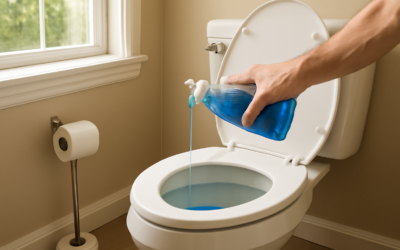
- Squirt a generous half cup of dish soap directly into the center of the bowl so it sinks through the standing water.
- Wait 15 to 20 minutes. This is the non-negotiable step — soap needs time to penetrate the clog.
- Slowly pour the gallon of hot water from waist height into the bowl. The height adds gravitational force without requiring a flush.
- Wait another 10 minutes, then try a flush. If the water level drops but does not clear, repeat once.
Why Water Temperature Matters
Boiling water can crack a cold porcelain bowl and damage the wax ring at the base of the toilet. Very hot tap water around 120 degrees Fahrenheit is plenty warm to soften toilet paper and activate the dish soap. If you are not sure, run a kitchen thermometer through the water before you pour.
In winter, warm the bowl first by pouring a half gallon of warm water in, letting it sit five minutes, and then adding the soap and the hotter full gallon.
When Dish Soap Won’t Cut It
Some clogs are simply beyond what soap and gravity can move. Here is when to skip straight to a different tool.
- The toilet clogged right after a child played nearby — likely a foreign object.
- “Flushable” wipes or paper towels went down the pipe.
- Multiple drains in the house are slow or gurgling, suggesting a main line issue.
- Two full soap-and-water treatments 30 minutes apart show no improvement.
- The bowl still overflows even after you bail water out.
Plunger Basics for Stubborn Clogs
A flange plunger — the kind with a rubber extension below the cup — is the correct tool for toilets. A flat cup plunger is designed for sinks and won’t seal properly.
Fit the flange fully into the drain opening. Push down gently on the first stroke to expel air without splashing, then plunge vigorously for 15 to 20 seconds. Break the seal, inspect the bowl, and repeat if needed. For tough clogs, squirt another splash of dish soap and let it sit 10 minutes before plunging again — the combination of soap and suction is highly effective.
Toilet Augers for Real Blockages
If dish soap and a plunger both fail, a closet auger (toilet snake) is the next tool. A basic 3-foot model costs $18 to $30 at any hardware store and comes with a rubber sleeve to protect the porcelain finish. Feed the auger cable into the drain and crank the handle clockwise until you feel resistance, then rotate to either hook the object or break up the clog.
Avoid full-length drain snakes designed for sinks and tubs — they can scratch or crack the bowl without the protective sleeve.
What Never to Pour Into a Clogged Toilet
In desperation, people reach for products that cause more harm than good.
- Commercial drain cleaners like Drano Max Gel: Damage pipes, wax rings, and seals. Also dangerous to the plumber who eventually has to clear the clog.
- Boiling water: Risk of cracked porcelain.
- Bleach: Ineffective on clogs, damages chrome and rubber parts.
- Random DIY mixes of ammonia, bleach, or vinegar and hydrogen peroxide: Release toxic gases in enclosed bathrooms.
Prevention for the Next Time
Most repeat clogs come from behaviors that are easy to change. Use less toilet paper per flush — many modern ultra-soft rolls fold thicker than older brands, so two or three pads are plenty. Keep a small trash can next to the toilet for wipes, cotton rounds, and floss, none of which are genuinely flushable. Twice a year, pour a cup of plain dish soap into the bowl at bedtime and let it sit overnight as a preventive flush for the trapway.
When to Call a Plumber
If two clearing attempts and a plunger session fail, or if you notice water backing up in tubs, showers, or floor drains at the same time, stop troubleshooting and call a professional. A main line clog can cost $200 to $500 to clear, but continuing to flush will turn the issue into a sewage spill that costs thousands to remediate.
Knowing how to use dish soap on a clogged toilet is a genuinely useful skill — roughly half the time, it is all you will need. The other half, catching the limits early saves your floor, your plumbing, and your weekend.