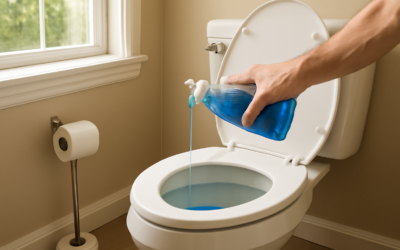
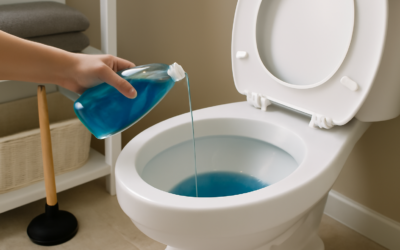
Before you run out to buy a chemical drain opener that can crack porcelain and burn your skin, there is a cheaper trick sitting under your kitchen sink. The dawn dish soap toilet clog method uses nothing but grease-cutting dish soap and hot water to break up a blockage, and for the most common clogs it works surprisingly well. It is not magic, and it will not touch a toy your toddler flushed, but for an ordinary paper-and-waste jam it is worth trying before you reach for a plunger or panic.
Part of our Bathroom Remodeling & Flooring guide — explore the full guide →
Why Dish Soap Works on a Clog
Dawn is engineered to cut grease and lubricate, and both properties help with a toilet clog. The soap coats the inside of the trap and the blockage itself, reducing friction so the mass can slide through the trap and down the drain. On clogs that contain any oily or greasy component, the surfactants in the soap start to break the material down the same way they cut grease off a frying pan.
Hot water does the heavy lifting alongside the soap. Warm-to-hot water softens toilet paper and organic waste, and the added lubrication from the soap lets gravity finish the job. The combination is most effective on soft, organic blockages, which happen to be the vast majority of household toilet clogs. It does nothing for a solid object, so know what you are dealing with before you commit.


The Step-by-Step Method
The technique is simple, but the details matter. Start by squeezing a generous amount of dish soap directly into the bowl, roughly a quarter to a half cup, more than you think you need. Let it sit for 10 to 15 minutes so it has time to work its way down into the trap and coat the blockage rather than just floating on top of the water.
Meanwhile, heat about a gallon of water until it is hot but not boiling. This is the single most important detail: never pour boiling water into a toilet. Water at a rolling boil can thermally shock and crack the porcelain, turning a $10 problem into a $300 replacement. Aim for water around 120 to 150°F, roughly the temperature of very hot tap water or water pulled off the stove just before it boils.
Pour the hot water into the bowl from about waist height. The height adds a little force that helps push the softened clog through. Wait a few minutes, then watch the water level. If it drops on its own, the clog has cleared; if it holds steady, give it another 15 minutes and repeat the pour once more before trying anything else.
When to Let It Sit Overnight
For a stubborn clog that partially clears but does not fully open, patience beats force. Add another round of dish soap, top up the bowl with hot water, and leave it overnight. The extended contact time lets the soap keep breaking down the organic material and lubricating the trap while you sleep. In the morning, a clog that resisted a quick attempt has often softened enough to flush freely.
This overnight approach is especially useful for the slow-draining toilet that is not fully blocked but gurgles and drains sluggishly. Rather than escalating to a plunger or auger, the soak often restores full flow by morning with zero effort and no mess. If the water level has dropped overnight, flush once to confirm before you use the toilet normally.
Combining Dish Soap With a Plunger
The soap method and a plunger are not either-or; they work better together. If the hot water and soap alone do not clear the clog, the soap you already added has lubricated the trap and made the plunger far more effective. A flange plunger, the kind with an extended rubber sleeve that seats into the drain opening, creates a much better seal in a toilet than a flat cup plunger.
Seat the plunger fully over the drain hole, make sure enough water covers the rubber to create suction, and give it several firm push-pull strokes without breaking the seal. The lubricating soap reduces resistance so the pressure changes move the blockage instead of just compressing it. This combination clears the large majority of clogs that the soap-and-water soak alone could not.
Why It Works Better Than Chemical Drain Openers
It is tempting to grab a bottle of commercial drain opener, but for a toilet those products are often the wrong tool and sometimes a dangerous one. Most chemical openers are formulated for sink and tub drains, not toilets, and they rely on caustic reactions that generate heat. In the confined trap of a toilet, that heat can crack the porcelain, and the harsh chemicals can damage the rubber components in the flush mechanism and the wax ring below.
There is also a safety hazard people overlook. If the chemical fails to clear the clog, you are left with a bowl full of caustic water that can splash and burn your skin and eyes the moment you try to plunge or bail it. Dish soap has none of these risks: it is gentle on the porcelain and the plumbing, harmless to handle, and it will not react badly with anything already in the bowl. For a routine clog, the soap method is not just cheaper, it is genuinely safer.
Using Baking Soda and Vinegar as a Backup
If plain dish soap does not fully clear a soft clog, a baking soda and vinegar follow-up adds a bit of fizzing action that can help break the blockage loose. Pour about a cup of baking soda into the bowl, then slowly add two cups of white vinegar; the two react into a foaming mixture that works into the clog. Let it sit for 20 to 30 minutes, then follow with a pour of hot, not boiling, water.
This combination is mild and safe for the porcelain and plumbing, and it pairs well with the dish soap approach for stubborn organic clogs. Keep your expectations realistic, though: the fizzing is gentle and will not blast through a solid obstruction or a heavy compacted mass. Think of it as a helper for a slow drain or a partial soft clog, not a miracle cure, and escalate to a plunger or auger if the bowl still will not drain after treatment.
When the Dish Soap Trick Will Not Work
Be realistic about the method’s limits. Dish soap does nothing for a hard object: a flushed toy, a toothbrush, a chunk of soap bar, or a wad of flushable wipes that has compacted into a solid mass. These require a toilet auger, also called a closet auger, which is a flexible cable that reaches through the trap to grab or break up the obstruction. No amount of soap dissolves a plastic action figure.
Repeated clogs at the same toilet point to a bigger issue than a one-off blockage. A toilet that clogs weekly may have a partially blocked trap, a poorly designed low-flow model, or a problem farther down the main line, especially if other drains in the house gurgle or back up at the same time. When multiple fixtures are affected, stop DIY attempts and call a plumber, because you are likely dealing with a main-line blockage or tree-root intrusion.
Prevent the Next Clog
Most clogs are avoidable with a few habits. Use less toilet paper per flush, or flush twice for a large amount rather than sending a thick wad through the trap at once. Keep so-called flushable wipes out of the toilet entirely; they do not break down like toilet paper and are a leading cause of both household and municipal clogs.
Keep a bottle of dish soap and a flange plunger within reach of every bathroom so a clog is a five-minute fix instead of an emergency. The dawn dish soap toilet clog method is the cheapest, gentlest first move you have, and for ordinary blockages it clears the problem without harsh chemicals, without a mess, and without a service call. Reach for it first, escalate to a plunger and then an auger only if it fails, and save the plumber for the times when the whole drain system is telling you something bigger is wrong.