A failed shutoff valve discovered during a 2 a.m. plumbing emergency is one of the most preventable disasters in a home, and yet survey data suggests roughly 40 percent of US homeowners cannot locate or operate their main water shutoff. Every shutoff valve in a house is a small, inexpensive component — most cost $5 to $40 — but each one stands between a normal day and a flooded floor. After replacing dozens of failed valves and walking many homeowners through emergency shutoffs, the basic knowledge that prevents disasters is straightforward to learn.
- The Six Shutoff Valves Every Homeowner Should Know
- Common Valve Types and How to Recognize Them
- How to Find Your Main Water Shutoff
- Signs Your Valve Is Failing
- Replacing a Toilet or Sink Shutoff Valve
- When to Call a Plumber
- Smart and Automatic Shutoff Valves
- Hose Bib and Outdoor Valve Considerations
- Annual Maintenance Routine
The Six Shutoff Valves Every Homeowner Should Know
A typical American home has between 15 and 30 individual valves. The critical six:
- Main water shutoff — usually in basement, crawl space, or garage near the meter
- Water meter shutoff — at the street, requires a meter key
- Water heater shutoffs — on the cold water inlet pipe at the top of the tank
- Toilet shutoffs — small angle valves on the wall behind each toilet
- Sink shutoffs — angle valves under each sink, hot and cold
- Washing machine shutoffs — behind the washer, hot and cold supply
Test each one at least once a year. Valves that have not moved in 5 to 10 years often seize and refuse to close when needed.
Common Valve Types and How to Recognize Them
Five valve types appear in residential plumbing, each with different operating mechanisms and reliability:
Ball valves use a rotating perforated sphere with a quarter-turn handle. They open and close fully in 90 degrees of rotation, almost never seize, and are the gold standard for reliability. The handle parallel to the pipe means open; perpendicular means closed.
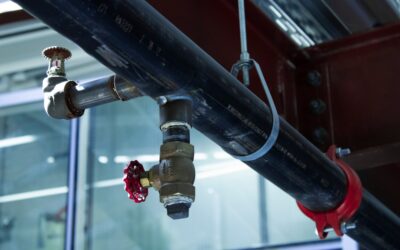
Gate valves use a wedge that lifts and lowers via a multi-turn round handle. They are common on older homes (pre-1990) and on water meter shutoffs. Gate valves stick easily after years without use and frequently fail to close fully.
Globe valves use a stem that screws down onto a seat. The round handle is similar to a gate valve but the body has a distinctive bulge. Globe valves degrade over time but are easier to repair than gate valves.
Stop-and-waste valves are gate valves with a small drain port for winterization. Common on outdoor hose bibs and irrigation systems in cold climates.
Compression angle valves are the small chrome valves under sinks and toilets. They use a packing nut and stem mechanism that wears out and weeps after 10 to 20 years.
How to Find Your Main Water Shutoff
The location depends on climate and home age:
Basement homes — usually in the basement, on the wall closest to the street, near where the water line enters. Look for a 3/4-inch or 1-inch copper pipe with a valve at the meter.
Slab-on-grade homes — typically in the garage, utility closet, or against an exterior wall. In hot climates without freezing risk, sometimes outside in a concrete box.
Crawl space homes — under the house near the front foundation wall. Locate by following the cold water pipe back from the water heater.
Find it now, before you need it. Tag the valve with a bright zip tie and a label so anyone in the house can find it in an emergency. Practice closing it once when nothing is wrong; muscle memory matters at 2 a.m.
Signs Your Valve Is Failing
Valves rarely fail catastrophically. The warning signs:
- Visible mineral deposits, corrosion, or green patina around the valve body
- Slow drips from the packing nut even when fully open or closed
- Handle that turns but does not actually stop water flow
- Seized handle that requires excessive force to operate
- Wet spot or water staining on the floor or wall below the valve
- Sweating or condensation on cold-water valves with no humidity source
Replace any failing valve before the next emergency. The cost is $5 to $40 in parts and 30 minutes of work, compared to thousands in water damage from a failed valve discovered too late.
Replacing a Toilet or Sink Shutoff Valve
Compression angle valves under sinks and behind toilets are the most common DIY replacement. The job takes 20 to 40 minutes per valve with these supplies:
- New shutoff valve (1/2-inch compression to 3/8-inch compression is standard) — $8 to $15
- Adjustable wrench and channel-lock pliers
- Towel and small bucket
- Teflon tape
- Replacement supply line if the existing one is over 10 years old
Steps: shut off the main water supply, drain the line by opening the fixture, place a bucket under the valve, unscrew the supply line, remove the old valve, install the new valve onto the same compression fitting (no need to disturb the copper pipe), connect the supply line, restore main water, and check for leaks.
Quarter-turn ball valves are the upgrade choice — they cost $3 to $5 more than the cheap multi-turn versions and last twice as long without sticking.
When to Call a Plumber
DIY makes sense for accessible angle valves with compression fittings. Hire a plumber for:
- Soldered (sweat) copper valves that require torch work
- Main water shutoffs and meter shutoffs
- Any valve in a wall or ceiling requiring drywall work
- Valves on PEX lines if you do not have crimp tools
- Whole-house valve replacements in older homes
- Anywhere lead solder might be present (pre-1986 homes)
Plumber rates run $80 to $200 per hour plus parts. A typical valve replacement that requires soldering or drywall work runs $200 to $600.
Smart and Automatic Shutoff Valves
Whole-house automatic shutoffs detect leaks and close the main valve automatically. The technology has matured significantly since 2020:
- Flo by Moen — $500 installed, monitors flow patterns, cuts water on detected leaks
- Phyn Plus — $500 to $700, similar features with high water-quality monitoring
- StreamLabs Control — $400, easier DIY install, less sophisticated detection
- LeakSmart Hub with valve — $400 to $600, integrates with smoke and motion sensors
For homes with histories of leaks, second-floor laundry rooms, or vacation properties left unattended, these systems pay back the investment after a single prevented leak. Insurance discounts of 5 to 15 percent are available from some carriers for installed leak protection systems.
Hose Bib and Outdoor Valve Considerations
Outdoor hose bibs (sillcocks) have an additional consideration in cold climates. Frost-free hose bibs include a long stem that places the actual shutoff inside the heated wall, with proper drainage to prevent freeze damage. Standard hose bibs need to be shut off at an indoor stop-and-waste valve every fall and drained.
Replace any hose bib that drips when fully closed — the leak only gets worse and freezes can crack the brass body. Frost-free replacements run $30 to $60 in parts and $200 to $400 if a plumber installs them.
Annual Maintenance Routine
Twenty minutes once a year prevents nearly all valve emergencies:
Walk every accessible valve in the house. Operate each one through a full close-and-open cycle. Listen for the water flow stopping completely when closed. Look for fresh moisture around the body and packing nut. Replace anything that fails the test before it fails on its own.
Schedule the inspection on the same date every year — first weekend of October works well in most climates because it precedes winter freezes and post-summer use stress. The 20 minutes spent now is the cheapest insurance available against home water damage.