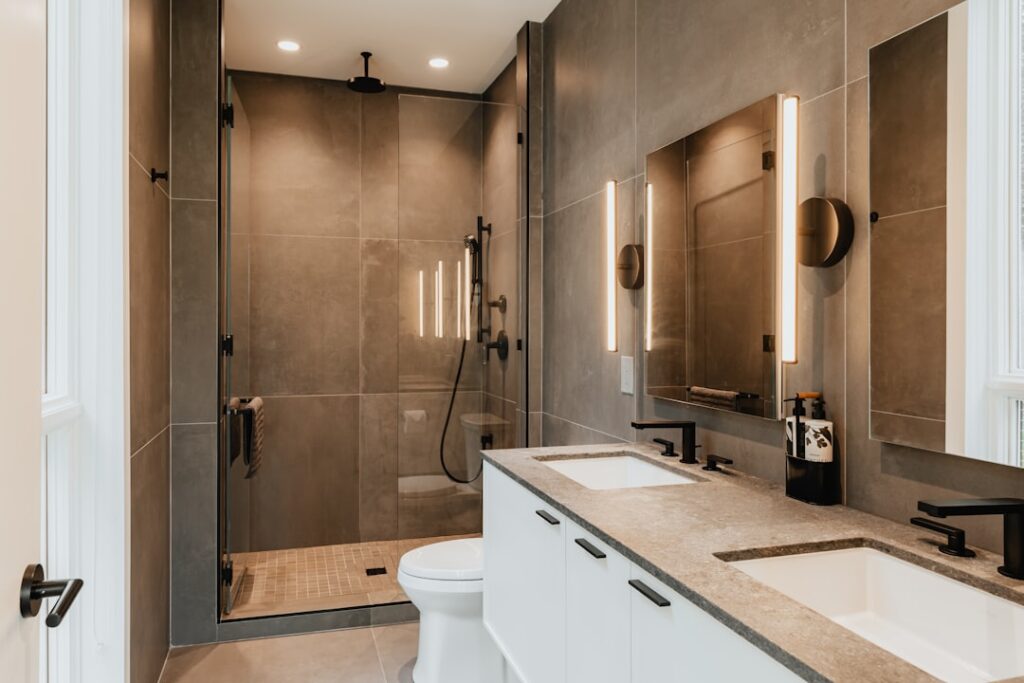
Sorting through dozens of showers reviews can feel like reading a foreign language full of GPM ratings, valve types, and material acronyms. Before you trust a single star rating, you need to understand what actually separates a good shower from a frustrating one. The truth is that the right shower depends as much on your bathroom layout and water supply as on any product score. This guide breaks down the shower types, the features that matter, realistic price ranges, and the warning signs that should make you pause before buying.
Part of our Bathroom Remodeling & Flooring guide — explore the full guide →
The Main Types of Showers
Knowing the category you are shopping for makes every review easier to interpret, because reviewers judge a curbless wet room by very different standards than a budget prefab kit.
Alcove Showers
An alcove shower fits into a three-wall recess, usually where a tub once stood. It is the most common layout in American homes and the easiest to fit with prefab kits, which keeps costs down.
Corner and Neo-Angle Showers
Corner units tuck into a 90-degree corner to save floor space, making them popular in powder rooms and tight remodels. Neo-angle designs use an angled front to free up even more room.
Walk-In Showers
Walk-in showers skip a swinging door or use a fixed glass panel. They feel open and modern, though they demand careful drainage planning so water stays contained.
Curbless and Roll-In Showers
A curbless or roll-in shower has no threshold, so the floor flows directly into the shower area. These are ideal for aging-in-place and wheelchair access, but they require a properly sloped subfloor and a linear drain.
Steam Showers
Steam showers add a sealed enclosure and a steam generator for a spa-like experience. They cost considerably more and need a vapor-tight build and dedicated electrical.
Prefab vs Tiled Showers
Prefab, also called a surround kit, arrives in molded acrylic or fiberglass panels and installs quickly. Tiled showers are built on-site and offer endless design freedom but cost more and depend heavily on the installer’s waterproofing skill.
What to Evaluate When Reading Showers Reviews
Many showers reviews focus on looks, but durability and performance live in the technical details. Read with these factors in mind so you can separate genuine quality from glossy marketing.
- Water pressure and flow (GPM): Federal standards cap showerheads at 2.5 gallons per minute, and many efficient models run 1.5 to 2.0 GPM. Reviews that complain about weak flow often describe a low-GPM head paired with already low household water pressure.
- Valve type: A thermostatic or pressure-balancing valve prevents scalding when someone flushes a toilet. Thermostatic valves hold a set temperature and are worth seeking out in reviews.
- Materials: Acrylic resists cracking and cleans easily, fiberglass costs less but can fade and scratch over time, and tile is the most durable and customizable when sealed correctly.
- Door type: Framed doors cost less and seal well, frameless doors look upscale but carry a higher price, and sliding doors save swing space.
- Drainage: Look for comments on how fast water clears and whether the base pools. Linear drains handle curbless designs best.
- Ease of cleaning: Fewer grout lines and seams mean less scrubbing. Reviewers who mention mold in corners are usually describing poor sealing.
- Warranty: A limited lifetime warranty on the shower base or a 10-year warranty on a valve signals manufacturer confidence.
Realistic Price Ranges by Type
Prices vary by region, finish, and labor rates, so treat these as general ballparks rather than quotes. A basic fiberglass or acrylic prefab kit often falls in the $300 to $800 range for materials, with simple installations adding a few hundred dollars. Mid-tier acrylic surrounds with upgraded hardware tend to land between $800 and $2,000 installed.
Tiled custom showers climb quickly because of labor and waterproofing, frequently running $3,000 to $7,000 or more depending on tile choice and size. Steam showers sit at the top, since the generator, controls, and sealed enclosure can push a project well past $5,000. Curbless conversions also add cost because of the subfloor work required for proper slope.
Installation Considerations
Even the best-reviewed shower disappoints if the installation is wrong. Prefab kits are the friendliest for a confident DIYer, since the panels are pre-formed and the seams are predictable. Tiled and curbless builds, by contrast, depend on flawless waterproofing membranes and correct floor slope, which is professional territory for most homeowners.
Check whether your existing plumbing rough-in matches the new unit’s drain location, because moving a drain involves opening the floor. Confirm that your home’s water pressure supports the showerhead you want, and verify there is room for the door swing or panel before you commit.
Common Complaints to Watch For in Reviews
Patterns matter more than any single angry review. When several buyers report the same issue, it usually reflects a real design flaw rather than a one-off defect.
- Weak or inconsistent water flow, which often points to a low-GPM head or a valve that cannot maintain temperature.
- Cracking or flexing bases, a frequent gripe with thin fiberglass units that were not set in a proper mortar bed.
- Leaking doors, especially frameless models with worn or poorly fitted seals.
- Mold and grout problems, typically a symptom of inadequate ventilation or rushed sealing.
- Difficult cleaning, tied to textured surfaces and tight corners that trap soap scum.
- Hardware that corrodes or loosens, a sign of cheap finishes on handles and hinges.
When you read showers reviews through this lens, you can tell the difference between a buyer who set their expectations wrong and a product with a genuine weakness.
Matching the Shower to Your Bathroom
Measure your space before you fall in love with a design. A spacious primary bathroom can support a walk-in or curbless layout, while a small guest bath is better served by a corner or alcove unit. If accessibility is a priority now or in the future, a curbless roll-in design pays off, even though it costs more upfront.
Think about household habits too. A busy family bathroom benefits from a durable acrylic surround that wipes clean fast, while a primary suite remodel might justify the splurge on tile or a steam enclosure.
The Bottom Line
Smart shopping starts with understanding the categories, then reading reviews for the technical details that drive long-term satisfaction. Weigh flow rate, valve quality, materials, drainage, and warranty against your budget and bathroom size. Use price ranges as a sanity check, lean on professional help for tiled and curbless builds, and treat repeated complaints as the most honest data in any review. Approach it this way, and the next time you scan a stack of showers reviews, you will know exactly what you are looking at.